A Different Russia: Khrushchev and Kennedy on a Collision Course
- By Marvin Kalb
- BookBaby
- 532 pp.
- Reviewed by Todd Kushner
- May 26, 2025
The former foreign correspondent recalls his memorable years in the USSR.
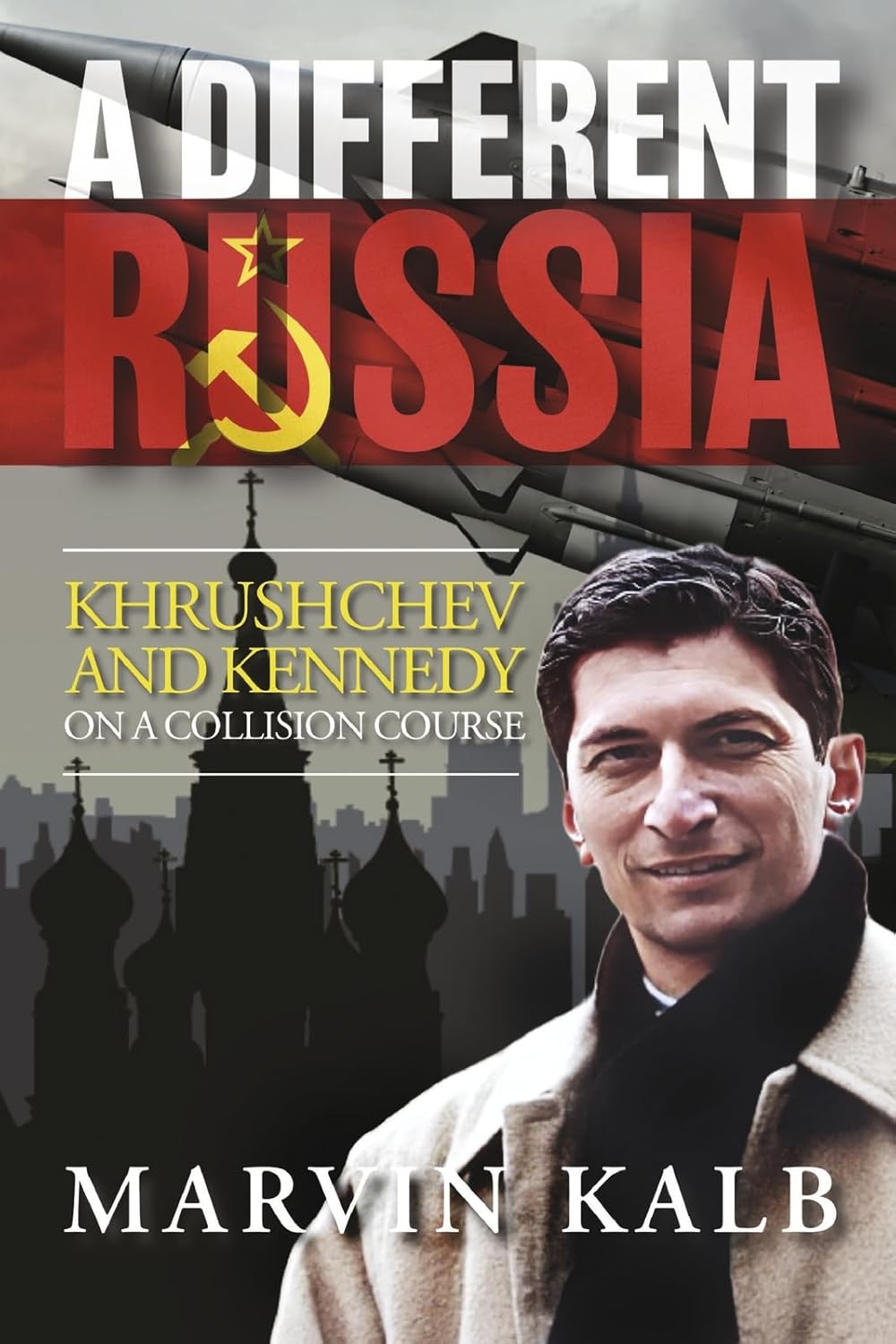
A Different Russia is Marvin Kalb’s captivating memoir about his experiences as CBS Moscow correspondent during the Kennedy administration. Sensing “imminent danger” from unceasing U.S.-Soviet confrontation, the American public eagerly took in Kalb’s reports.
Soviet Premier Nikita Khrushchev was his central subject; Khrushchev could inspire fear by testing massive nuclear weapons, threatening Berlin, or provoking other confrontations with the West. But he could also be reassuring and folksy: During an earlier trip to the United States, he praised the taste of hot dogs and complained about the cancellation of a Disneyland visit. Kalb had an amiable relationship with Khrushchev, found the Soviet leader “a terrific story, important, interesting, often unpredictable,” and tried to cover him “with a mix of professional detachment, skepticism, and fascination.”
Kalb, now 94, tells the story of U.S.-Soviet relations during the Kennedy era using only the information he had at the time. His CBS broadcasts (which Kalb’s wife, Madeleine, had copied and retained) are his principal source for this memoir. These are supplemented by the columns he wrote for the Sunday Times and other publications. In an interview, Kalb explained that drawing on the broadcasts was important to the book’s integrity, as he could base the narrative on contemporaneous reports and not his six-decades-old memories.
The developments Kalb reported for CBS were among the 20th century’s most significant, such as the first manned space flight, an event he termed “one of the most extraordinary days in modern Russian history [and] a singular historic scientific feat.” Later events included the Bay of Pigs, the building of the Berlin Wall, the emergence of Aleksandr Solzhenitsyn’s One Day in the Life of Ivan Denisovich, and the Cuban Missile Crisis (the section of the book Kalb is most proud of).
Layered onto coverage of the events are insights into the experience of being a Western reporter in Cold War Moscow. Unlikely to obtain useful information from apparatchiks, Kalb became an expert at “Kremlinology” and carefully read the Soviet press daily. Although it was turgid and “a haystack of Marxist gibberish,” it reflected the policies and opinions of Kremlin leadership; clues or hints of newsworthy developments could be gleaned from changes in tone, alterations in word choice, or even by paying attention to which Soviet journalists did the reporting.
Kalb also developed insights from his discussions with Eastern European reporters (to whom the Soviets gave better access), Western European reporters with access to their home countries’ Communist party representatives (who had inroads into the Soviet establishment), and officials from Western embassies who sometimes shared their information and perspectives.
A Different Russia also provides insights into the mechanics of journalism in the pre-digital era. Kalb lugged his own tape recorder, camera, radio, and portable typewriter. Filing reports required booking radio circuits from Soviet authorities, pleading for rarely given permission to use a local television studio, and navigating the USSR’s censorship regime. Superimposed on the Moscow realities were internal CBS politics and processes — packaging reporting to attract audiences, selling story ideas, and cooperating with fellow correspondents (“the band of brothers”) who were also competitors for future job assignments.
Some of the most endearing parts of the book are derived not from Kalb’s reporting but from his more personal recollections. The reader inwardly cheers when Kalb uses flattery and bluster to convince East German border guards not to detain an elderly American who arrived without a transit visa (“I work in Moscow [Kalb threatened], I cover and I know Nikita Khrushchev…Let [the American] go and I assure you I will not write a news article about this unfortunate incident”). We mourn when Kalb almost misses his father’s funeral due to international travel delays. And we’re amazed when his long-scheduled excursion to Mongolia requires him to hide for two days in the office of the airport manager of Irkutsk, Siberia.
Kalb relates that, before being sent to Moscow, he didn’t know much about the news business but did know a great deal about Russia. A fluent Russian speaker, he’d worked at Harvard’s Russian Research Center while pursuing a Ph.D. (And his wife was writing her doctoral dissertation on Soviet-African relations.)
Subsequent to his Moscow assignment, Kalb became one of America’s most distinguished journalists, boasting stints as chief diplomatic correspondent for CBS and as host of “Meet the Press” on NBC. A Different Russia is his third memoir, and it is an invaluable contribution to understanding a crucial period in our history and the early days of broadcast journalism.
Todd Kushner is a retired U.S. Foreign Service Officer. The views expressed are his alone and do not represent the views of the U.S. government.