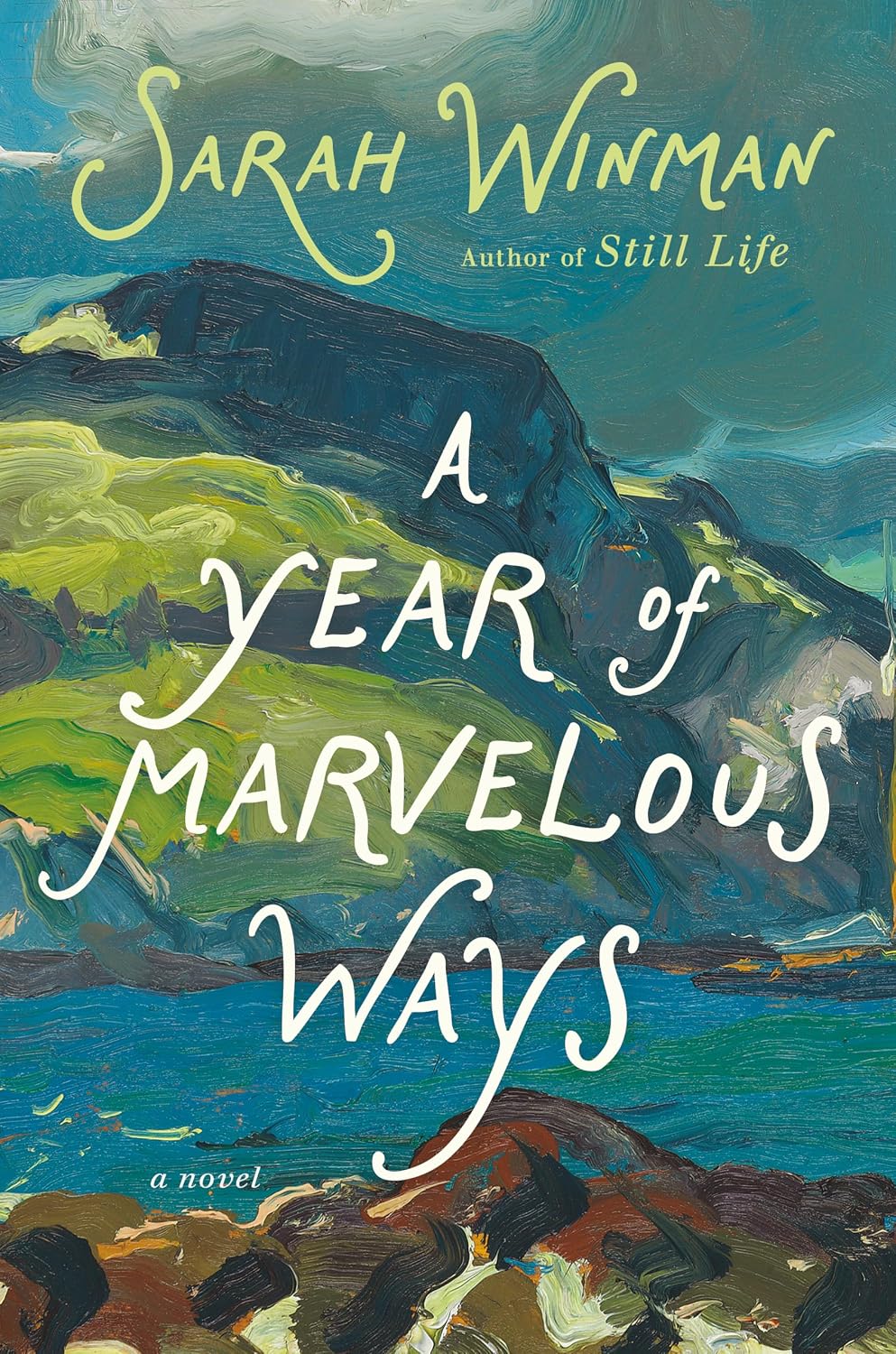
A Year of Marvelous Ways: A Novel
- By Sarah Winman
- G.P. Putnam’s Sons
- 288 pp.
- Reviewed by Marcie Geffner
- August 6, 2026
An old woman’s magic heals a young soldier’s heart in this uneven tale.
Sarah Winman’s third novel, Still Life, was so beloved by reviewers that it was featured in three of the Independent’s roundups of their favorites: year-end 2022, year-end 2024, and “20 Not-Technically-a-Love-Story Love Stories,” also in 2024. Readers who enjoyed or haven’t yet read Still Life might also like the author’s second novel, A Year of Marvelous Ways, if they’re willing to overlook some flaws.
The story begins in 1947. A 90-year-old woman with the improbable name Marvelous Ways lives in a camper near an unnamed creek in St. Ophere, a fictional hamlet in Cornwall on England’s southern coast. Marvelous spends her days swimming nude in the creek and waiting for something, though it’s not immediately clear what — or who.
Francis Drake, a 28-year-old British soldier, is in London on his way to deliver a last letter from a dying soldier to his father when he happens to catch sight of his teenage crush, Missy Hall. Rather than approach Missy directly, Drake stalks her until she confronts him. They’re both struggling with painful emotions from traumatic wartime experiences but are unable to share their feelings with each other:
It did us all in, really, didn’t it, said Missy. We’re all a bit different now, aren’t we?
And he wanted to tell her just how different he was, and he wanted her to hold that difference and for her to tell him he wasn’t so bad, and that’s just what war did to people. But he lit a cigarette instead and handed it to her. She took a puff as the first of her tears fell on his hand.
Don’t look at me, she said, and turned away. Please don’t look at me.
In the short time they spend together, Drake behaves badly, and Missy retaliates with a cruel trick. In despair, he somehow washes up in Marvelous’ creek, where she’s been waiting for him.
The story then meanders through the next eight years, during which Marvelous talks about her life and Drake is gradually healed by her care and companionship.
There’s a lot to like. But also a lot not to like. The novel’s strengths include the author’s evocative language and vivid descriptions, like this immersive view of Drake’s hotel room:
The room was shabby but the sheets were clean. The reading lamp cast a pitiful light across the bed and he went to turn on the overhead light but saw that the bulb was missing. Blue flock wallpaper peeled away at the ceiling edge where a haze of mold had made its home, and a garish picture of chrysanthemums hung above the headboard...He went to the window and looked out onto a dirty night made dirtier still by the drab buildings that huddled either side of him, some boarded up, one derelict.
Among the novel’s weaknesses are several contrived coincidences that only begin with Drake’s chance sighting of Missy on the very day he returns from France. When he eventually delivers the dying soldier’s letter, he discovers the man’s father not only knew Marvelous briefly years earlier, but that he also happens to know some big secrets about her parents that even she didn’t know. Neither coincidence is believable.
Marvelous’ stories about herself tend to drag on, stalling Drake’s emotional journey and giving the narrative, at times, a sluggish pace. One long story, dumped in near the end, is particularly dull, in part because the big reveal — concerning Marvelous’ lifelong love — was already revealed earlier. Another romance, also introduced late, lacks intensity and is oddly dispassionate.
Magical realism might account for Marvelous’ spry condition at her advanced age, the curative power of her presence, and the multiple coincidences, but it can’t overcome the jarring effect of the novel’s jumble of other mystical elements, which include Christian images (saints, God, grace, light, Jesus, and heaven) alongside ghosts, mermaids, and — wait for it — egg divination. How this all fits together as a magical system is...well, it doesn’t.
Worst of all are some laughably cringy personifications, such as this in one of Marvelous’ longwinded stories:
And once — silly her! — she invited Doubt in....and Doubt lit a big fat pipe and lay back on the bed and rubbed his stomach seductively. That’s when Marvelous told him to go. Didn’t want Doubt’s smell to linger, certainly not for when Jimmy got back that night.
By the end, The Year of Marvelous Ways, released in the U.K. in 2015 and this summer in the U.S., devolves into a sentimental pile-up of predictable events and rapid revelations that manage to be both confusing and improbable. Readers willing to just enjoy the ride may be enchanted. Those who expect their stories, even the magical ones, to make sense should stick with Still Life.
Marcie Geffner is a journalist, essayist, and book reviewer in Ventura, California.