All We Hide: A Novel
- By Robyn Gigl
- Soho Crime
- 456 pp.
- Reviewed by Tim Hennessy
- October 8, 2026
A trans detective takes on a decades-old cold case.
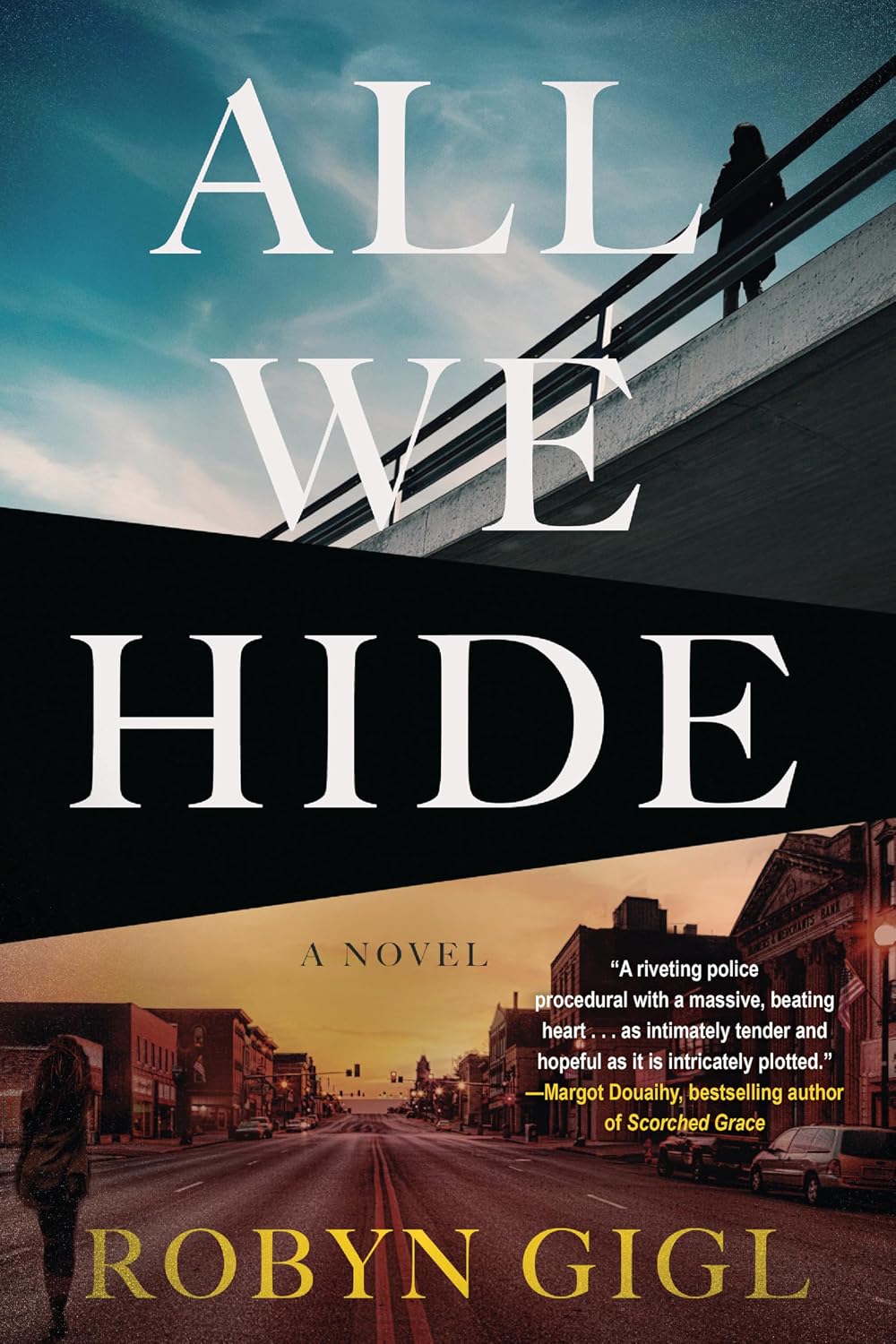
In the most haunting mysteries, every answer compounds the tragedy at the heart of the story, and by the time the truth comes to light, understanding how the damage was done only makes everything worse. In Robyn Gigl’s propulsive new novel, All We Hide, Lieutenant Lauren Kelly is put in the Donn County Homicide Cold Case Unit, where her review of the long-buried death of Sherry Darling, a transgender sex worker and former classmate, reveals troubling flaws in the original investigation.
Lauren’s interest in the 21-year-old case is both professional and deeply personal. Coming out as a trans woman sent shockwaves through Lauren’s personal and professional life: Her marriage ended, and she became persona non grata in the district attorney’s office, where she’d been promoted. In high school, Lauren admired Sherry’s fun-loving spirit and courage, especially the way Sherry lived openly as herself, something Lauren had not yet been able to do. Now, as Lauren rebuilds her own life, she seeks justice for Sherry as a way of honoring her friend’s fiery, independent spirit.
As the novel opens, Lauren is visiting her father, Frank, a retired detective who worked the initial case, at his nursing home. Battling early-onset Alzheimer’s, his memories are fragmented and fuzzy now, but he once loomed large over his family. He was an abusive alcoholic whose tolerance evaporated when his wife, Maureen, apparently ran off, leaving him ill-equipped to care for their then-young children. Frank disowned his son, Brian, now a famous television actor, when Brian came out as gay; during this visit, he fails to recognize (literally) his trans daughter:
“Do I know you?” he asked.
“Not sure if you remember me,” I replied. “I’m a sergeant in the Donn County District Attorney’s Office.”
He eyed me suspiciously. “I used to work there.”
“Yes sir, I remember. And that’s why I’m here.”
“I have a son who works there.” He hesitated, a look of profound confusion spreading across his face. “I think…”
In this introductory scene, Gigl deftly unpacks years of familial discord and the limits of memory, even as she plants the clues that will propel the narrative forward. Few mainstream procedurals open with such assured structural momentum.
Sherry’s boyfriend, Joseph, was charged with her murder, but the conviction was overturned. Since then, all the detectives involved in the case have either died or left the department — all, that is, except Snyder, Lauren’s captain, who pressures her to end her investigation. Lauren believes he has survived and thrived because he’s been protecting someone prominent in the law-enforcement community. The deeper she digs, the more bureaucratic obstacles she encounters, along with evidence suggesting a department-wide conspiracy to bury the truth.
Soon, Lauren enlists the help of her ex-wife, Becca, a reporter-turned-novelist engaged to a local celebrity, who puts her journalism skills to the test digging into untapped areas of the case. While researching cold cases similar to Sherry’s, she finds one from decades earlier involving a body bearing the description of Lauren’s mom. In a photo of the remains was a unique gold-and-silver Saint Christopher medal identical to the one Maureen wore. As she works to have the body exhumed so a DNA test can be performed, Lauren begins probing her mother’s past, including her time working in the office of county executive Ron Furst, scion of a wealthy political family eager to expand its influence.
Throughout the winding narrative, Gigl, who is trans, gives LGBTQ+ characters the time and space to be more than witnesses providing the next clue. They reveal pieces of themselves, deepen readers’ understanding of Sherry, and help Lauren see herself in a new context. In an affecting exchange with a queer character named Dash, who knew Sherry and who is now facing terminal cancer, Lauren recognizes that their conversation is also about the lives they might have lived:
“Like your concerns about what could’ve happened to you and Robert if you transitioned, my marriage ended, although I’m not sure it would have survived if I hadn’t transitioned.”
Lauren ruminates on the guilt of making her daughter’s life more difficult by transitioning but acknowledges, despite it all, she would do it again.
Ultimately, Gigl has constructed in All We Hide an excellent, layered procedural that draws in the reader as its threads entangle and the plot deepens. By keeping Lauren’s work, family, and complicated personal life at the center, the author ensures the mystery never loses sight of its human costs.
Tim Hennessy is a writer and editor who lives in Milwaukee, WI. His writing appeared in Publishers Weekly, Vol. I Brooklyn, Tough, Mystery Tribune, and the Milwaukee Journal Sentinel, among other venues. He also edited the Milwaukee Noir anthology from Akashic Books.

.png)