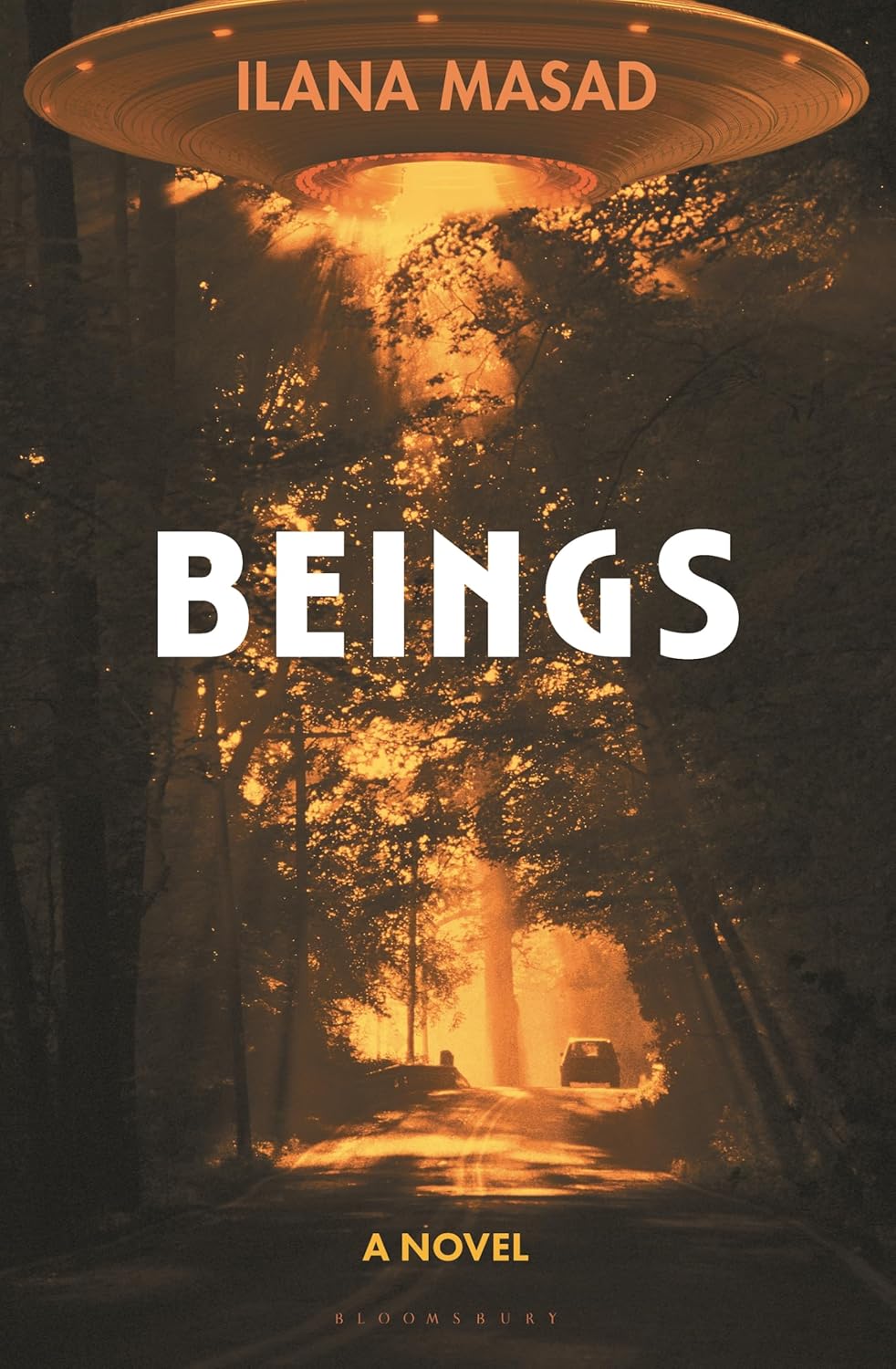
Beings: A Novel
- By Ilana Masad
- Bloomsbury Publishing
- 304 pp.
- Reviewed by Mariko Hewer
- October 22, 2025
Interwoven timelines bring together alien encounters and the queer experience.
The question “What do UFO investigations and queer history have in common?” may seem like the beginning of a clever pun. In Ilana Masad’s capable hands, though, the two intertwine to create a compelling, thought-provoking narrative.
Beings begins with an unnamed, present-day archivist investigating both a fictionalized version of Barney and Betty Hill’s claim that they were abducted by aliens in 1961, and the papers of author Phyllis Egerton. The archivist is portrayed both from a first- and third-person perspective — the former via interjections in the Hills’ narrative, and the latter through whole chapters. As they progress (the archivist uses they/them pronouns), they’re also coming to terms with potentially having witnessed their own inexplicable incident as a child.
Masad’s dual narratives tackle several of life’s great themes: loneliness and community, exclusion and belonging, and the importance of feeling seen. Reflecting on an encounter with a neighbor and her cat, the archivist remembers “the scent of coffee on the neighbor’s breath and her golden-brown eyes meeting theirs with ease…To be looked at, to be seen, however fleetingly, is to exist.”
Back in the 1960s, the Hills, after their UFO sighting, progress from unwitting witnesses to celebrities, floundering — who wouldn’t? — as they try both to process and repress their experience. This emotional maelstrom is compounded by additional evidence of strange happenings:
“The kitchen table, white, rectangular, was piled high with dry, dead leaves…At first, it felt like magic, as if a leaf pile for children to jump into had been transposed from its proper place outside in autumn to their kitchen in the dead of winter. But then it began to feel very wrong, all this dead plant matter in the middle of the neat room with the mint-green refrigerator and lemon-yellow cabinets and white countertops and checkered linoleum.”
Here and elsewhere, using words that describe nothing extraterrestrial or impossible, Masad manages to create a sense of simultaneous unease and wonder.
During the same decade as the Hill incident, Egerton has been finding her feet and making a living as a reporter in Boston, writing letters home to an old flame that, remaining largely unanswered, become a kind of diary archive. In it, she explores her gender identity, sexuality, and sense of belonging in ways that will feel familiar to anyone who’s had to wear any kind of mask:
“Sometimes, when I put on makeup, I feel like I’m making the bed: tucking all the corners in so my face is pleasing and inoffensive, neat and orderly, my eyelids fluffed like pillows with mascara and eyeshadow. I’ve always hated making the bed.”
As the archivist continues to investigate the Hills’ and Egerton’s history in the present day, they’re also grappling with the awareness that they, too, lived through a UFO encounter long ago — one they cannot recall despite having been interviewed and recorded describing it at the time. Trying to make sense of this non-memory is a tricky prospect:
“They’re still resistant to watching the video of themself. Whatever they see in it will color anything they might eventually dredge up.”
For readers, this departure into the archivist’s past might seem unnecessary, but maybe it serves as a reminder that some questions can’t be answered. Similarly, the archivist’s interjections into the Hill sections — such as one where they justify their use of “racial terminology, which in my era is outdated and offensive” — can feel extraneous and a bit performative.
Nevertheless, these aspects do little to detract from the story of the Hills’ eerie and affecting experiences; Egerton’s heartbreaking, inspiring journey of self-discovery; and the archivist’s poignant musings. In Beings, Masad has deftly interwoven reality and potential to create a beautiful tapestry of a sci-fi novel.
Mariko Hewer is a freelance editor and writer as well as a nursery-school teacher. She is passionate about good books, good food, and good company.