There’s a storm (literal or figurative) constantly brewing in this penetrating collection.
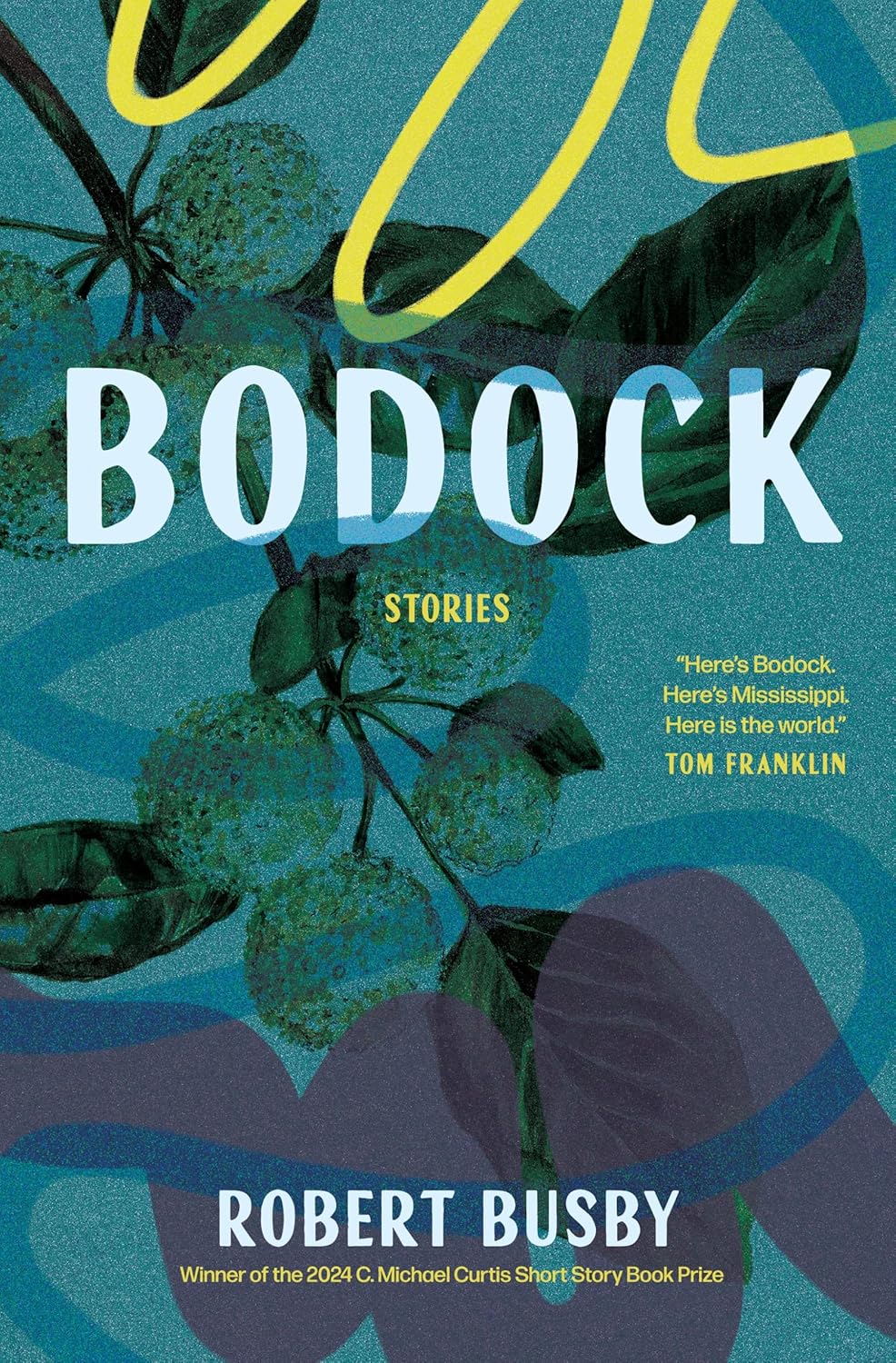
You probably don’t want to live in Bodock, Mississippi, the fictional town that’s home to the 11 stories in Robert Busby’s impressive debut collection, Bodock. This has little to do with the crippling ice storm that touches the lives of dozens of Busby’s characters, however, because while the storm and its chorus of falling limbs are a constant backdrop, the gore and glory of these people’s lives carry on.
But there’s still plenty of trouble. Part of it is that there are a lot of guns in Bodock — they show up in most of the stories — and so a lot of things get shot. Some of the victims are birds, others are people. Some of the shootings are accidental, others are self-inflicted. Bad decision-making is a constant worry, so much so that some kind of storm has almost always just passed or is about to hit.
While most of the tales take place right before, during, or after the ice storm, Busby also takes us back into the history of Bodock — a town whose name stems from the longtime mispronunciation of the local bois d’arc tree. One of these histories is actually set in the past, while another — featuring several generations of ghosts hanging out on the porch of a bait shop — contains a bit of magical (and comical) realism. We learn that trouble has been endemic to the town since white settlers cheated the local Chickasaw out of the land, held neighbors in slavery, and even sold their own children into indentured servitude.
This is not to suggest that Bodock is without moments of connection and happiness. Twin brothers share a bond; a marriage is saved by a tree-limb-tossing contest; a divorced man finds a way to give dignity to his dying father-in-law; and the cable guy brings much more than TV service to an elderly couple. That these rare moments of grace happen in a community deluged by tragedy only makes them more moving.
Tragedy and grace, of course, are closely related. In the final, long offering, Busby revisits an earlier story in which the senseless slaughter of a prior tragedy seems to be closing in on the characters. This second look at that event comes from a different, neighboring perspective as two characters, prodded in mysterious ways by the violence at the farm next door, attempt to overcome impossible guilt and grief to save their marriage.
All this is told in prose that’s so exact and exacting, it could be an instruction manual. Busby writes beautifully about material processes, and you may at times feel like you could put the book down and (using only his descriptions) skin a deer, rewire a house for cable, even run a meth lab. Such a level of detail is less interesting when it involves making coffee or getting dressed in the morning, but Busby’s attention to it is all-encompassing.
On top of this, the author has a gift for deploying verbs. Pork chops “rejoice” when they hit hot grease, crowded parking lots “heave” with vehicles, and vines “contemplate” their way around the trunk of a tree. While some of these obviously call attention to themselves, they also bring an original touch of magic to otherwise familiar scenes. The overall picture in Bodock is of folks for whom life is a series of physical tasks. There are few opportunities for emotion, let alone psychology, to command anyone’s full attention, so feelings and ideas are worked out via movement and activity, all of it rendered with vivid, engaging precision.
While the collection’s ever-impending storm of tragedy and mayhem suggests you don’t want to live in Bodock, the fact that the storm is laced with succor and redemption might convince you that you already do.
John P. Loonam has a Ph.D. in American literature from the City University of New York and taught English in New York City public schools for over 35 years. He has published fiction in various journals and anthologies, and his short plays have been featured by the Mottola Theater Project several times. He is married and the father of two sons; the four have lived in Brooklyn since before it was cool. His first novel, Music the World Makes, will be published by Frayed Edge Press in 2025, while a collection of his short stories, The Price of Their Toys, is forthcoming from Cornerstone Press.