Circle of Days: A Novel
- By Ken Follett
- Grand Central Publishing
- 704 pp.
- Reviewed by Holly Smith
- September 22, 2025
Stonehenge, where a man’s a man, and the children… (Okay, we’ll stop.)
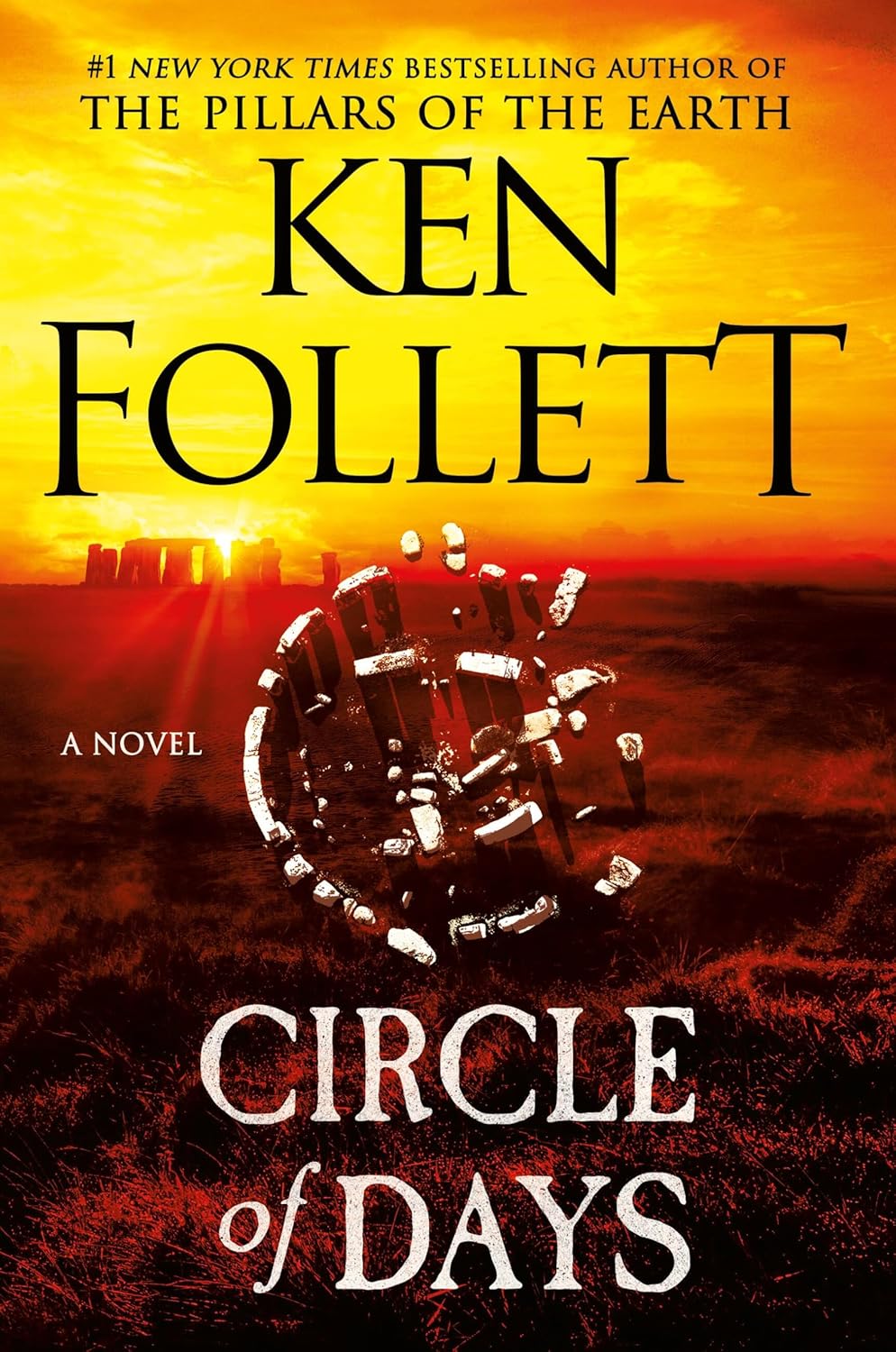
Yearning to read an entire 700-page novel but don’t have a whole afternoon? Ken Follett’s Circle of Days is for you. A doorstop akin to the volumes in the bestselling author’s popular Kingsbridge series, which chronicles England’s growth from the Middle Ages to the 18th century, this latest offering tells the story of another epic historical event — the building of Stonehenge — by jotting it down on a Post-It note.
If this sounds like a criticism, it isn’t meant to be. Not every book needs to double as SAT prep. But the key to enjoying this wildly oversimplified saga is to surrender early. Will you find in its pages people whose maturing over time demonstrates the resilience of the human spirit? No. A complex, cerebral plot that deepens as it unspools? Also no. Wise commentary on our earnest yet futile quest to be valued by an indifferent universe?
You’re new here, aren’t you?
As in the aforementioned (and wonderfully entertaining) Kingsbridge books, Follett concerns himself in Circle of Days almost solely with action. Characters with names like Oft, Neen, Ag, Wun, Dee, Han, and Stam populate his Late Neolithic setting, an era when the Iron Age was still centuries away and syllables were scarce. Nobody evolves — bad guys stay bad, good guys stay good, hot women stay hot — but they’re fun to watch. (Listening to them is another matter; more on that in a moment.)
The narrative centers on the ambitious, unusually clever Joia, a young priestess, and her brother-in-law, Seft, an earnest, preternaturally gifted craftsman. (Follett fans will recognize these archetypes.) After Joia witnesses the torching of the Great Plain’s circular wooden monument — crucial to date-keeping, the Midsummer Fair, and religious rites — she decides a newer, sturdier structure must go up in its place, one made of stone. Figuring out how to move gigantic stones to the site (in a time before wagons and harnesses) and raise them into place is Seft’s decades-long puzzle to solve, a burden he accepts comically quickly:
“Building it would probably take the rest of his life, Seft realized with a doomy feeling. But then his stone Monument would last forever. He nodded to himself as he reached his home, thinking: That would really be something.”
Meanwhile, there’s trouble brewing among the three factions populating this part of the future England. Woodlanders, farmers, and herders may grudgingly share the land, but each group needs different things from it and varying access to it. Personal grudges, drought, famine, and domestic entanglements fuel the discord. Murders will be committed. Crops will be sabotaged. Unfortunate coitus will be had. And through it all, the characters will speak, even though you’ll soon wish they’d stop. Take this exchange among some of the farmers:
Pia said: “I had a visitor this morning. I’ve promised not to say who.”
“Intriguing,” said Duff lightheartedly.
Yana, more sensitive to the seriousness in Pia’s tone, looked worried.
Pia said to Duff: “I have been warned that you could be killed if you go on Joia’s mission after this year’s Midsummer Rite.”
Duff said incredulously: “Who would want to kill me?”
“The only other thing I know is that you might not be the only victim.”
Yana said: “Oh, no!”
Or try this one, where a few of those same farmers discuss how to handle their wicked leader:
Katch said: “Troon’s awfully cross.”
Pia felt a pang of pity for the woman, living with that horrible man.
Yana said: “Look, Katch, why don’t you go home and tell Troon that we listened to you attentively and we promised to think very hard about what you said.”
Katch brightened. “Yes, I think he might be mollified by that.”
See what I mean? Even by Follettian standards, it’s clunky. But you can’t fight city hall, so just enjoy the ride. Besides, it’s kind of cool spending time in c. 2500 BCE Europe and learning how flint was mined, wild cattle were herded, calendars were developed, and oral sex was refined. If a particular scene makes you roll your eyes, give it three paragraphs, and the author will have moved on.
And when a child, upon learning her uncle has been killed by an arrow, cries, “That must have hurt!” just agree. It probably did hurt. When a teenage boy, at the moment he loses his virginity, exclaims in all sincerity, “Oh! It’s lovely!” be happy for him. I bet it was lovely. Finally, when these ancient, spunky folk with their ludicrous dialogue succeed in erecting what we now call Stonehenge? Be happy for them. Surely, their gods were mollified.
Holly Smith is editor-in-chief of the Independent.