Cool Machine: A Novel
- By Colson Whitehead
- Doubleday
- 368 pp.
- Reviewed by Ryan Davison
- July 21, 2026
The author’s much-lauded Harlem Trilogy finishes with ferocity.
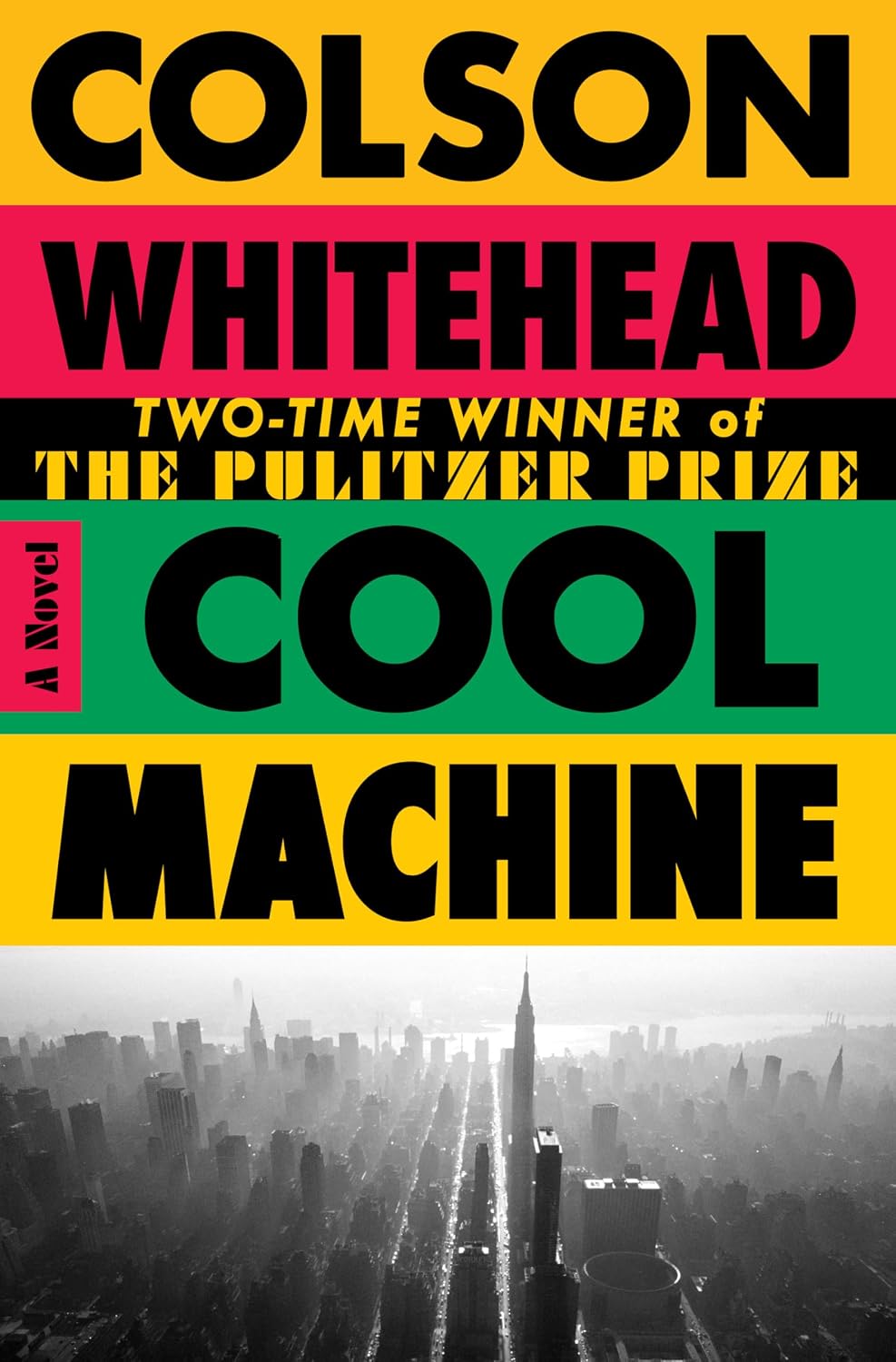
Shove over, The Bonfire of the Vanities and American Psycho, for the dazzling final volume of Colson Whitehead’s superbly stylized Harlem Trilogy, Cool Machine, would like a spot on the zeitgeist podium. Volumes one and two, Harlem Shuffle and Crook Manifesto, respectively, rendered gorgeous portrayals of 1960s and 70s New York City. Cool Machine completes the author’s signature vision in the ultimate decade of decadence, the 1980s. Rare is a novel so true to its period and locale that it helps define the era.
Ray Carney has thrived as a legitimate Harlem furniture dealer for many years, but more impressively, he’s still breathing after an equal amount of time operating as an illegal fence. Cool Machine tells three connected stories featuring the famous neighborhood set in 1981, ’83, and ’86. The first begins with Ray proudly being interviewed by Sterling Quality, a magazine that has just named him Sterling Furniture’s “Northeast Regional Dealer of the Month.” When a reporter asks what’s the best thing about his job, Ray reveals impressive rationalization, perhaps the key to surviving on both sides of the law:
Carney whistled, “So many.”
Like opening his 1977 model Hermann Bros. safe and depositing a brick of cash atop last week’s brick, one neatly fastened by the bank’s paper belt, the other grubby bills cinched by a rubber band. Or the day after a complication, replaying how it all went down and realizing he could have died — but didn’t. Seeing Elizabeth’s eyes when she unwraps a gift and he’s not bothering about whether the money that bought it was clean or dirty, just that she loves it and what does it really matter, really?
Carney said, “That little smile on a customer’s face when they sit on a fine new sofa for the first time, and they’re not thinking about how much it costs, or the landlord, or how the kid needs her teeth fixed, they’re thinking about how good it feels. That, and nothing else.”
A few chapters later, Ray joins a team that embarks on a near-impossible robbery at the Waldorf Astoria. Whitehead sets in motion complex set pieces that move with the ease of smoothly oiled gears, creating believable heist sequences that bubble with tension. Intelligent prose avoids cliché and the overly slick vignettes common in an “Ocean’s Eleven”-type caper.
This first section captivates the reader with gritty realism, yet we are still unprepared for the intensity of the next. It begins two years later, when Ray’s wife, Elizabeth, enlists his longtime friend and colleague, Pepper, to serve as bodyguard for a shady art dealer. The chewed-up skeleton of an unglamorous Manhattan forms the backdrop to this hip, dark tale. Mutilated bodies lay in the wake of a hitman with a flat affect, creating disturbing situations and an existential climax with a vicious, unpredictable antagonist. Fear, humor, and violence all influence the tone of this section, but most memorable are its richly drawn, eccentric characters.
In the last segment, the most significant commodity of all — the Carney family — is in peril. With serious reservations, Ray struggles to fulfill a promise to a dead cousin he feels he failed, opening his loved ones up to extreme danger.
Taken together, the three parts form an exhilarating page-turner overflowing with risks and thrills. While packed with poetic flair and meaningful symbolism, they never relent in their ability to entertain. Whitehead is a keen observer, gifted with the trained eye of an insider, but his ability to weave relevant social and political themes into the fabric of the plot is likely the trilogy’s greatest achievement. He lived through Gotham’s embrace of racially discriminatory policies, but rather than grow bitter, he channels his city’s failings into savvy stories of mob etiquette, flawed good guys, and lovable sociopaths.
Cool Machine blends literary, historical, and crime fiction fantastically. (Most chapters finish with tantalizing cliffhangers or major plot twists, so putting the book down presents its own challenges.) This final installment works as a splendid standalone but will especially satisfy those who’ve been along for the full ride. Cool Machine is as quintessentially New York as Lady Liberty’s torch penetrating the darkness from Ellis Island.
Ryan Davison, Ph.D., is a writer and literary critic residing in Portugal and the U.S. He has contributed to the Malahat Review, the Independent, Open Letters Review, Edelweiss+, and NetGalley. Ryan’s blurbs are often cited by LitHub’s Book Marks, the popular book-review aggregator. Along with literary criticism of traditional and independently published works, Ryan holds a doctorate in neuroscience and authors scientific papers.
.png)