Dear Future Occupants: A Novel
- By Keith Stahl
- University of Wisconsin Press
- 256 pp.
- Reviewed by John P. Loonam
- November 6, 2026
A witty tale of a scrappy 1970s family trying to stay afloat.
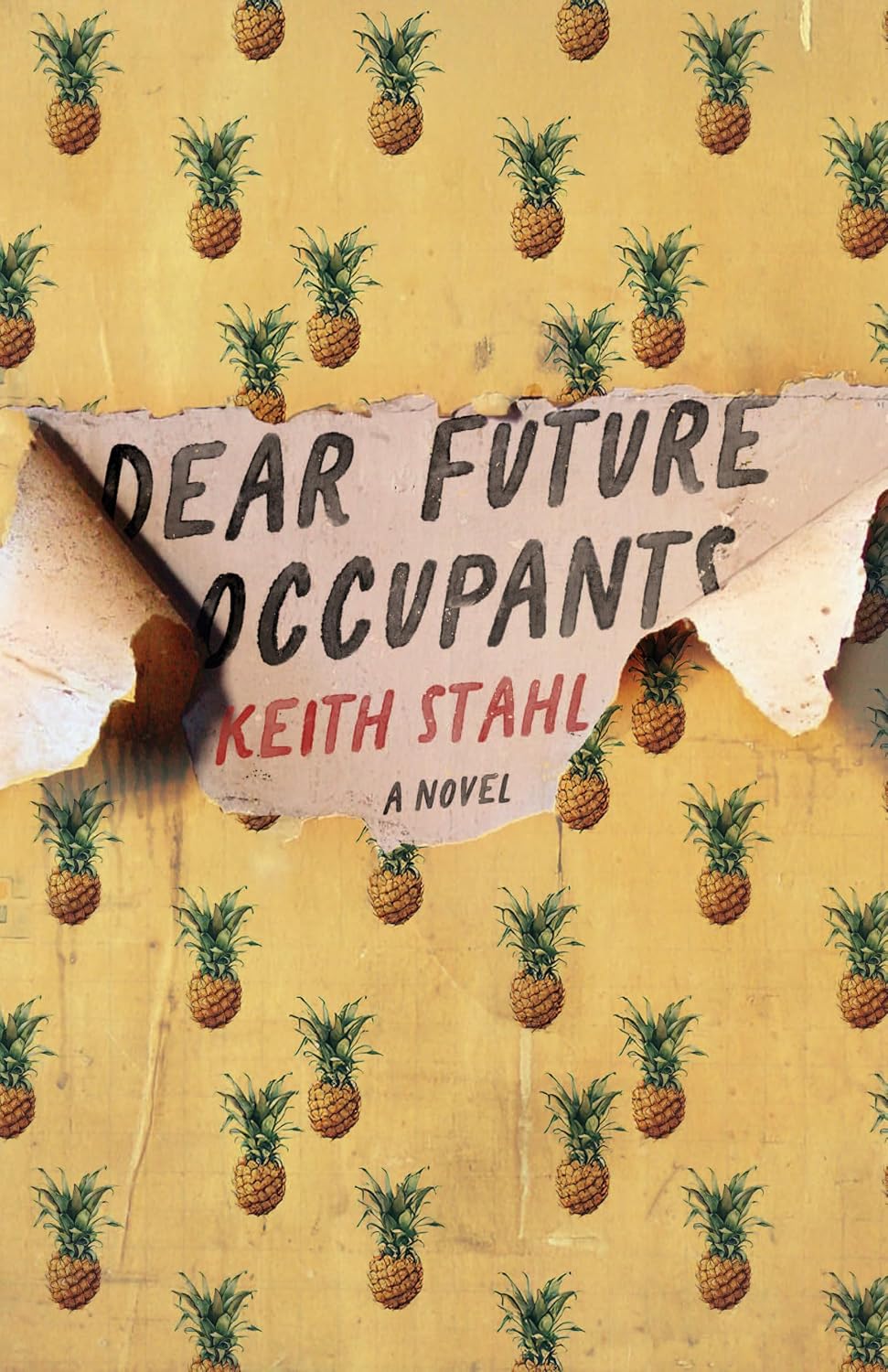
The Sommer family is in trouble. Bud Sommer’s life has no direction. His wife, Rebecca, is chronically anxious to the point of tears. Eldest son Herman has been wearing Rebecca’s underwear, while middle child Victor is navigating the world of stoners and bullies in high school. True, youngest child Wade is a sweet, undemanding musical prodigy, but that only makes the whole bunch seem odder.
Bud has moved them back home to Greenhill, Connecticut, to run a small, unpromising restaurant near the house he grew up in. But that house is falling apart, and there’s apparently no way to make the restaurant a success. Meanwhile, being back in town is haunting him with memories of the life he and Rebecca had planned before getting pregnant and trading art school for food service.
Adjusting to their new circumstances will involve any number of comical adventures: Victor will have to perform spontaneous surgery on his bully’s buckshot-filled butt; Bud will have to decide whether to have an affair with a woman named Cassandra; Herman will challenge every gender stereotype he encounters; and the police will find a centuries-old body in the Sommers’ basement. Fortunately, the family is nothing if not flexible.
Because Keith Stahl’s Dear Future Occupants is set in 1979, the parents have little experience and no language with which to understand nonbinary Herman’s approach to life. They hide from it and worry over it constantly, often in terms that have been recognized as more than a little offensive in this century. But their love for him is clear, and the homophobia here is involuntary and short-lived as Bud and Rebecca stumble toward acknowledging, accepting, and celebrating their son’s unique genius.
Strangely, one thing never discussed is the entire family’s seeming genius. Herman has an innate grasp of political and social philosophy. Often, his rebellions are expressed in terms familiar to any progressive college sophomore today, but they’re precocious for a 1979 dropout. Wade, still in middle school, isn’t merely musically inclined; at one point, he entertains visitors by whipping off a Bortkiewicz piano concerto (I had to look him up) and then plays some Mozart. And excerpts of the novel are taken from 9th-grade Victor’s own unfinished novel. None of this gets explained. The family’s remarkableness is treated as unremarkable.
The story is told from several points of view, with Bud’s primary narration augmented by passages from Victor’s work-in-progress and creative retellings from Herman that, like an offbeat Greek chorus, highlight the absurdity of this family and this town. The various subplots — Bud’s struggles with the restaurant, Victor’s social dilemmas, and, of course, the ancient corpse in the basement — all connect back to Herman’s sexuality, which becomes the focus of the men’s quest for happiness. While Rebecca has her own quest, it mostly involves a search for calm, and she becomes less important as the narrative progresses.
Speaking of the male quest for happiness, it requires a good deal of marijuana. At one point or another, all the Sommer men become pot enthusiasts. There is virtually no concern over Wade’s middle-school high times. Rather, like Herman’s sexuality, weed is a source of joy that’s mostly kept secret. Smoking lightens their moods and, in Bud’s case, awakens creativity. It also relieves any lingering anxiety over Herman’s fashion choices. Smoking pot quickly leads to selling pot; with some creative (and incongruously modern) marketing, the new revenue stream may save the restaurant.
Some of the pleasure of Dear Future Occupants comes from watching the characters’ hijinks and the shame they feel over their lack of shame. But a good deal of the fun also lies in the story’s satirical nostalgia. Spending time amid the narrow-minded pains of a previous generation — when being gay was a radical act of freedom and getting high was an illegal form of rebellion — offers a respite from the narrow-minded pains of our own generation.
And the resilience of the Sommer family is a tribute to a certain spirit of acceptance that is welcome at any time. Their ingenious solutions, plans, and workarounds are never entirely plausible, but their gumption and love for each other carry the day. In Stahl’s hands, they show us where we’ve been and give us a comic glimpse of how we got to where we are.
John P. Loonam has a Ph.D. in American literature from the City University of New York and taught English in New York City public schools for over 35 years. He has published fiction in various journals and anthologies, and his short plays have been featured by the Mottola Theater Project several times. He is married and the father of two sons; the four have lived in Brooklyn since before it was cool. His first novel, Music the World Makes, will be published by Frayed Edge Press next week, while a collection of his short stories, The Price of Their Toys, came out in February.