Eleanor: A 200-Mile Walk in Search of England’s Lost Queen
- By Alice Loxton
- Macmillan
- 336 pp.
- Reviewed by Anne Cassidy
- February 11, 2026
The past is made tangible in this fascinating history.
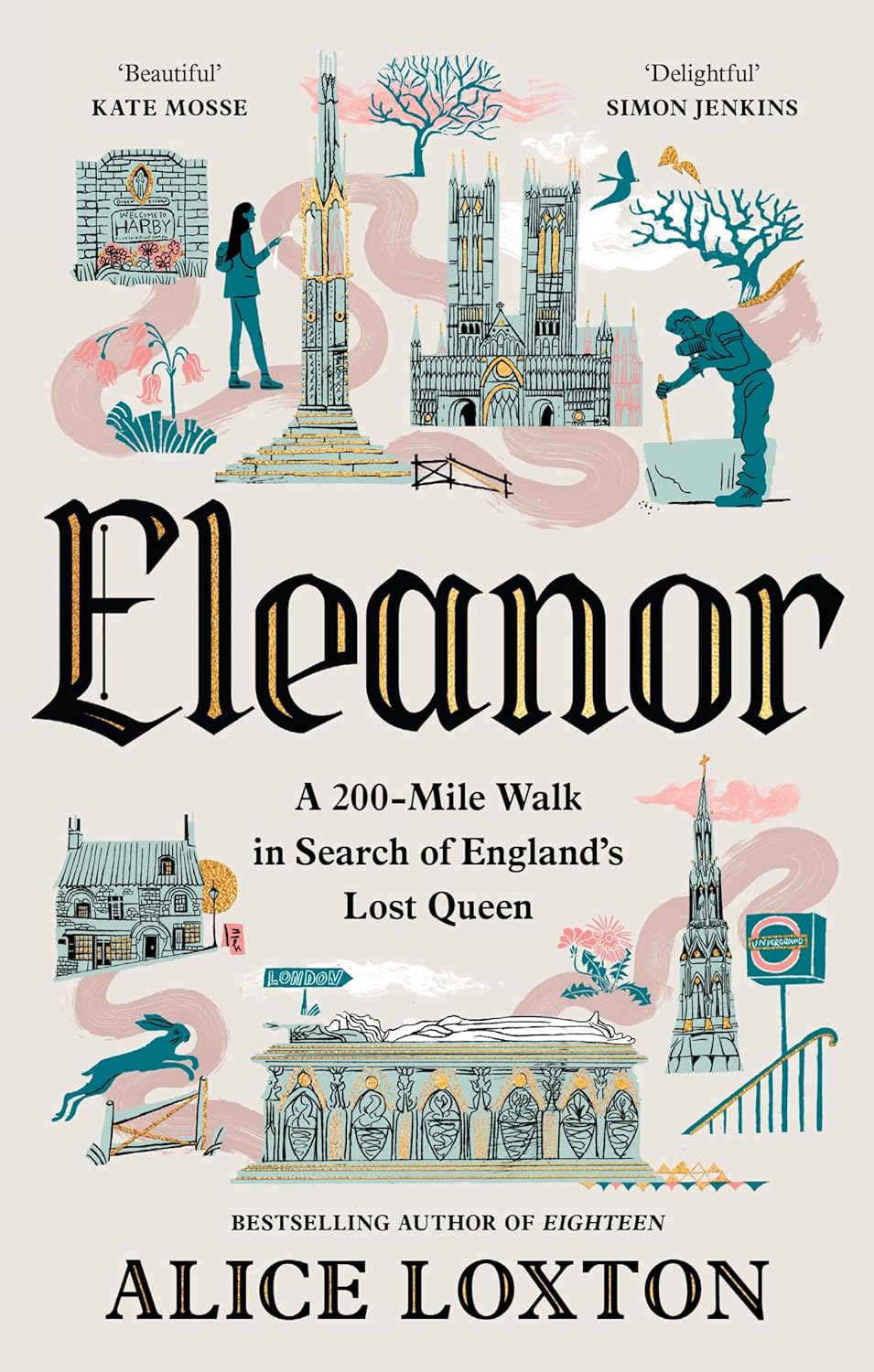
As far as I know, there is no such thing as the Historian Olympics, but if there were, author Alice Loxton would win a gold medal. In December 2024, she trekked 200 miles through rain, frost, and mud to replicate the funeral procession of Queen Eleanor of Castille, who died in 1290. Loxton did it to bring life to this long-ago English monarch and to tell the story of her reign and times.
The queen’s husband, King Edward I, was so bereft at his wife’s passing that he planned an elaborate cortege from Harby, near Lincoln, where Eleanor died, to Westminster in London, where she was interred. Loxton decided to retrace this journey on the exact same days of the year it took place — which, unfortunately, were in November and December. But the author is of sturdy stock: She came up with the idea after standing in a 10-hour line to pay her respects to the late Queen Elizabeth II.
It’s no spoiler to reveal that Loxton survived to tell Eleanor’s tale, despite the fact that she hiked most of the way in new boots. The book she wrote about her journey, Eleanor: A 200-Mile Walk in Search of England’s Lost Queen, is as energetic as the expedition itself. It mixes history, travelogue, and trail memoir into a whole that is greater than the sum of its parts.
Loxton is an affable travel companion. Passionate about history and preservation, she urges readers to look beyond the modern world for vestiges of the past — a hidden plaque on the wall of a guildhall or bumps in the ground that reveal the manor house where Eleanor died.
Queen Eleanor was a woman of energy and influence, a devoted wife and loving mother. Despite being married at 12 and pregnant 16 times, she traveled, gardened, acquired property, joined a Crusade with her husband, and was the first person in England to be recorded using a fork.
At each of the dozen places where Eleanor’s cortege stopped for the evening, a cross was later erected. These “Eleanor Crosses” were marvels of Gothic architecture and became landmarks in their own right. Although only three survive, the places where they stood — London’s Charing Cross, for example — are still marked by their presence.
As Loxton hikes from Lincoln to Grantham, Stamford, and Geddington, where she encounters the first preserved cross, we fall into step with her. We travel at the pace not only of a funeral procession but of medieval life itself, the rhythm of footfall.
Though Loxton admits the trip tested the limits of her “ambulatory potential,” she was invigorated by the journey. “Small surprising details — a tombstone, an information sign hidden in the reeds, a clank of a gate — began to jump out” at her. “It was only by walking, by travelling at the natural human pace, that these unexpected revelations arrived.”
Eleanor is Loxton’s third history book. Her second, Eighteen: A History of Britain in 18 Young Lives, was Blackwell’s Book of the Year in Britain. There seems to be a generational shift taking place here, a new way of shedding light on the past.
Loxton pulls out all the stops to make history come alive, including by offering vivid descriptions, imaginary interviews, and lots of photos. (Not for nothing does she have over 3 million social-media followers.)
But the history she presents is also meticulously researched and thoroughly inhabited. She takes a stone-carving class to enhance her appreciation of medieval masonry and checks in with a funeral director to understand the embalming techniques that made it possible for Eleanor’s body to withstand such a long journey.
It’s all part of Loxton’s plan to make history accessible. “This is no dusty biography of Queen Eleanor,” she states early in the book. And indeed, it is not. This is a full-throated portrait of a medieval queen and the king who, in honoring her, forever altered the British landscape.
Anne Cassidy has been published in many national magazines and newspapers, including the Washington Post, the New York Times, and the Christian Science Monitor. She blogs daily at “A Walker in the Suburbs.”