Emerald City Blues: A Novel
- By H. Lee Barnes
- University of Nevada Press
- 388 pp.
- Reviewed by Beth Kanell
- November 6, 2025
A resourceful young woman seeks a new life in WWII-era California.
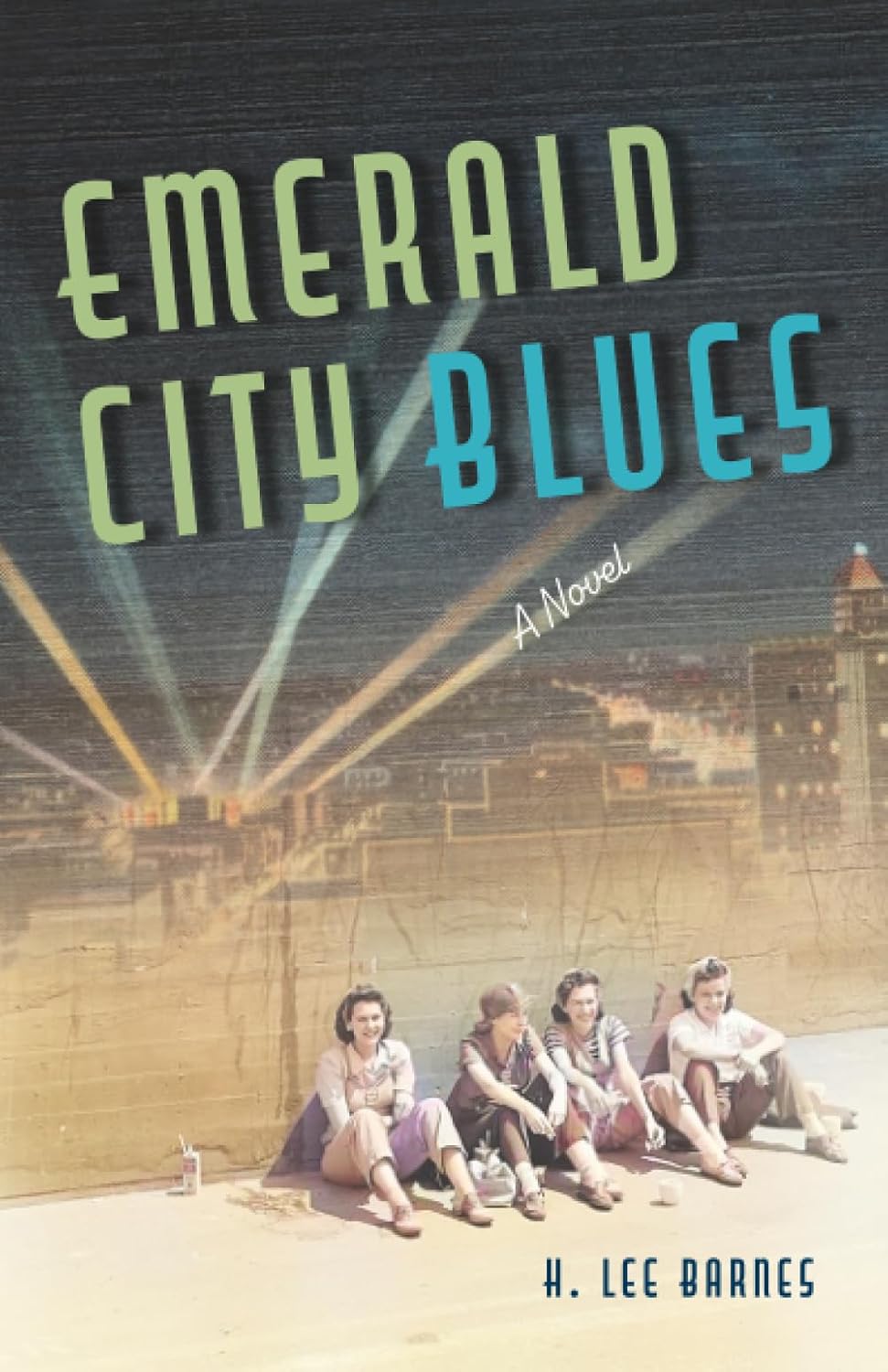
Sure, there are jobs for the women replacing all the men off fighting World War II, but that doesn’t mean they pay much. Eve Halvers, who’s grown up in the farm region of Washington state called the Palouse, needs work with real income. Even more, she wants to leave behind her bitter mother, the memory of her sister’s death from a botched abortion, and the vacancy left by her enlisted brothers.
But Eve isn’t just leaving: She’s heading to Los Angeles, seeking the kind of experience her “Wizard of Oz” film hero, Dorothy, found when “casting her gaze on the Emerald City for the first time.” Thinks Eve:
“I wanted to grasp something as magical as Oz and embrace its hopeful message. I wanted rainbows and all that lay on the far side of them.”
Without friends or family to support her, Eve reaches L.A. and almost immediately finds a job because she can sew. Can’t everyone? Not in the big city, it seems. With a kind boss, Selmo, and her own determination to justify his faith in her, Eve adapts to her place on an assembly line making boots for Marines.
The work is hot, hard, and far from sweet, and if this is what it means to be over the rainbow, the film oversold things. Still, Eve quickly makes friends among the other women and settles into a wartime support role that includes — as all the others are doing — dropping a cheerful message into each pair of boots, along with dreams of another kind of “over the rainbow”: a secure, married life with one of the unseen men who’ll survive the war.
Author H. Lee Barnes carved two significant paths in his 10 earlier books: one based on his Special Forces experience in Vietnam, and the other rooted in his work in the American West as a deputy sheriff, private investigator, construction worker, and, finally, educator. So he’s deft at knotting together the issues of war, labor, and especially class in the languidly paced Emerald City Blues.
Women’s vulnerability — in an era when even rape didn’t justify the safe or legal termination of a pregnancy — looms large in Eve’s world, as does racism. When her tentative friendship with a Black man working at the bootery deepens around his music, she must confront more personal risk. Oz, indeed.
Moreover, the amiable Selmo has more in mind for her than just factory work, but her naivete keeps her from grasping what he and his barren wife want. When she figures it out, she’s faced with a dilemma: If she says no, will she lose her job and the fragile security she’s pieced together? And how many kinds of “yes” can she dare say to the Black community, whose music has entranced her, but where danger lurks? She also discovers her allure at the dances held for soldiers on leave — and the expectations she refuses to fulfill:
“I was thinking, if this was the other side of the rainbow, I wanted the next train to Kansas.”
Despite its moments of violence and suspense, Emerald City Blues is crafted as a literary coming-of-age tale, almost a female counterpart to Mark Twain’s The Adventures of Huckleberry Finn. It rewards readers who can adapt to the slower pace of the time it portrays. Eve’s repeated experience of generosity from the locals mirrors her own willingness to support friends and tackle hard physical labor. In that sense, this is a very American book with the potential to become a classic.
Only a few things fall flat, including Barnes’ effort to engender forgiveness for Eve’s mother, and the path he sets Eve on following the war. But these take up so little of the story that they can’t quench the satisfaction of walking with Eve through her real-life Emerald City.
Beth Kanell lives in northeastern Vermont among rivers, rocks, and a lot of writers. Her award-winning feature articles, short stories, and novels include The Bitter and the Sweet (2024), This Ardent Flame, and The Long Shadow (SPUR Award). Her poems seek comfortable seats in small, well-lit places. Find her memoirs on Medium and her reviews in the Independent, as well as at Historical Novels Review and https://kingdombks.blogspot.com.