Everything That Is Beautiful: A Novel
- By Louise Nealon
- Harper
- 304 pp.
- Reviewed by Anne Eliot Feldman
- September 23, 2026
Two Irish families confront a secret that threatens their longtime bond.
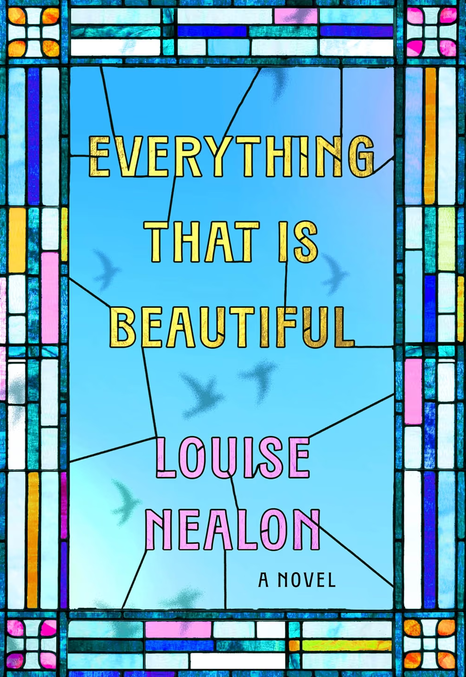
Everything That Is Beautiful is the second novel from award-winning Irish writer Louise Nealon and it is unforgettable. Set in an unnamed Irish town, the story is told from the points of view of three women from two families who’ve shared generations of memories, marriages, and heartbreaks. Life in this small, rural community revolves around the ancient Irish sport of hurling — a ball-and-stick game played on grass, blending elements of lacrosse, field hockey, and baseball. While the Catholic Church is relied upon to provide the town’s rituals and to be its conscience, it is hurling that informs the passion of its denizens and determines who and what matters most in life, and why.
The story opens with Niamh Ryan, who grew up next door to the Foleys and considers them more like family than her own. As the only child of divorced, alcoholic parents, Niamh spent every day at their house and marvels that they “all hugged hello and goodbye like it was normal for love to be easy.” She became a young star on the local boys’ hurling team, playing with her best friend, Peter Foley, and also with his sister Kate on the girls’ team. Niamh sees their father, Liam — whom the president of Ireland said was “the finest hurling player that he had ever seen, and an even better man” — as her devoted mentor and his wife, Helen, as the mother she wishes she’d had.
An only child herself, Helen grew up close friends with Niamh’s mother in the same town where they all still live. A schoolteacher before marriage, Helen became a stay-at-home mom to her five children and has always been “desperate to be God’s favorite.”
Kate, the closest Foley girl to Niamh, has lived across the border in Belfast since adulthood and has not had:
“a proper conversation with her mother in over three years…When Helen spoke to her, the interaction felt both heightened and meaningless — like they were extras on a film set having a pretend conversation for the benefit of a scene.”
After decades of relative harmony between the families, Niamh, Helen, and Kate have grappled over the last few years with an unresolved secret that has created awkward emotional silence between the Foleys and the Ryans. Now, a wedding looms for one of the Foley siblings, and the women must be in each other’s presence again. As they prepare for the big day, each reflects on the newly fractured state of the relationships that once meant everything.
Thrust back into the heart of the Foley family, Niamh struggles to find her way:
“Her own opinions had the constitution of Victorian women on their sick beds. A strong breeze could blow them over the rare time she took them out for a bit of exercise…Kate’s opinions had meat on their bones, were fed on facts and figures.”
In addition, as Peter returns from years in Australia, Niamh must face the fact that many of the Foleys — including Peter himself — expected that she and he would become a couple. And Kate faces issues stemming from a childhood eating disorder and a complicated marriage that requires learning to speak her truth. Meanwhile, Helen opts out of the filial drama altogether, preferring weekends away, during which she often opens up to strangers.
In the end, Everything That Is Beautiful is funny, compassionate, and heart-wrenchingly authentic. In Liam’s words, “Nothing and nobody can exist on the straight and narrow…Try to live a straightforward life and watch as it splinters into smithereens.” A lot is not beautiful as the Foleys and Ryans attempt to repair broken ties and find meaningful connections with each other. Joy will be tinged with anger, regret, and sorrow. But the families’ desire to grab and acknowledge “every beautiful thing” that comes along with messy lives gives readers hope that perhaps we can all eventually find peace, self-acceptance, and a greater capacity for love.
With a B.A. from Colgate University, an M.A. from Georgetown University, both in Russian area studies, and a UCLA certificate in fiction writing, Anne Eliot Feldman has worked in the Library of Congress and the defense industry. She’s currently at work on a writing project of her own.