Family & Other Calamities: A Novel
- By Leslie Gray Streeter
- Lake Union Publishing
- 255 pp.
- Reviewed by Heidi Mastrogiovanni
- June 13, 2025
A wry, widowed journalist returns home to right some wrongs.
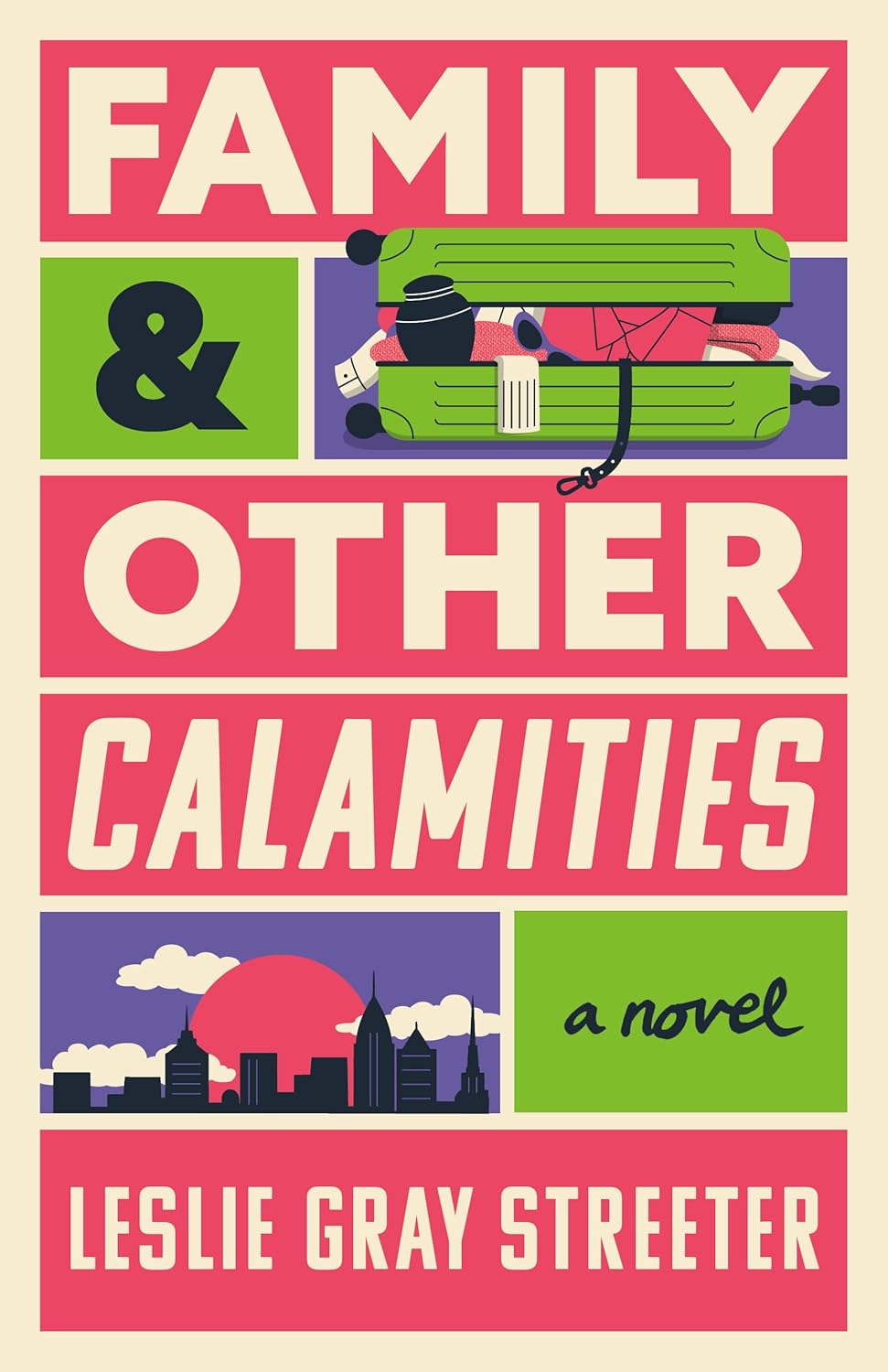
In Leslie Gray Streeter’s captivating Family & Other Calamities, the travails of entertainment journalist Dawn Roberts invite comparison to the epic plight of Edmond Dantès.
Well, move over, Count of Monte Cristo. There’s betrayal, and then there’s betrayal. Granted, your enemies stole everything from you and trapped you on a prison island for years, but did your sister ever forget to tell you she’s working on a movie with the man who stole your story and won a Pulitzer for it? And that the villain of the film — based on your stolen scoop — is a character named Fawn (aka, you)?
Because that’s what’s happening to Dawn, a widow living in Los Angeles. Once upon a time, in her native Baltimore, she was half of the team that was “the potential Black Woodward and Bernstein.” Alongside her in her quest to one day slay the mighty dragons of political corruption was Joe Perkins, her mentor/colleague during her internship at the Baltimore Sentinel. Dawn was a graduate journalism student at the University of Maryland, where he was a year ahead of her.
In the novel’s first-person narration, Dawn refers to Joe, her nemesis of ages ago (and forevermore), as an “evil Taye Diggs-looking Muppet.” It’s this kind of succinctly detailed description that makes Streeter’s multitude of characters wonderfully vivid. Dawn’s mom’s ringtone is the “Law & Order” theme. Dawn’s late husband, Dale, was Jewish; she calls herself “the Christian Black goy lady” he married. And the diva she’s interviewing for work — and who comes to serve as her R&B Fairy Godmother — is Dawn’s “own Patti LaBelle Yoda.”
Like a case of the shingles, Joe (the “well-preserved bane” of her existence) keeps showing up at the worst possible times. He’s even on the same cross-country flight with Dawn, who’s bringing half of Dale’s ashes back to Maryland so her brother-in-law, never one of her fans, can have a memorial service for his deceased sibling. Between her own family and her in-laws, this isn’t likely to be an entirely calm or loving reunion.
Years earlier, you see, Dawn fled Baltimore with Dale under cover of night, just as Joe’s pilfered exposé — on people at city hall plotting to enrich their coffers by destroying public education — was to be published. She left behind confusion and anger, including from her sister, Tonya, the scandal’s whistleblower, who felt abandoned when Dawn took off.
Chapters toggle between what happened then and what’s happening now, but the past doesn’t unfold via traditional flashbacks. Instead, Dawn becomes submerged in memories or in stories she’s telling to others. It may sound confusing, but Streeter makes these switches work, conveying urgency across timespans.
There’s something beguiling to be found on almost every page. The author elegantly choreographs extreme feelings around significant set pieces (e.g., a big press conference, an intimate burial, and a milestone birthday party). Unexpected allies appear at surprising times and from the least likely places. And Dawn, who utters many smooth, dry, and clever lines, offers moving reflections on what it means to be widowed. She misses her best friend, “who was so much fun.” But Dale still speaks to her; indeed, when he’s in her head, he is “the better part of my conscience.”
Streeter doesn’t let her protagonist off the hook, though. Dawn isn’t a saint, and she gains hard-earned insight into the mistakes she’s made. In returning home after having been away so long, she finally examines her bad and good behavior over the years. “I didn’t think I had a choice,” she admits while recalling some of her actions, “but we all do.” It’s rewarding and relatable to witness her braving the uncomfortable process of honest self-discovery.
A few revisions might’ve made Family & Other Calamities even more satisfying. One or two conversations border on preachy, and the novel’s ending is a little abrupt and convenient. And Dawn’s narration sometimes leans too heavily on wink-wink exclamation points. (Yet she remains fabulous despite her fondness for energetic punctuation!) These are minor quibbles, however, and they’re amply mitigated by the tale’s heartening epilogue. Nothing can be perfect, but some things, like this novel, are perfectly wonderful.
Heidi Mastrogiovanni is the author of the comedic novel Lala Pettibone’s Act Two (finalist for the Foreword Reviews Book of the Year Award) and the sequel, Lala Pettibone: Standing Room Only (Chicago Review Press). Heidi is part of the triumvirate behind “The Classics Slacker Reads...” series. A dedicated animal-welfare advocate, she lives in Los Angeles with her musician husband and their rescued senior dogs.
_1.png)