For the Sun After Long Nights: The Story of Iran’s Women-Led Uprising
- By Fatemeh Jamalpour and Nilo Tabrizy
- Pantheon
- 336 pp.
- Reviewed by Rose Rankin
- October 2, 2025
An astonishing tale of pushing back against oppression.
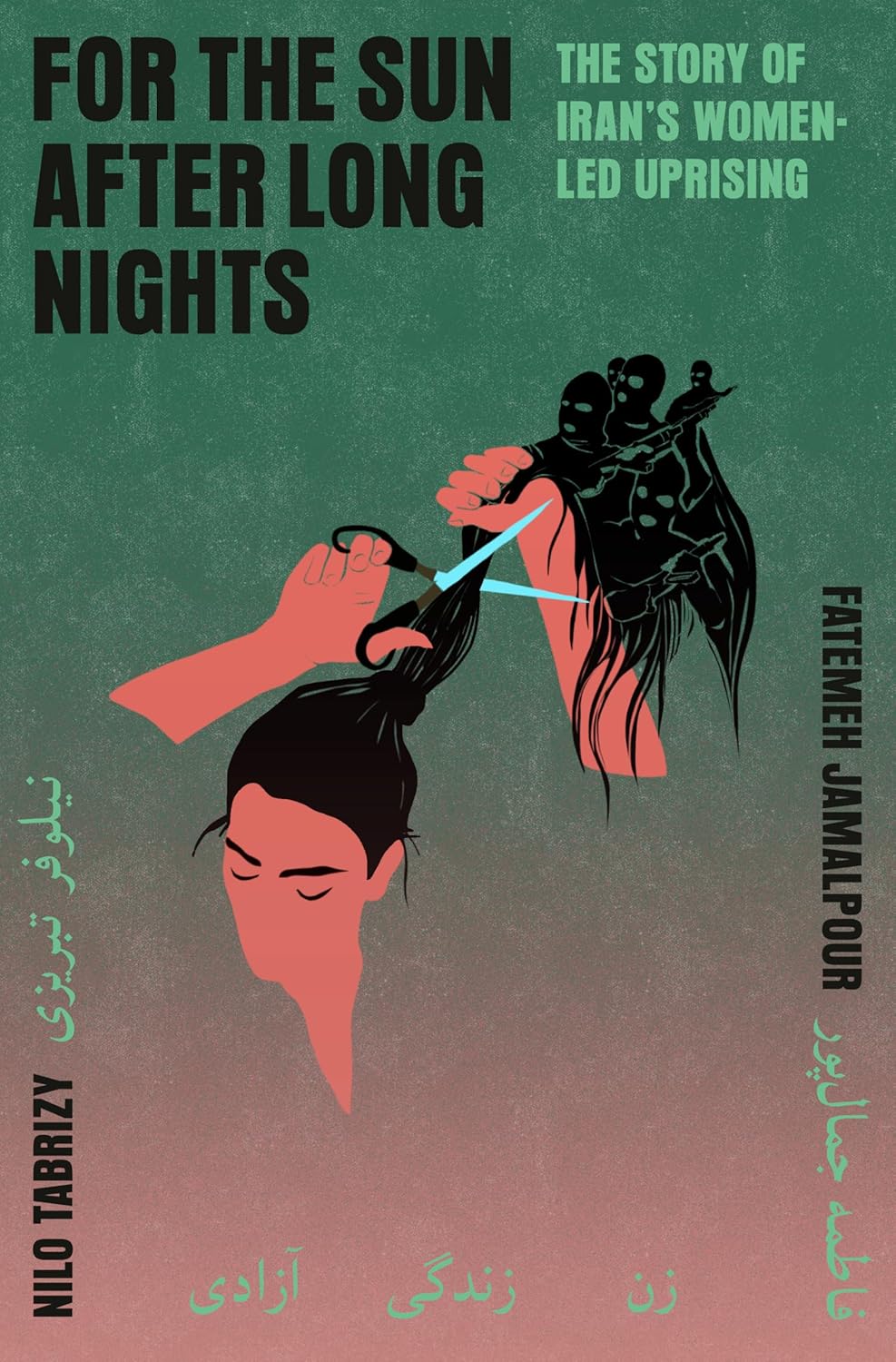
In the chaotic fervor of the 24-hour news cycle, with its consistent IV drip of atrocities worldwide and growing authoritarianism at home, it’s easy to forget about any one violent crackdown by a despotic regime. But despotism isn’t a zero-sum game — any state-sponsored repression only breeds more in a worsening cycle, and it’s this dark merry-go-round that Fatemeh Jamalpour and Nilo Tabrizy bravely bring back to our attention with their account of the Woman, Life, Freedom movement in Iran in 2022.
In September of that year, a young woman named Mahsa Jîna Amini was beaten to death by Iran’s morality police for not “appropriately” wearing her hijab, or head covering. The tragedy sparked outrage and protests in Tehran that soon spread throughout the country as an expression of fury at discrimination not only against women but also minorities, dissidents, and artists — anyone who dares challenge the brittle theocracy controlling the nation.
For the Sun After Long Nights is an eyewitness account of these protests and their brutal repression, but it’s presented via an outsider/insider view. Tabrizy is an Iranian whose family immigrated to Canada during her childhood, and she covers her birth country for news outlets such as the Washington Post. She knows she cannot return because reporting on the regime equals imprisonment. Jamalpour is a journalist living in Iran, an incredibly dangerous profession for anyone but especially for a woman, when simply wearing your clothes a certain way can get you killed.
The chapters alternate between the authors as they share their experiences, reporting the events of 2022 from afar and up close. Tabrizy waits fearfully for messages from Jamalpour and other contacts on the ground in Iran. Jamalpour runs from tear gas and rubber bullets during street protests in Tehran. We learn how Tabrizy and her colleagues use the same advanced-surveillance tools as the regime to corroborate photos and prove the government is lying — essentially turning the authoritarians’ weapons against them. Meanwhile, Jamalpour is hauled in for interrogations and threatened with jail time.
This book isn’t just bearing witness; it’s a lamentation. Steeped in the poetic traditions that have been part of Iranian culture for millennia, the authors mourn the country they once knew, the talent wasted, the lives destroyed, the communities torn apart.
Yet it’s also a refutation of the terror the regime imposes and a cry of defiance in the face of oppression. The authors share stories of famous women and unknown citizens alike who’ve stood up to the rulers or even just managed to persist despite terrible restrictions. These heroes are primarily women but also members of ethnic minorities like Kurds and Balochis who’ve been discriminated against for decades.
After narrating the unfolding of protests in the first section, the authors look back in time to Iran’s recent history to explain how imperialism, revolts, and coups through the 19th and 20th centuries influenced the conditions that led to the 1979 Iranian Revolution. Crucially, they describe how women have always played vital roles in uprisings by speaking truth to power.
They also explain what too few Americans know: that the U.S. led the 1953 coup that overthrew Mohammad Mossadegh, Iran’s democratically elected prime minister, and reinstalled the unelected, unpopular shah. This was the final act that set the revolution in motion, but the triumph of religious leaders was never assured or even desired. The ayatollahs purged and destroyed the leftists, nationalists, and others who’d also resisted the shah’s regime.
Jamalpour and Tabrizy then explain how actual families, including their own, have navigated increasing oppression and the reality of theocracy. Both the heartbreaking choice to flee and the perilous decision to remain are brought into stark relief. The authors reveal the warped priorities of the government, such as disallowing funerals and desecrating graves to prevent protests, or, as Jamalpour personally experienced, employing psychoanalysts as interrogators to wheedle information from everyday people — incredibly elaborate schemes and wastes of resources when all people want is basic freedom. These stories knit together loosely, bringing the reader back to the authors’ lives in the present day.
For the Sun After Long Nights is difficult to stomach at times. The scale of the brutality and the focus on actual individuals’ destroyed lives border on overwhelming. But this is exactly why we should not look away: because Jamalpour, Tabrizy, and millions of other Iranians cannot look away. The carnage since 2022 is mounting; the repression in Iran is ongoing.
But so is the desire for change, as the authors clearly show. This book proves the resilience and strength of those fighting back every day in ways large and small. Their ability to continue demanding their rights in the face of staggering cruelty should be an inspiration to people everywhere, including — or maybe especially — right here in America.
Rose Rankin is a freelance writer from Chicago. She focuses on history, science, and gender issues, in particular women’s literary history.