Heap Earth Upon It: A Novel
- By Chloe Michelle Howarth
- Melville House
- 288 pp.
- Reviewed by Madeleine de Visé
- February 12, 2026
An unnamed “you” haunts this dispiriting tale of yearning and loss.
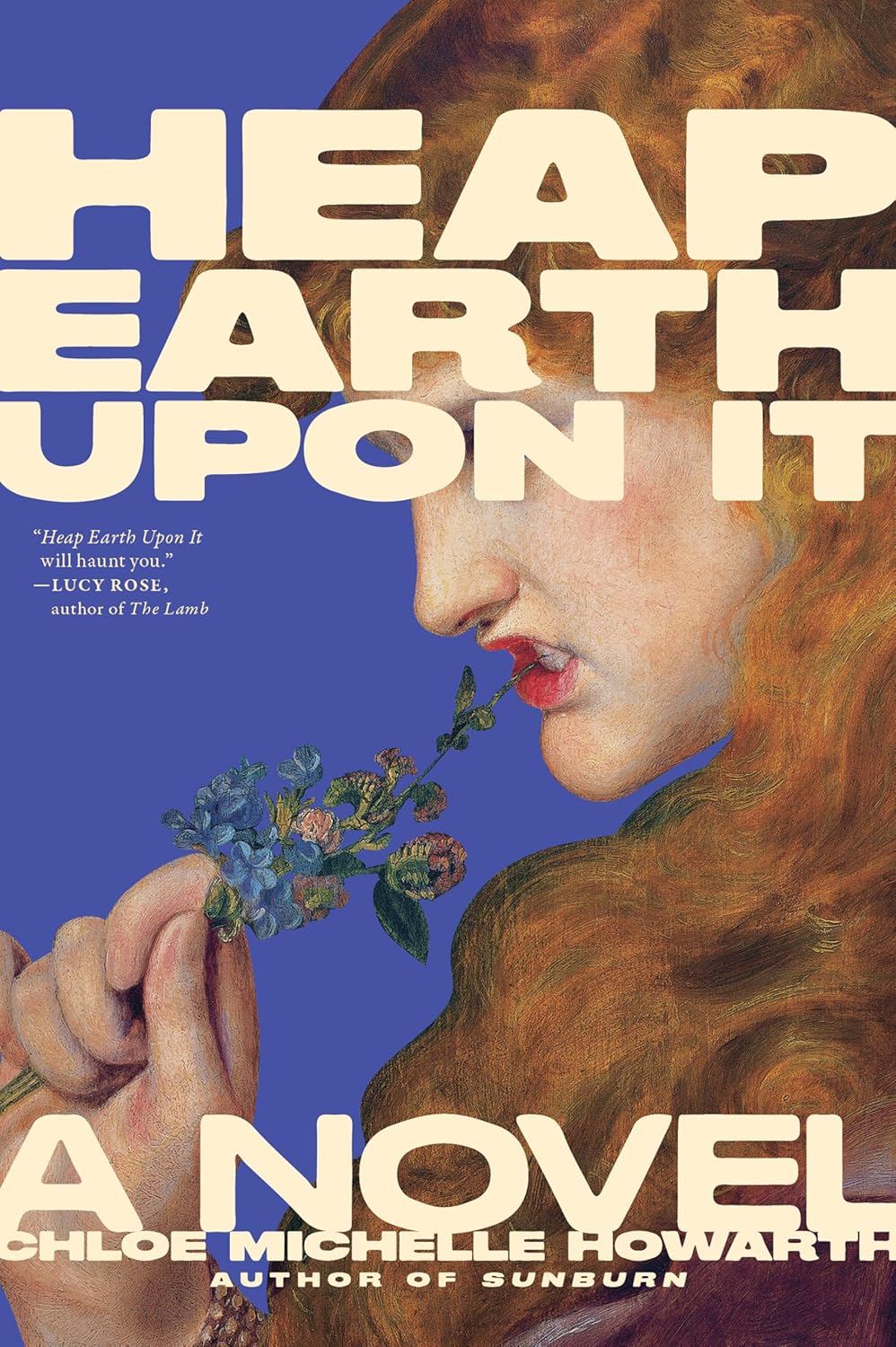
I almost wish I hadn’t read Chloe Michelle Howarth’s debut novel, Sunburn. I liked it so much that I leapt at the chance to review her second, Heap Earth Upon It, hoping for more of the same. Unfortunately, these books are as different as the seasons. Where Sunburn is an overexposed photograph of an endless summer afternoon, Heap Earth Upon It evokes the cruelest days of early spring. It’s all melting snow and naked earth — the land at its ugliest.
Told in alternating perspectives, the story follows the orphaned O’Leary siblings as they acclimate to a small town in 1960s Ireland. Of the four siblings, three are in their 20s — Tom, Jack, and Anna — while their baby sister, Peggy, is some 10 years younger. Not one of the siblings is consistently likable. Tom is the cunning puppet-master, working tirelessly to ingratiate himself and the others to their new neighbors. Anna is bitter, morose, and prone to obsession. And Jack is the family man, the only sibling who cares to look after the youngest. He is also, by my interpretation, the only one whose affections are either heterosexual or well-adjusted. (In other words, Tom and Anna are the real stars here.)
The O’Learys have chosen Ballycrea seemingly at random, traveling away from their old home rather than toward a new one. As readers, we understand they are fleeing a tragic event that haunts their waking lives. Someone has died — a mysterious “you” to whom each chapter is addressed, elegantly placing the novel in the second person. The mystery is such a slow burn that I didn’t realize it was unfolding until halfway through; until that point, I’d assumed this was a gothic love story. Frankly, I had to discover for myself how flawed these characters are in order to grasp that their relationships are far from romantic.
Through Tom’s schmoozing, the siblings meet Bill and Betty Nevan, a childless couple with influence in Ballycrea. While Bill takes Tom under his wing, Betty is instantly smitten with little Peggy. Often accompanying Peggy is Anna, who mopes and pries and becomes jealously obsessed with Betty. She vies for the woman’s attention, acting like a lonely young girl but seeming to Betty like a strange adult. Betty only tolerates Anna so she can see Peggy.
It isn’t the first time Anna has loved an unavailable woman. She often compares Betty to “you,” the ghost of somebody apparently beloved by all who knew her. The siblings speak of “you” with such reverence and longing that they sound almost religious. In fact, they increasingly turn away from Catholic prayer and worship and toward idols closer at hand. As we get to know the family, it’s clear they had misgivings about their faith long before arriving in Ballycrea. Citing his late mother’s pregnancy out of wedlock, Jack reflects:
“Existing under the immense weight of that shame, I later realised, was existing under the immense weight of the church. ’Twas around that time I fell out of step with god and his son.”
I found it difficult to absorb the religious elements of the text, having no point of reference as I was raised without religion. I imagine this crucial theme would resonate more if I knew the first thing about Catholicism. As it stands, I can only interpret Tom’s and Anna’s worship of the Nevans as misplaced desire for parental figures, a desire that grows teeth. All of the characters are yearning for some kind of attachment: Jack, for a partner; Tom, for a father; Anna, for a mother; and Bill and Betty, for a child. There is horror in the lengths they go to to fulfill these desires and tragedy in the ways they abandon each other in the process.
At the novel’s poignant conclusion, we learn who is deemed worthy of life and who is not; whose bones will grow trees bearing fruit for the next generation. Though the whole narrative is addressed to “you,” this unnamed specter never speaks to us directly; there is a great silence on the other side. In that silence, there is only poetry and conjecture and deep loneliness. Heap Earth Upon It asks a question: Lonely children get adopted, and lonely men get jobs, but what happens to lonely women? And how might they be heard from beyond the grave?
Madeleine de Visé is a bookseller in Baltimore, MD.

.png)