Hidden Heroes: Anthology of North Korean Fiction
- Edited and translated by Immanuel Kim and Benoit Berthelier
- First Hill Books
- 202 pp.
- Reviewed by William Schwartz
- June 30, 2025
These nine tales offer a limited glimpse into an inscrutable land.
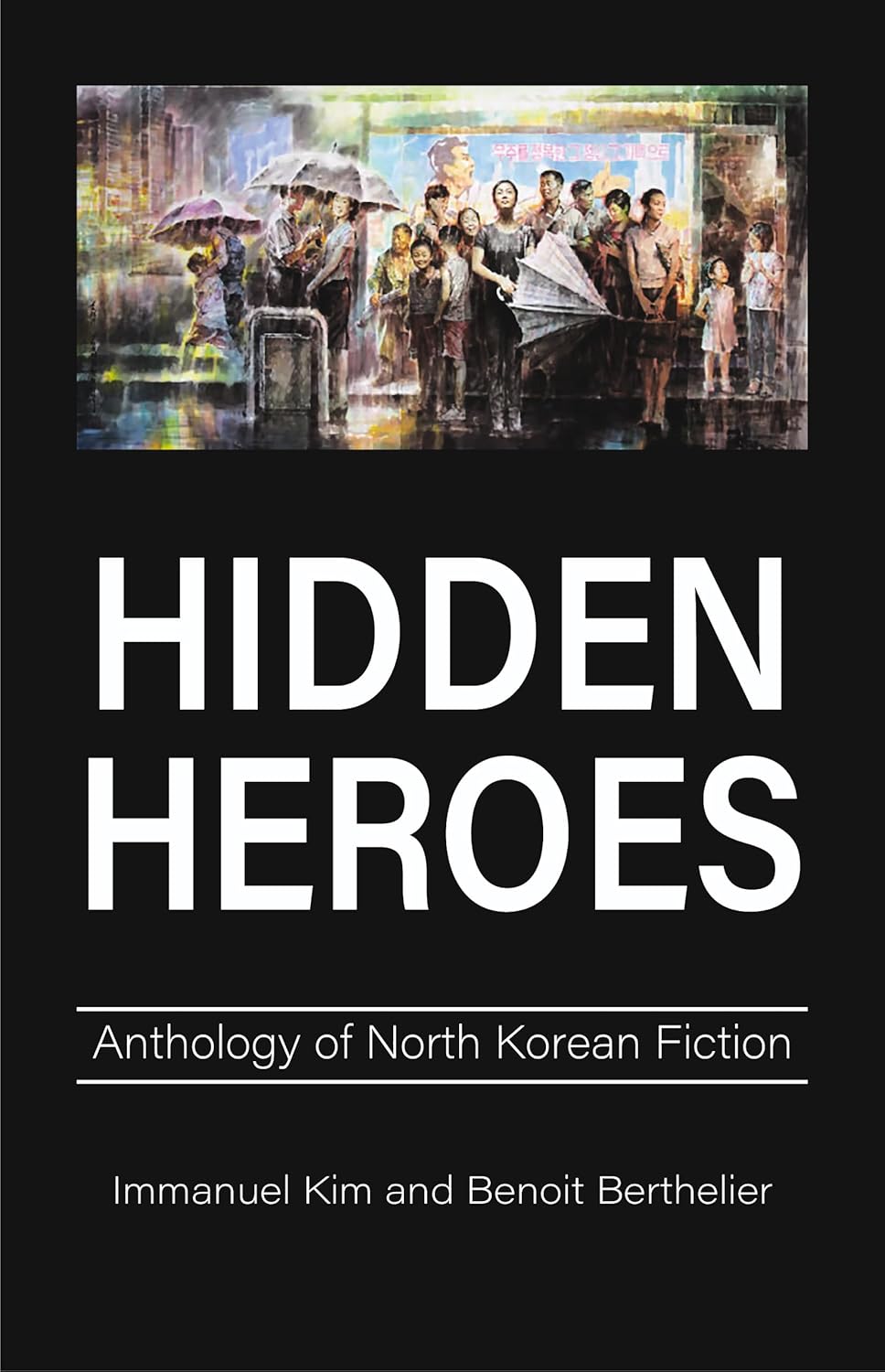
Stories about North Korea exist in a bit of an awkward place. In the English language, at least, nearly any written claim made about the country, however outlandish, is assumed to be true. Immanuel Kim and Benoit Berthelier fully recognize in their introduction to Hidden Heroes that the bizarre nature of the North Korea narrative, more than the country itself, was the main obstacle in selecting short stories for this anthology since any image used in an individual story could be recast as a broad stereotype. Fortunately, for readers, they didn’t let this stop them.
What is a hidden hero? In socialist realism, it’s a normal, everyday figure choosing to do the right thing in normal, everyday life — even when it might be easier not to. Who are the heroes of these nine stories? Well, that’s a bit ambiguous. While one may expect a single hero per story, character development in this sort of North Korean genre fiction goes beyond that of just the protagonist.
In the first story, by far the longest in the collection, a suffering single mother with a pushy, estranged husband seems to be our hero. Yet, as the tale drags on, he becomes more complex under her quiet analysis. The initial question — why did I mess up by marrying him? — gradually morphs into a more ambivalent one about whether he’s capable of genuine change.
The concept of recognizing wrongdoing and pledging reform is a recurring theme, and it’s easy to interpret as mere moralizing, given the infrequent references to the North Korean state being an aspirational one. Such a sentiment, when translated literally, is why North Korea typically figures as a propaganda state warranting only mockery. But in these stories, lined up together like this, the tone is more optimistic than jingoistic.
One offering, in particular, about a Zainichi (an ethnic Korean living in Japan) unable to escape discrimination is especially noteworthy in this regard because its core idea of a racist Japan is hardly a North Korean invention. Min Jin Lee’s English-language Pachinko, for instance, operates on a similar premise. Nobody in that bestselling American novel is so gauche as to say outright that the Zainichi are so doomed to suffer from racism that they’d be better off moving somewhere else. Rather, it’s implied, with the reasoning behind one character leaving to be educated in the U.S. never explicitly discussed but implicitly regarded as the ticket to success.
Hidden Heroes isn’t about success, though. At least, not the personal kind. It’s about service in the name of the greater good. Whether that greater good is achieved by meeting production quotas or by something more intangible like playing the accordion for a group of rowdy workers is beside the point. The stories make the argument that all of us are in this together. What’s good for one is good for all. It is, fundamentally, a different approach to empathy than one typically finds in Western stories.
Still, the translators caution against reading too much into North Korean culture at large through this book, and for good reason. These stories span multiple decades, none all that recent. The main thing they have in common is that they encourage the reader to do better. To be better. In that regard, they’re closer to Chicken Soup for the Soul than to literary fiction. And I would’ve preferred for Kim and Berthelier to more clearly separate their analyses from the stories themselves — and to have been more careful about revealing spoilers. Nonetheless, the translators do their best to contextualize the tales, and readers would do well to explore them.
William Schwartz is a freelance writer living in Southern Illinois. He has reviewed wide varieties of media, including South Korean dramas, upscale graphic novels, vintage videogame media, and much more.