I Was Alive Here Once: Ghost Stories
- Edited by Sarah Coolidge
- Two Lines Press
- 216 pp.
- Reviewed by Mariko Hewer
- March 30, 2026
Eerie tales from around the globe showcase the diverse nature of the otherworldly.
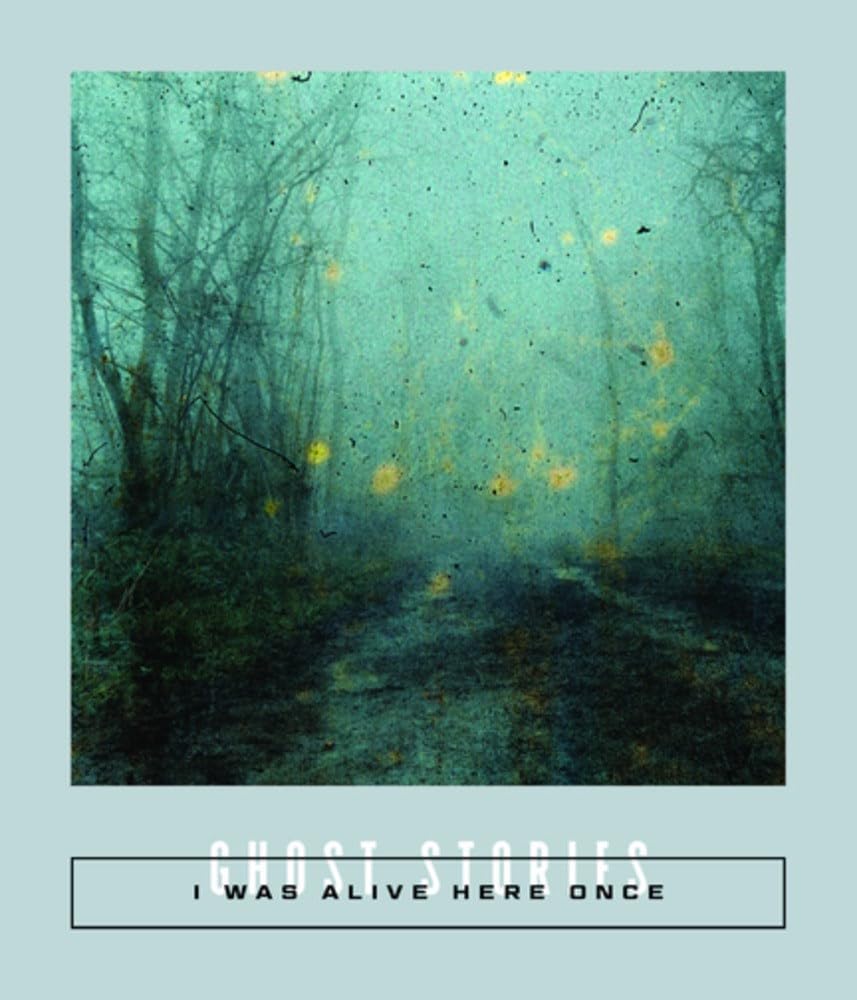
If Hollywood is to be believed, ghosts fall into one of a few rote categories: a betrayed or crazed bride; chaotic children (preferably from the Victorian era); or gruesome, grizzled grandparents. In I Was Alive Here Once, however, authors from Tanzania to Thailand offer unique, original takes on the supernatural.
Readers making their way through this collection, edited by Sarah Coolidge, will be delighted by the sheer variety of specters haunting its pages. From a doppelganger who’s always one step ahead of his twin to a midwife called upon to assist a jinni in childbirth, these tales offer a broad scope for considering what it means to be a ghost — and what it means to be left behind.
The innovative authors assembled here also do a remarkable job of blending the uncanny with the more quotidian aspects of human nature. In “One Step Ahead of You,” written by Anna Kantoch and translated from the Polish by Kasia Laganowska, the protagonist reflects that he “doesn’t believe in ghosts. He absolutely, one hundred percent, believes that, even if ghosts did exist, they certainly wouldn’t come to visit him. Deep down in his very soul he is absolutely convinced that he does not even deserve to be haunted.” What a body blow of a sentence.
In “Jupiter,” written by Tomoyuki Hoshino and translated from the Japanese by Brian Bergstrom, a woman trying to navigate an increasingly disorienting world confronts her feelings about a friend who seems somehow altered: “Those who sell their souls look at those who haven’t and say, ‘Oh, they’ve changed!’ As if, having boarded a train, they were to accuse those left on the platform of moving.” This observation feels both poignant and relevant — a reminder of the importance of perspective.
While spectral children do make appearances in the collection, some of them are endearingly innocent (if mischievous) rather than malicious. In Cho Yeeun’s “A Swamp’s Love,” translated from the Korean by Giulia Ratti, main character Water, tied to the creek where she died despite having no memory of how it happened, teases the tourists who visit: “No one had ever been happy to see her. Knowing she would never be well received, she had resorted to pestering people. She didn’t know what else to do.” Not so different, then, from a living child who craves positive attention but doesn’t know how to ask for it and, acting out, receives backlash instead.
After a young woman who apparently haunts the surrounding forest introduces herself, though, Water realizes her own apathy has fled. She “calmed her galloping heart and curled up in a ball. She felt strange. As if she were about to ruin something.” In writing about those who inhabit the afterlife, the author evokes a youthful, innocent friendship that ultimately is threatened by developers trying to tear the forest down.
Jarupat Petcharawet, in “The Death of Aunt Huang,” translated from the Thai by Peera Songkünnatham, conjures a woman who, after eating a bead of sap from a crocodile-bark tree, is haunted by the spirit of a novice monk imprisoned in the tree. Petcharawet’s visceral description of Aunt Huang’s illness (“her face yellow like a half-ripe mango”) primes the reader for her descent into madness as she relives the novice’s bloody story in her mind while her brother and sister watch over her deathbed.
Again and again, I Was Alive Here Once brings fresh life to the idea of what a ghost can be — and offers readers new ways to interpret the great beyond.
Mariko Hewer is a freelance editor and writer, as well as a nursery-school teacher. She is passionate about good books, good food, and good company.