If You Love It, Let It Kill You: A Novel
- By Hannah Pittard
- Henry Holt & Co.
- 304 pp.
- Reviewed by Marcie Geffner
- July 17, 2025
This smoothly written autofictional work has everything but a point.
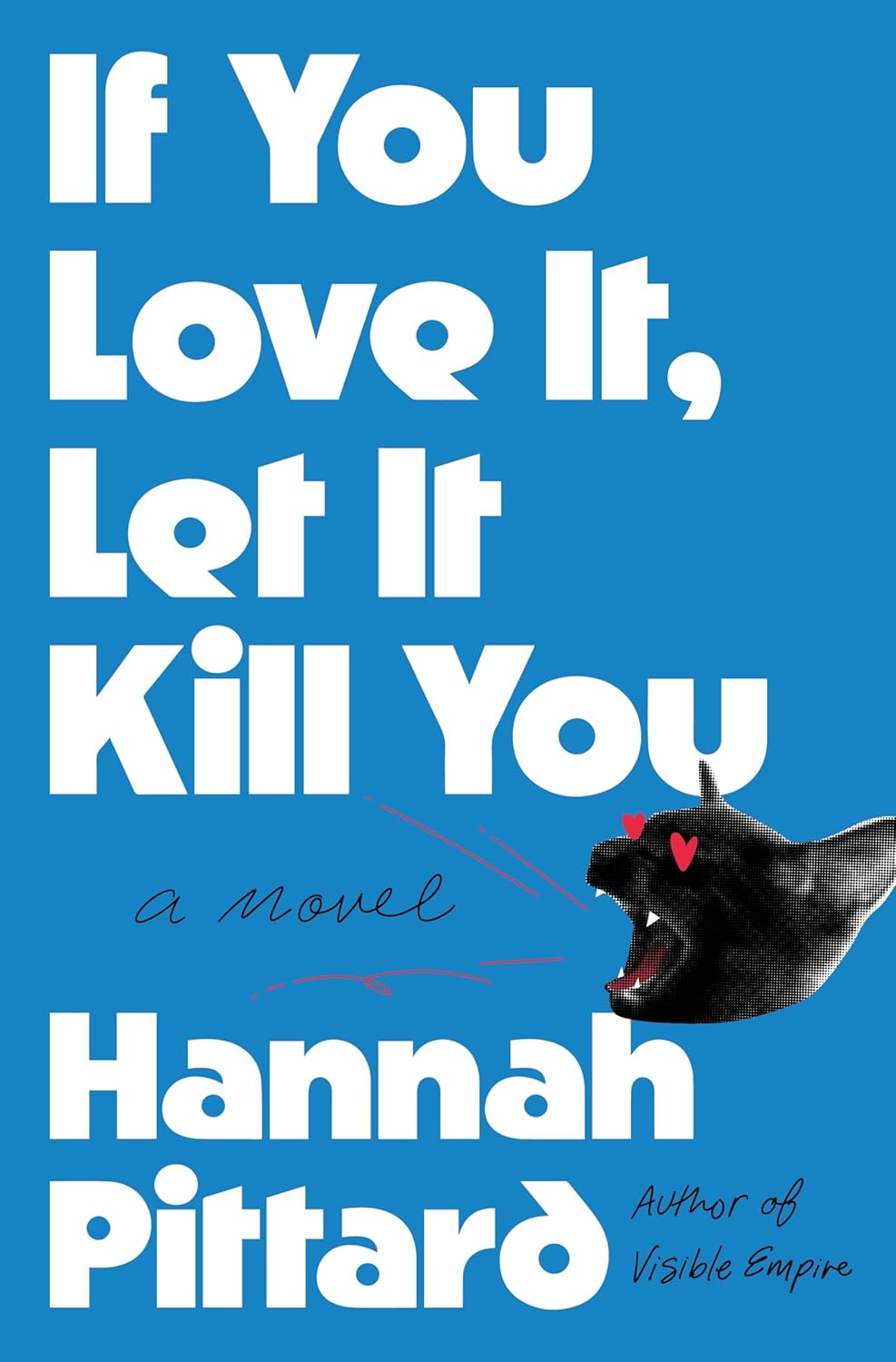
There’s a lot going on in Hannah Pittard’s latest novel, If You Love It, Let It Kill You. Among other things, the main character, Hana P., attends a birthday party for her 6-year-old nephew, drinks wine on her front porch with her family, teaches a college creative-writing course, and sends texts about everything and nothing to her friend Jane.
Hana’s chief concerns are her ex-husband’s forthcoming novel, in which she may be unflatteringly portrayed, and her uncomfortable status as a sort-of stepmom to her live-in boyfriend’s 11-year-old daughter.
The story is populated by dislikable characters. Hana’s father is a sad, needy, intrusive kook who walks to her house in freezing weather (without proper clothing) only to hand her a manila file. Then, refusing a pair of gloves and a ride home, he turns and strides away. What’s in this urgently important folder? Hana’s eighth-grade report cards.
One of Hana’s students, Mateo, is a pushy, manipulative creep who maneuvers her into an inappropriate conversation in a bar, her reaction to which is off-kilter, awkward, and unprofessional. Then there’s “the Irishman,” a man with whom Hana may or may not have had sex during her marriage. Like Mateo, he’s a creep, and her ongoing relationship with him, comprised only of flirty text messages, is unseemly.
Amid it all, time passes:
“Days yawn into weeks, and the seasons flutter. All over town, daffodils bloom, followed by tulips, followed by the tentative scapes of hostas. The Irishman — haha — sends me filthy one-line texts that I read and delete. My sister comes over for wine in the evenings. Her boys pee from the ledge of our porch. My mother goes on dates, falls in love, gets bored, breaks up, then repeats the process a few weeks later. I see the dentist, the eye doctor, the allergist. My primary physician informs me that it’s time to remove my IUD; it’s been ten years. She says she can do it herself right now, or I can schedule an appointment for another time. I tell her we should grab time by the balls. She hands me a paper gown and leaves the room.”
Hana is aware of how bored and unhappy she is and how pointless and meaningless her life feels. She wishes more people liked her, wishes the ones who do liked her more, steals gum from the grocery story, and cries a lot. “In the middle of the night now,” she relates at one point, “I sometimes wake up and can’t breathe just thinking of all the things I’ve accumulated. Several moving trucks’ worth of junk. And I feel so empty and sad and weighed down by the emptiness.”
Later, she finds a lost and injured tabby cat in her garage. She imagines herself having a conversation with it, hides it from its owner (who’s desperately searching the neighborhood for it), and then inexplicably gifts it to another of her students.
The story, such as it is, resolves with a tidy ending in which Hana expresses anger about the sorry state of life and upends her routine in several conventional and obvious ways. Assorted bits and pieces of the plot are wrapped up in pretty paper with pretty bows. Others are not.
The novel is autofiction, so Hana is, to some extent, Pittard. Both are college professors and authors. Both live with their boyfriend and his young daughter somewhere in Kentucky. (And Pittard’s former real-life husband did put her in one of his novels.) The book’s “is it truth or is it fiction?” parlor-game feel will amuse some readers, and the prose is as smooth as the plot is unsubstantial. In the end, though, it’s never quite clear why we should care about the self-absorbed Hana or her inconsequential problems.
Marcie Geffner is a writer, editor, and book reviewer in Ventura, California.