Israel: What Went Wrong?
- By Omer Bartov
- Farrar, Straus and Giroux
- 256 pp.
- Reviewed by Paul D. Pearlstein
- May 27, 2026
A Holocaust scholar levels the charge of genocide.
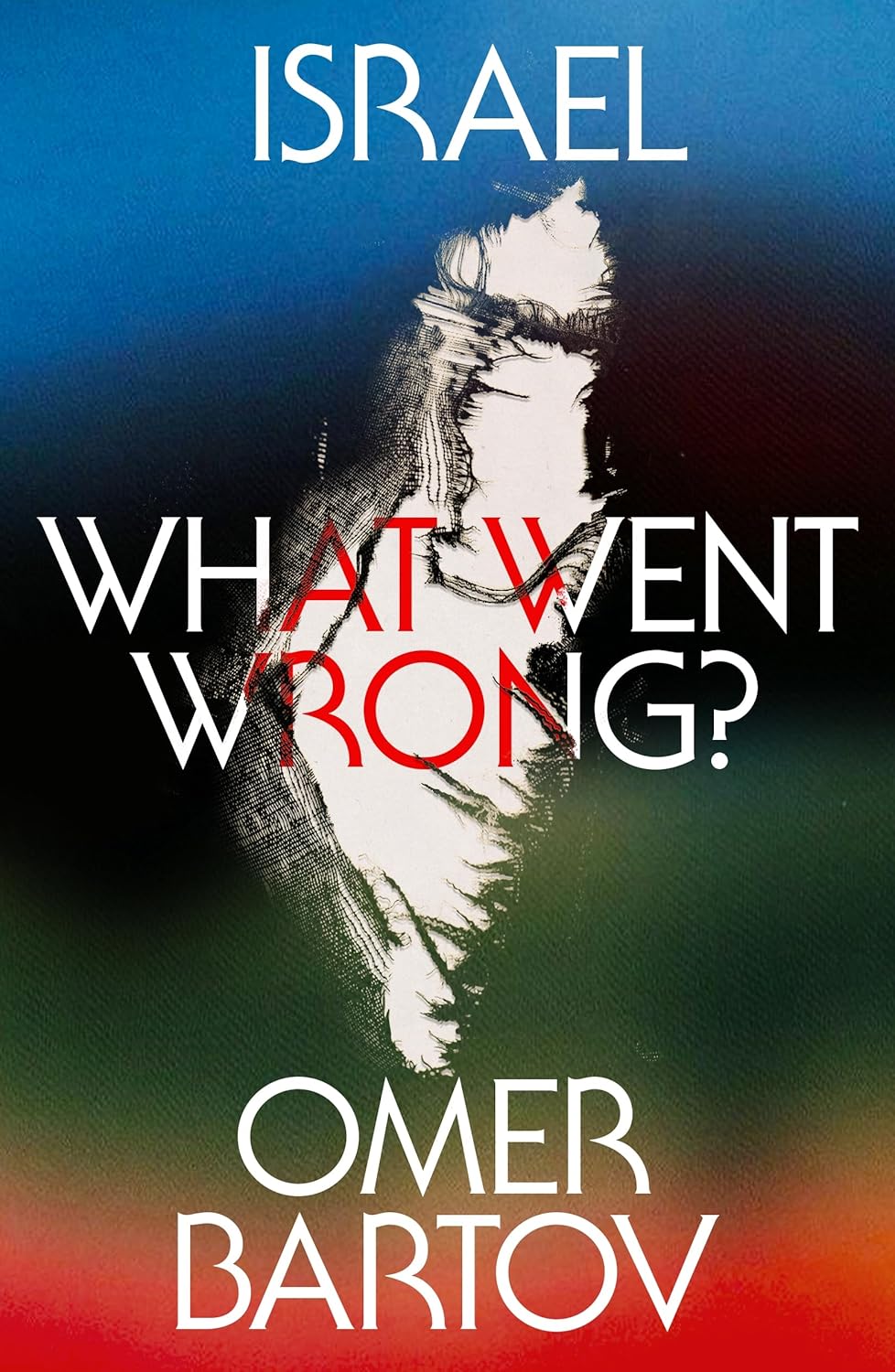
Omer Bartov is a dual citizen of Israel and the United States. As a former member of the Israel Defense Forces (IDF) and now a Holocaust scholar at Brown University, he makes the case in Israel: What Went Wrong? that Israel is guilty of genocide against the Palestinian people in Gaza. This extremely controversial position reflects the belief of much of the vox populi that has incited anti-Israel protests on American campuses, throughout Europe, in the Arab world, and even in Israel itself.
Problems in the region began as early as the 13th century BCE, when the Hebrew slaves of Egypt were directed to escape bondage and occupy the “promised land” of Canaan, whose inhabitants were of mixed religions until the prophet Muhammad founded Islam in the 7th century CE. The faith spread throughout the Arabian Peninsula, and Muslim Arabs lived (under the control of the Ottoman Empire) in what is now Israel from 1299 until after World War I.
During that period, only a small number of Jews inhabited the area. The Ottoman Empire was defeated in WWI, and its land was divided up among the war’s victors. After years of rule by the British Mandate, the land became the State of Israel in 1948. The surrounding Arab nations reacted by immediately declaring war on it. A ceasefire was brokered, but the war was never actually won or lost, and many smaller wars followed.
Over 700,000 Palestinian Arabs fled their homes and land after the creation of the Jewish state. Those who remained experienced a high rate of growth and immigration. With Jewry now protected by the welcoming sanctuary state of Israel, and with the expulsion of Jews from Muslim countries, there was a huge influx of Jews from around the world to Israel. There are now approximately 7 million Palestinian Arabs living alongside 7 million Jews in the region.
The tension between Jews and Palestinians exploded again on October 7, 2023, when the Palestinian terrorist group Hamas launched a surprise attack on Israel. Hamas soldiers killed, raped, and/or abducted hundreds of Israeli men, women, and children, as well as citizens of other countries, including the United States. The IDF responded by vigorously bombing the nebulous Hamas fighters embedded in tunnels and hospitals in Gaza.
Israel demanded the release of its hostages. In a tentative agreement that has slowly unfolded over the past two years, those hostages — or their corpses — were surrendered by Hamas. Yet Israel has continued its military assault on Gaza, maintaining that its security depends on the eradication of Hamas. As of now, the conflict has caused the deaths of tens of thousands of Palestinian civilians and the ruin of much of Gaza’s infrastructure.
The pictures of bombed-out buildings and reports of starvation and suffering have captured global media attention, unleashing the dormant antisemitism still ingrained in so much of the world. By far, the most incendiary — and disputed — charge currently leveled against Israel is that it is perpetrating a genocide against the Palestinian people.
Article II of the 1948 UN Genocide Convention provides this definition of genocide:
In the present Convention, genocide means any of the following acts committed with intent [emphasis mine] to destroy, in whole or in part, a national, ethnical, racial or religious group, as such:
(a) Killing members of the group;
(b) Causing serious bodily or mental harm to members of the group;
(c) Deliberately inflicting on the group conditions of life calculated to bring about its physical destruction in whole or in part;
(d) Imposing measures intended to prevent births within the group;
(e) Forcibly transferring children of the group to another group.
Genocide is a legal concept determined by evidence and judicial deliberation. But Bartov strayed from the constrained academic world and became instead an ass-kicking polemicist when he published his July 15, 2025, New York Times essay, “I’m a Genocide Scholar. I Know It When I See It.”
Clear, clean evidence of intent is the gold standard to prove genocide, but it isn’t easy to find here. True, the world has seen images of the devastation in Gaza: flattened buildings and hospitals; hungry families lined up in food queues; and horrific injuries allegedly inflicted by the IDF. And it’s not difficult to discern intent in the public statements of Israeli politicians, military commanders, and Prime Minister Benjamin Netanyahu. These leaders have demanded the complete elimination of Hamas, the removal of Palestinians from Gaza, and the resettlement of Gaza by Israelis. It all echoes King Saul’s “Take no prisoners” command in the Old Testament to annihilate the Amalekites for attacking Israel.
Bartov’s book is a reorganization of much of the material from his Times essay. To provide expanded context and to bolster his position, he argues that because of the hardships inflicted on the then-stateless Jews during the Holocaust, Israel believes it is entitled to special immunity for its conduct in Gaza or anywhere else.
The author further points out that Israel doesn’t have a written constitution or bill of rights, but that the nation’s leadership — all the way back to its founding — has declared its support for equality for all. Still, the sentiment seems more an appeal to the world stage than an accurate reflection of national will. Israeli leadership apparently doesn’t want equal rights for Palestinians, nor do Palestinians want them for Israelis. A “two-state solution” is a convenient catchphrase for an unacceptable and unsupportable political-legal fiction.
The professor, however, isn’t shy about outlining his own fix. He suggests that many of Israel’s problems could be cured by a vast restructuring. The written constitution promised in 1948 should finally be produced and ratified, he says, as should a bill of rights that establishes those equitable protections that the poets and diplomats allude to. Bartov further proposes that Israel’s parliamentary democracy be given greater flexibility to rein in the excesses of the government’s radical right and left wings.
Such changes might help the nation, but they’re tangential to the immediate question: Has this book proven Israel guilty of genocide? Was the author’s arrogantly simplistic essay title just a cheap attention-grabber, or is he correct that he knows genocide when he sees it? Readers must decide for themselves.
Paul D. Pearlstein is a retired lawyer and secular American Jew deeply troubled by this topic.