John of John: A Novel
- By Douglas Stuart
- Grove Press
- 416 pp.
- Reviewed by Ryan Davison
- May 8, 2026
A father and son struggle to accept brutal truths about themselves and each other.
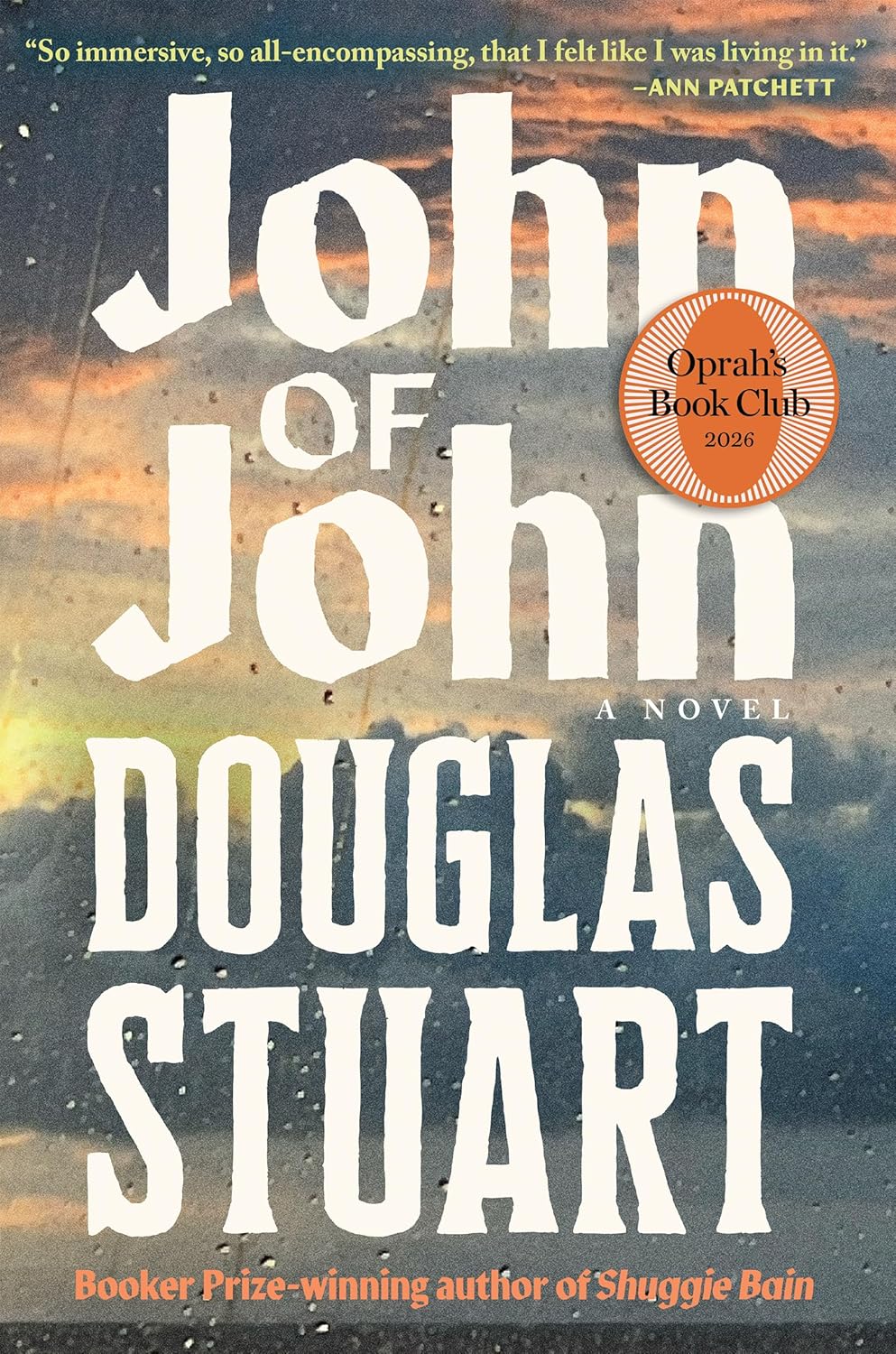
It’s the late 1990s, and 22-year-old John-Calum Macleod (known as Cal) has recently graduated from an art and textile school in Edinburgh. Rather than practicing any sort of art, Cal parties, crashes on the odd couch, and cleans pubs for tiny sums of cash. Once a week, his puritanical father, the other “John” in our story, forces his son to recite prayers over the phone.
While Cal plays contrite, he is far more focused on the sweat-soaked shorts covering the muscled thighs of nearby football players. Still, his aimlessness soon runs its course, and he agrees to leave his fast life on the metropolitan mainland to return home and work on the family farm, which sits on a speck of an island on the Isle of Harris in the Scottish Hebrides.
As Cal rides the ferry home, coming down off a dose of ecstasy and concealing his long-dyed hair and homosexuality, we sense the secrets that will complicate his return. From its early pages, Douglas Stuart’s John of John compels readers to contemplate how truths are often more painful than lies.
The Scottish landscape may be backdropped with dour grey skylines, but the novel’s scenes shine brilliantly. For generations, the Macleods wove tweed and wool on the family loom, transforming plain fabrics into vibrant creations of dazzling color. Stuart does something similar, swirling a sentimental palette of stunning prose — as here, when Cal asks his divorced father if he’s ever lonely working by himself:
“Sometimes,” said John. “But I’m never alone.” Cal was expecting some trite line about the omnipresence of the Lord, but John surprised him when he said, “I think about you. And I talk to you. Tell you the little things about my day.”
He crossed to the yarn shelves. It was his favorite place in the whole world. “Look at all the new colours!” The shelves were full of hundreds of yarns, all the romantic colours of Scotland: bracken and grouse, gorse and heather, rain and moss, the chafed red of a drunkard’s face, and pure, bilious whitey. Amongst these were punkish hot pinks and acid yellows, violent tones that made people recoil until they saw the finished cloth and saw how skillfully John could mix sour greens with wheats and nightshades until it was a field of spring bluebells.
This heartwarming tone changes quickly, however. Only days later, John, sickened by Cal’s flamboyant laziness, punches him in the face. Ultra-religious Dad’s anger stems from his own demons, which are artfully revealed as the plot progresses. John’s ex-mother-in-law, Ella, also calls the farm home and provides wonderful dramatic relief throughout the book, sharing Cal’s secrets and serving as his foul-mouthed but loving co-conspirator.
The Macleods are complicated. Cal’s mother, Grace, walked out when he was only 9, settling across the island with John’s older brother. This created a deep source of betrayal, but we learn that Grace’s departure didn’t occur without reason. Stuart sets up a family dynamic that’s fascinating in its instability. He has every pin wobbling before a ball is rolled, and it’s in this environment that father and son engage in a soul-wrenching search for identity. They each in their own way experience the consequences of honesty and the significance of rejection.
The discriminatory nature of faith — which stings when followers are expected to act against their instincts — frames the narrative. While John of John primarily charts the fraught paths traversed by those forced to conceal their true selves from God and man, it includes engrossing forays into wider topics like farming, sewing, ham radios, and church politics. The story takes place just 30 years ago, but the characters who populate these tiny islands come alive with such stark realism (and authentic use of Gaelic) that fans of history will be drawn in deeply.
John of John is less emotionally taxing than Stuart’s phenomenal, Booker Prize-winning Shuggie Bain, but it is as expertly composed. The last quarter of the novel is impossible not to read in a single sitting and feels like it might’ve been penned by Thomas Hardy. The gripping finale is loaded with unexpectedly poignant moments that underscore the central tenet of the book: The truth is transformative, and the scars left by honesty are mere scrapes compared to the wounds from living a lie.
Ryan Davison, Ph.D., is a writer and literary critic residing in Portugal and the U.S. He has contributed to the Malahat Review, the Independent, Open Letters Review, Edelweiss+, and NetGalley. Ryan’s blurbs are often cited by LitHub’s Book Marks, the popular book-review aggregator. Along with literary criticism of traditional and independently published works, Ryan holds a doctorate in neuroscience and authors scientific papers.