Launching Liberty: The Epic Race to Build the Ships That Took America to War
- By Doug Most
- Simon & Schuster
- 464 pp.
- Reviewed by Peggy Kurkowski
- September 12, 2025
Recalling the massive WWII effort to fill the seas with U.S. vessels.
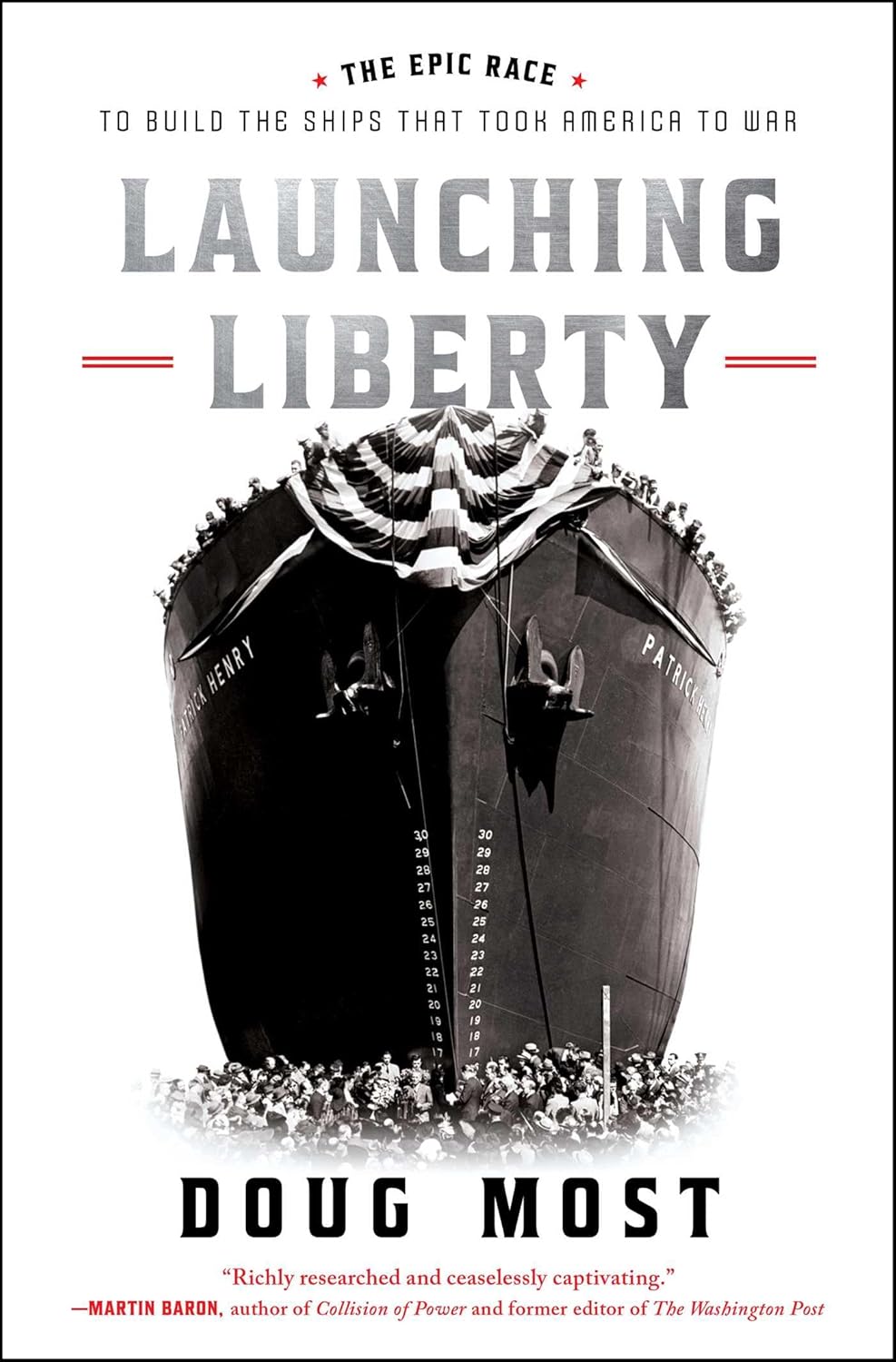
One of the most overlooked yet monumental achievements of World War II — America’s accelerated shipbuilding program — takes center stage in Launching Liberty by historian Doug Most. As war raged in Europe in 1940, President Franklin D. Roosevelt began to prepare the U.S. for an entry into the conflict that he saw as inevitable. Even as we toed the neutrality line that year, German U-boats fired torpedoes at half-a-dozen American ships, sinking two and killing sailors.
Roosevelt understood that when not if America officially joined the fight, a new maritime strategy would be required to successfully transport enormous amounts of materiel across vast oceans. That same year, he directed the United States Maritime Commission to draw up plans for the “unprecedented expansion of the nation’s moribund shipbuilding industry.” If Hitler was building more U-boats, then America had to answer with more ships — and build them faster than ever before.
Between 1941 and 1945, the country’s workforce came together, writes Most, “in the greatest emergency shipbuilding program the world had ever seen,” a race against time to assemble massive steel freighters the length of a football field whose gargantuan holds would deliver Roosevelt’s “Arsenal of Democracy” to the front lines. These were the Liberty ships, and their production was a story of American fortitude and innovation.
The author begins with the British government’s proposal to contract U.S. businessmen to build 60 desperately needed cargo ships in 1940. Roosevelt approved the deal, which resurrected two great domestic shipbuilding sites: San Francisco Bay and Portland, Maine. Coming on board for the contract was one of the nation’s most dynamic industrialists, Henry Kaiser, whose résumé of getting jobs done quickly and cost-efficiently was impressive (he built the Boulder Dam two years ahead of schedule and $4 million under budget, among many other projects).
By January 1941, the British ships were complete, and Roosevelt turned his eye to vastly expanding the number of cargo vessels on the American side of the ledger. Nine more shipyards were opened along the U.S. coastlines, and Kaiser and his associates began to churn out Liberty ships at an astounding rate amid an air of competition among the shipyards to see who could build fastest. Despite never having manufactured a ship before, Kaiser held the core belief that you didn’t need to be an expert to get a job done properly; it was about hiring the right people, giving them the right tools, and providing the right training.
The book offers absorbing overviews of how those mammoth ships were built, along with an exploration of Kaiser’s trademark innovation that revolutionized the shipyard. With hundreds of thousands of laborers — including women and minorities — descending on the shipways, accidents and illnesses were rampant. Providing healthcare became Kaiser’s “newest and most serious passion,” which eventually led to the creation of the Kaiser Permanente Foundation, which would go on to “revolutionize health care in America.”
Through a chorus of characters and personal stories, Most puts a human face on this legendary undertaking and reveals the teamwork that transcended race, class, and gender. He deftly shines a light, as well, on the resourcefulness of American shipbuilders in adopting Henry Ford’s model of mass production to cut down on the hours it took to churn out new ships. He points to prefabrication and standardization as key to winnowing down the build time. At the start of Roosevelt’s program, a single ship took eight months to complete; a year later, it was 55 days. That time frame would shrink even more, by December 1943, to a record 42 days. In total, the author reveals, American shipyards produced 2,710 ships over four years — half of them in a Kaiser-run facility.
Launching Liberty is a detailed yet sprightly narrated tale of grit and determination that spotlights American ingenuity and an audacious businessman who helped turn the tide of the war.
Peggy Kurkowski is a professional copywriter for a higher-education IT nonprofit association by day and major history nerd at night. She writes for multiple book-review publications, including Publishers Weekly, Library Journal, BookBrowse Review, Historical Novels Review, Independent Book Review, Shelf Awareness, and the Independent. She hosts her own YouTube channel, “The History Shelf,” where she features and reviews history books (new and old), as well as a variety of fiction. She lives in Colorado with her partner (quite possibly the funniest Irish woman alive) and four adorable, ridiculous dogs.