Maria La Divina: A Novel of Maria Callas
- By Jerome Charyn
- Bellevue Literary Press
- 336 pp.
- Reviewed by Martha Anne Toll
- October 29, 2025
A fact-packed, oddly flat portrayal of the singular diva.
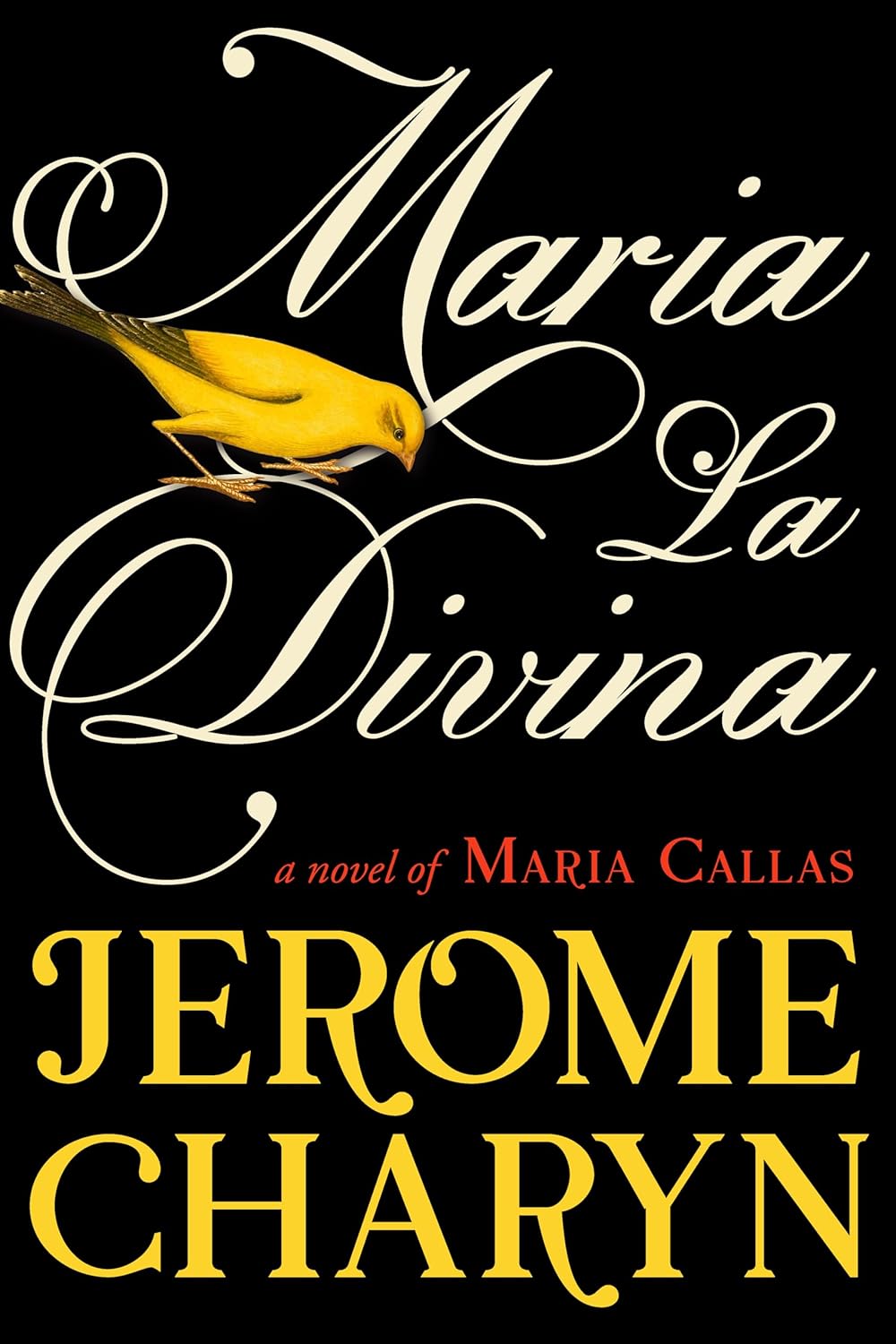
Jerome Charyn’s Maria La Divina, a biopic in the form of a novel, features Maria Callas (1923-1977), the legendary soprano. The daughter of Greek American parents, Callas grew up impoverished in various New York neighborhoods. Her parents’ marriage was not a happy one. Maria’s mother, Litsa, recognized her daughter’s talent and moved with Maria and her sister to Athens to pursue a musical education and more exposure for Maria. The year was 1937, and Maria was 13. She comes of age as Greece falls prey first to Mussolini and then to Hitler.
The plot moves briskly, with minimal descriptions other than repeated recitations of certain physical and emotional qualities of the characters. As a young girl, Maria is “myopic” and “stout.” Her nearsightedness dogs her throughout her career. She cannot see her audience and has trouble navigating her place on stage. As she gets older and takes on more roles, Maria is granted other descriptors by Charyn, including “Diva” and the “Queen.”
One thing is clear: Maria can sing. In Athens, she hones her craft with Madame Elvira de Hidalgo, by far outshining everyone else under Madame’s tutelage. Soon, troops roll into town. The surrounding terror notwithstanding, both the Italian and German military brass adore her, and her fame seems to grow despite her efforts. Often, she’s not the first choice cast or the leading lady sought by opera lovers. But once they hear Maria sing, their devotion knows no bounds.
Charyn has a distinct storytelling style that takes getting used to. If he were a student in a writing class, his prose would be termed “all tell and no show.” Since he has published more than 50 books, one must assume his style is deliberate. He plunges readers into action yet keeps them at arm’s length by avoiding interiority in his characters. This approach makes for a page-turner, but not always a satisfying one.
At times, in fact, the author’s style is so pedestrian as to be of the “ouch” variety. Of Callas’ early encounter with Major Tilio De Stasio in the Italian army, Charyn writes:
“Tilio leaned over as valiantly as a leopard in the wild and kissed her on the mouth. Maria was amazed. She could feel a tingling that rushed to her toes.”
Still, Charyn did his homework. We get the sweep of Callas’ career and the people who surround her, from lovers to the coterie of loyal servants whose devotion borders on slavish. In news stories and tabloids during her lifetime, as well as in the novel, Callas is portrayed as larger than life. She has an outsized talent, close to a three-octave range, and a more-than-captivating onstage presence. Callas maintains a throne in the operatic firmament, although passionate discussion persists about just what and who she was.
Early on, Callas marries her manager, Battista Meneghini, an Italian operator unequal to her who appears to have stolen vast sums of money from her. She never divorces him but moves on to the fulcrum of her adult love, Aristotle Onassis, the Greek shipping magnate who ultimately married the widowed Jackie Kennedy. Callas meets Onassis on his private yacht as he is entertaining an aged and infirm Winston Churchill. Onassis is married to a woman a generation younger than himself, and they have two children.
Nonetheless, Onassis aggressively pursues Callas, and she falls hard for him. He lavishes her with jewelry and Paris real estate, wines and dines her on his yacht, but never commits to her. As Kennedy moves into the frame, Callas recognizes she can’t compete.
This love triangle, as Charyn portrays it, was the most interesting part of the book for me. Onassis marries Kennedy — drawn as a cunning wife who out-matches both Aristotle and Maria in cleverness — but doesn’t give up on Callas. In this international chess tournament, Onassis and Callas are frequently checkmated.
Although I can’t speak to the veracity of these portrayals, they certainly make for dramatic copy. The downward spiral of both Onassis and Callas during his marriage to Kennedy is tawdry and depressing. Onassis weakens and begins losing his fortune. The death of his son is unbearable and pushes him to the brink of insanity.
By the end of Maria La Divina, we know a lot about Callas’ career and her lifestyle, but the person feels lost in the telling. Who is the real Maria Callas in these pages? Readers come to understand that “the opera house was more of a home than any home she’d ever had,” and that she held enormous sway over her audiences by fully inhabiting whatever role she was playing. It is an irony, then, that the author doesn’t bring similar skill to his writing. He never fully inhabits his muse.
Martha Anne Toll is a literary and cultural critic and a novelist. Her second novel, Duet for One, a musical love story and a journey through grief, was just published. Her prizewinning debut novel, Three Muses, was published in 2022.
.png)