Medicine River: A Story of Survival and the Legacy of Indian Boarding Schools
- By Mary Annette Pember
- Pantheon
- 304 pp.
- Reviewed by Peggy Kurkowski
- May 15, 2025
How a vicious institution inflicted pain across generations.
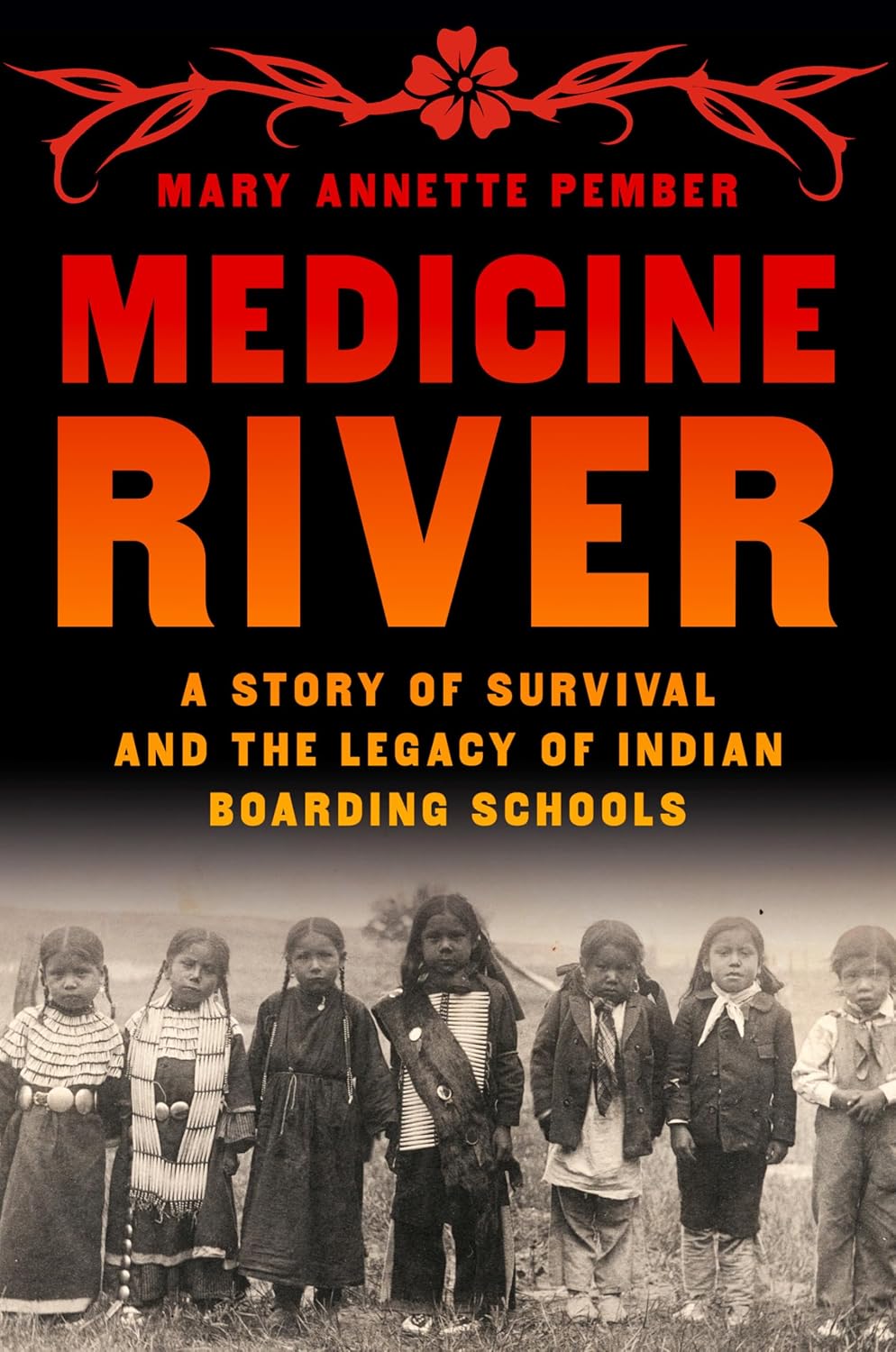
In Medicine River, journalist Mary Annette Pember, the daughter of a Native American boarding-school survivor, examines the dark history of the institution and its lingering impact upon her family and the Ojibwe community.
Pember, a citizen of the Red Cliff Band of Wisconsin Ojibwe, spent 20 years researching boarding-school history in the United States and Canada, motivated by her mother’s experiences attending St. Mary’s Catholic Indian Boarding School as a 5-year-old in 1930. “We were always hungry,” her mother, Bernice, would begin before moving onto recollections of the beatings, forced labor, and humiliation she and hundreds of other Indian children endured — stories, Pember says, that would “thrill me and fill me with fear and dread.”
In this intricate blend of history, reportage, and memoir, Pember tackles the dismal legacy of the “Indian boarding school” system that, from 1879 to the 1930s, was “marked by draconian, unforgiving rules, brutal enforcement, and discipline.” These facilities had one main purpose, according to Pember, and that was “to destroy Indian families in order to destroy tribes to free up land for white settlement and exploitation.”
The government had help in this work in the form of Christian missionaries, “the de facto Indian experts of the day.” Beginning in 1792, the U.S. government funded missionaries to “civilize, convert, and educate” Native Americans, with every major Christian denomination trying its hand at some point. But it would be the Catholics who “launched a full-court press in Indian country.”
Life at a typical boarding school like St. Mary’s included military-style regimentation, hard labor, and exposure to diseases that would travel back to the village with the infected student. Pember provocatively suggests that the U.S. government “weaponized” contagions during the era to help create “a final solution to the country’s Indian problem.” In addition to the health risks, daily denigration by the nuns led to traumatized children growing into traumatized adults.
In fact, the major theme of the book is trauma — both on an individual and communal basis — and how boarding schools created feelings of shame and worthlessness among Native American children. Pember reveals the fraught dynamics of her relationship with her mother and observes how her mother’s behavior — and that of many other boarding-school survivors — “reflect[s] the insidious nature of oppression.”
By its midway point, the book’s focus pivots from the historical overview of boarding schools to an insightful analysis of Native American health (both physical and mental) and the science behind it:
“Indian people have known about the deadly fallout from trauma for a long time. Our health-care professionals and community leaders have been championing the importance of considering the deadly role historic and ongoing trauma and violence play in making us the gold standard for disease in this country.”
Pember is not afraid to share her own personal demons, either. From her problematic upbringing to her struggles with alcoholism, she is an authentic tour guide to the concentric rings of hell that was the Native American boarding-school experience. And Medicine River is as much a wide-ranging work with fascinating insights into Ojibwe culture as it is a personal cri de cœur for “Indian people’s unparalleled ability to survive.”
Peggy Kurkowski is a professional copywriter for a higher-education IT nonprofit association by day and major history nerd at night. She writes for multiple book review publications, including Publishers Weekly, Library Journal, BookBrowse Review, Historical Novels Review, Independent Book Review, Shelf Awareness, and the Independent. She hosts her own YouTube channel, “The History Shelf,” where she features and reviews history books (new and old), as well as a variety of fiction. She lives in Colorado with her partner (quite possibly the funniest Irish woman alive) and four adorable, ridiculous dogs.