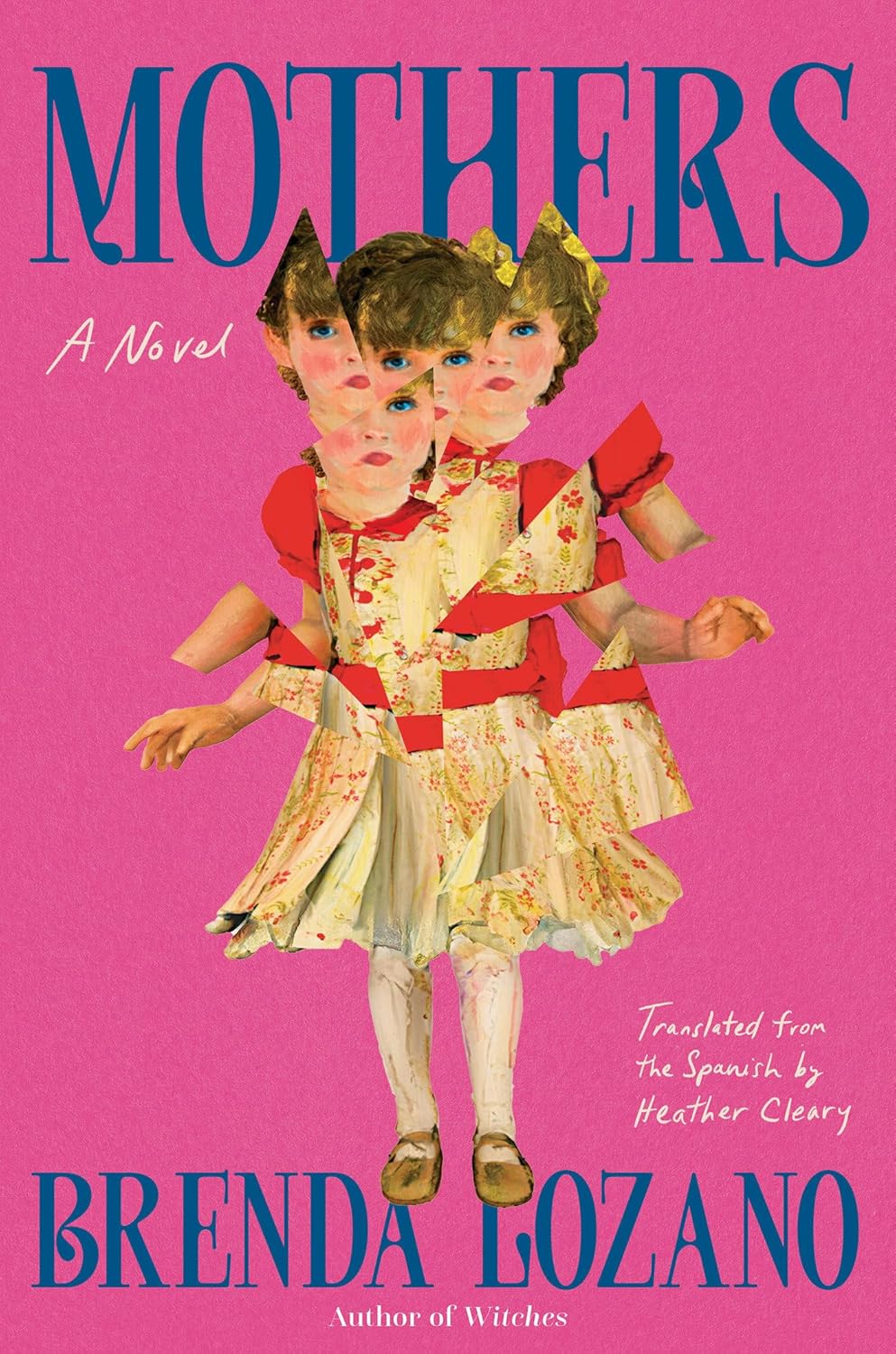
Mothers: A Novel
- By Brenda Lozano; translated by Heather Cleary
- Catapult
- 208 pp.
- Reviewed by Haley Huchler
- December 11, 2025
Kidnappings in 1940s Mexico City reveal the precariousness of parenthood.
“She shouted her daughter’s name, her own name, as if by losing her daughter she had somehow lost herself.”
One winter morning in 1946, little Gloria Miranda Felipe disappears from the courtyard of her family home in Mexico City. Her mother, Gloria Felipe, left the 2-year-old playing with another child for 16 minutes and returned to the scene of her worst nightmare.
The case embodies the fears of parents across Mexico, where kidnappings are rampant and an understaffed police force can’t keep up. The news reaches everywhere, including the household of Nuria Valencia, who has just adopted a toddler after years of struggling to conceive. Upon hearing the dreadful story, she locks her radio away in the sideboard. Nothing will infect her newly happy home.
As the Felipe family falls into shambles — Gloria is scarcely able to give her four boys any attention as she grieves and searches for her missing girl — the working-class Nuria and her husband, Martín, experience the joys of early parenthood, though not without the baggage that comes with adoption (a burden felt most strongly by Martín, who lies about his toddler’s origins so people won’t question his manhood). As the Felipes endure false ransom requests and constant clues that lead nowhere, the Valencias fall in love with their child and fear anything that could take her away.
Mothers weaves these two stories together, combining the delight and despair, the exhilaration and fear of parenthood. With a unique narrative voice, author Brenda Lozano pries into issues like class and infertility to explore the question: How far will a mother go for her children?
“I wouldn’t want you thinking I was some male omniscient narrator,” we’re wittily told early on. Instead, our guide throughout the tale is a woman whose job it is to narrate stories. She knows she’s good at it, too; her words dance the jarabe tapatío, she says. Though not a physical character, this disembodied voice sets the tone for the proceedings.
As we become more embroiled in the lives of Gloria and Nuria, we meet the complicated figures who surround them. One of the most fascinating is Ana María Felipe, Gloria’s mother, who raised her daughter by herself and became one of the foremost fashion designers in Mexico. She is a woman of power, importance, and great wealth. Although emotionally withdrawn from Gloria, Ana María wields her status and money in an attempt to bring her granddaughter home, even promising bribes to the police and journalists.
The various reactions to Gloria Miranda’s abduction shed light on the stark class divide in Mexico. While the case becomes a national sensation, other missing children — ones from families lacking the fame of Ana María — are neglected by both the authorities and the press:
“If their case was being discussed on a national level, why wasn’t the same thing happening for all the other kidnapped children? The waters were stagnant on one side and rushing on the other.”
More than just an examination of class, Mothers also grapples with the challenges of living in a society where motherhood is compulsory and infertility brings shame. Fortunately, Lozano packs these heavy topics into a slim, fast-paced novel without a sentence wasted. Despite the grief and fear underpinning the story, Mothers is light on its feet, leavened by graceful prose and dry humor, and capped off with a revelatory, unforgettable ending you won’t see coming.
Haley Huchler is a writer from Virginia. She has written for publications including Northern Virginia Magazine and DC Theater Arts. She has a B.A. in English and journalism from James Madison University, where she was editor-in-chief of Iris, an undergraduate literary magazine.