Red Dawn Over China: How Communism Conquered a Quarter of Humanity
- By Frank Dikötter
- Bloomsbury Publishing
- 384 pp.
- Reviewed by Todd Kushner
- March 9, 2026
The USSR played a key role in Mao’s rise and rule.
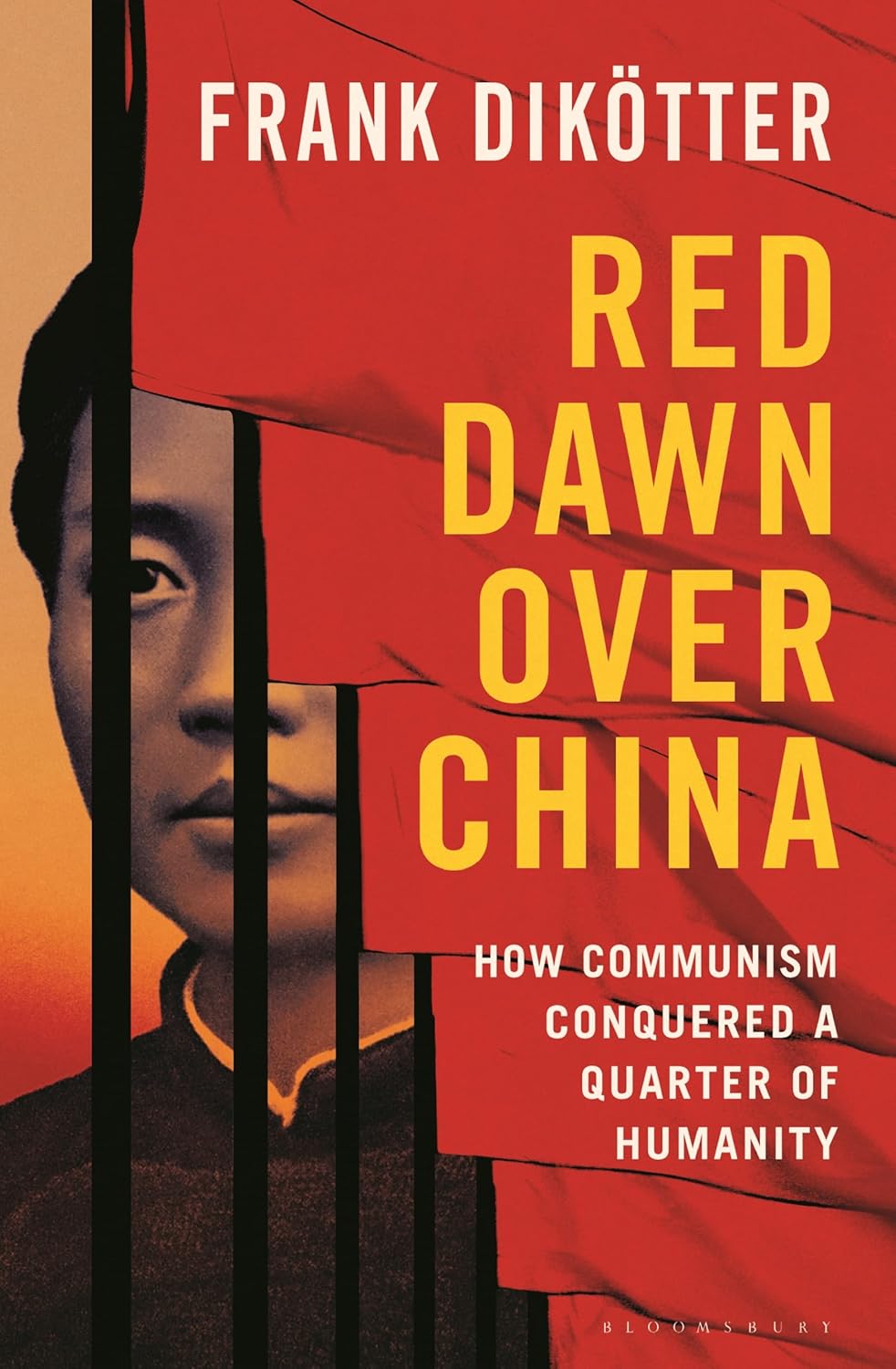
“A fairy tale” is how Dutch historian Frank Dikötter characterizes the Chinese Communist Party’s (CCP) narrative of rising to power via land reform, resistance to the 1937-1945 Japanese invasion, and mobilization of popular support against the “corrupt” Nationalist Party. In Red Dawn Over China, he sets out to discredit this myth by drawing on original Party documents, Western government dispatches, and Nationalist Party records. (This echoes earlier works of his that drew on Chinese archives open to a select few and, consequently, “changed the way historians view modern China.”)
Dikötter argues here that the CCP’s rise from its humble 1921 beginnings to its 1949 victory in China’s civil war was due not to popular appeal but to Soviet support, masterful propaganda, and pitiless cruelty.
The Communists’ brutality particularly stands out in Dikötter’s account. The CCP routinely burned down cities and engaged in plunder, ransom, and forced labor to obtain revenue and military manpower. Communist “land reform” involved confiscation, torture, peasant impoverishment, and sometimes murder. In 1948, the author writes, “in Xing county alone, over 2000 people were put to death including 350 elderly and 25 children…in Hebei, some people [were] buried alive, dismembered, shot or throttled to death.”
In the final months before they toppled the Nationalist government, the CCP starved Manchurian cities into surrender. In Changchun, for example, 160,000 civilians died of hunger during the CCP’s six-month blockade. The Communists recruited villagers under duress and launched them in human waves against government troops, resulting in tens of thousands of casualties.
The CCP’s genius for manipulating information was key to its success. American journalist Edgar Snow famously spent several months in the CCP’s Yenan stronghold, reporting that the Communists should be viewed as domestic reformers eager to counter Japanese aggression. Of course, as Dikötter points out, the Communists had carefully vetted Snow, controlled his access to information, and edited his work.
The Communists deceived other visitors by hosting them in contrived settings designed to accentuate the compatibility of Communism with Western values while concealing its authoritarian elements. Mao so adeptly sold his fiction of a “new democracy” — with promises of a multi-party system, equal suffrage, and democratic freedoms — that American journalists who’d never set foot in Yenan widely accepted it. Dikötter remarks that General George C. Marshall, sent by President Truman to China as his envoy in December 1945, believed the Communists were “merely rural reformers who could help shape a democratic China.”
The USSR’s support was also crucial to the CCP. Dikötter notes that Soviet agents cultivated opinionmakers in China as early as 1917 and organized the CCP’s 1921 founding (while simultaneously assisting the Nationalist Party because of its anti-imperialist bent). Until the Chinese Communists took power from the Nationalist government in 1949, the Soviets shaped key dynamics of the Nationalist-Communist relationship, providing the CCP with arms, training, propaganda, funding, and, at times, direction.
Importantly, the USSR kept the CCP viable by insisting the Nationalist government cooperate with the Communists, especially to counter the Japanese invasion. The Soviets’ “United Front” policy culminated with Marshall’s 1945 declaration that U.S. financial and military aid to China was dependent on a truce with the Communists. After Japan was defeated, the USSR provided the CCP a safe haven, military advisors, and thousands of tons of armaments, thus ensuring the Communists’ victory over the Nationalists.
Red Dawn Over China is recommended for readers who already have a familiarity with the basic outlines of the CCP’s rise to power. Dikötter offers an important alternative to standard accounts and does so with rich descriptions and well-documented details. Those new to the subject, however, may need more context than he provides to understand the overall flow of events. The book’s most valuable chapters involve the CCP’s formative years. The sections covering 1945-1949 could have used further development.
Todd Kushner is a retired U.S. Foreign Service Officer. The views expressed are his alone and do not represent the views of the U.S. government.