Freddy Otash returns, although he probably shouldn’t have.
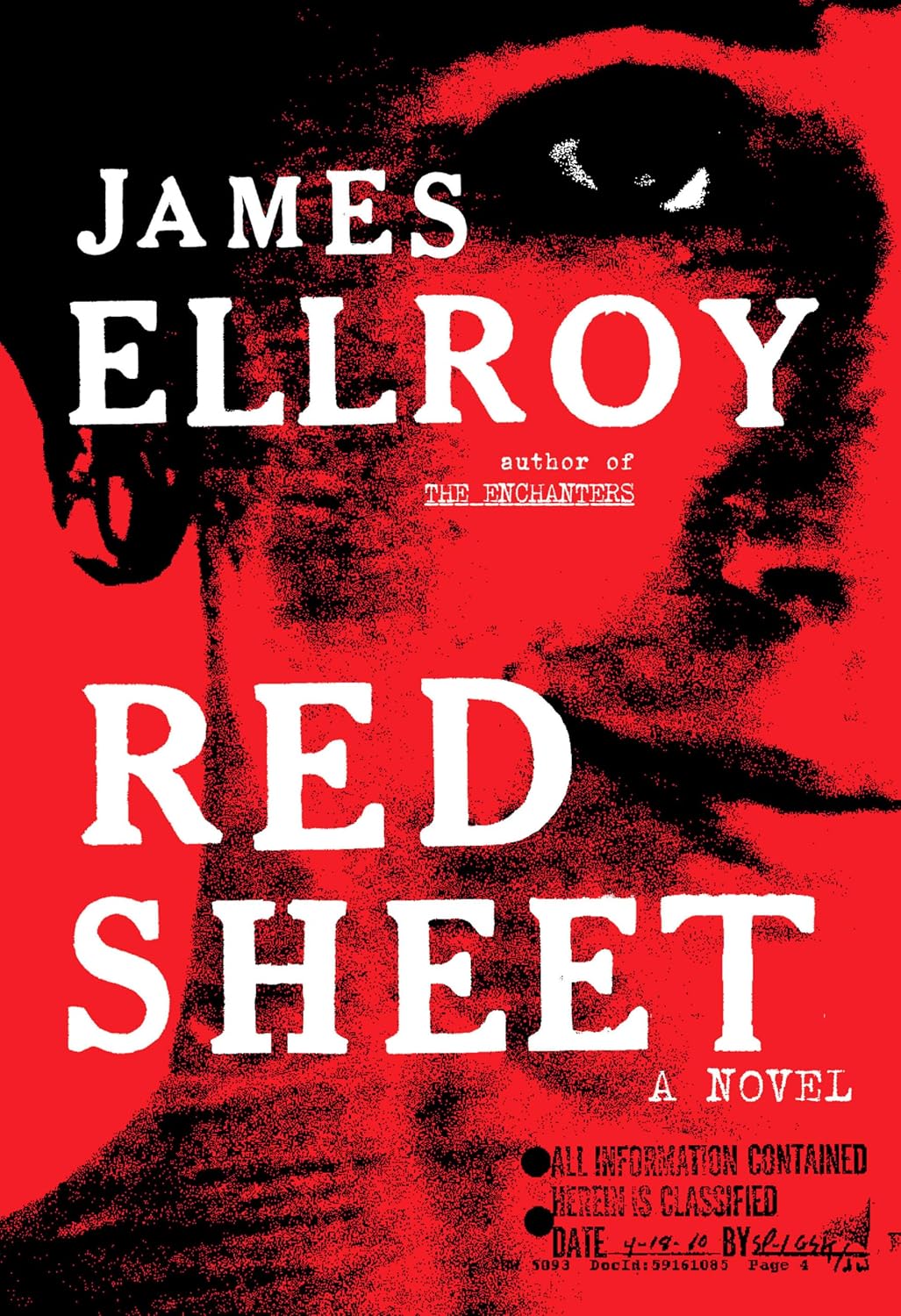
For the third time in five years, James Ellroy is back with his literary alter-ego, P.I. Freddy Otash, the boozehound bottom-feeder who slithers through the criminal demimonde in postwar Los Angeles. In Red Sheet, Ellroy’s antihero plays cleanup after the Cuban Missile Crisis. This time, Ellroy adds Richard Nixon, Charles Lindbergh, spy-hunter Whittaker Chambers and his prey, Alger Hiss, Mayor Tom Bradley, and 1960s folk singer Judy Henske (!?) to his usual mix of the Kennedy brothers, the commies, and the misguided liberals seeking to curtail the brutal Los Angeles Police Department.
Red Sheet is a sequel to a sequel. In 2021’s Widespread Panic, Otash, a real-life cop with the LAPD during its worst reputational years and later a notorious Hollywood fixer, emerged from Purgatory. Resurrected to Ellroy’s Earth, Otash attempted to atone for the sins he committed in the 1950s on behalf of Confidential magazine: bugging hot-sheet motel rooms to catch — and out — closeted gay movie stars. In 2023’s The Enchanters, Ellroy zeroed in on August 4, 1962, the day Marilyn Monroe overdosed, and followed Otash’s investigation into the role her sexcapades with JFK and RFK may have played in her death.
Now comes October 29, 1962, the day the Cuban Missile Crisis ended and the world breathed a collective sigh of relief. “Party! Party! Fuckhead Jack and Bobby Kennedy saved the world,” Ellroy writes in his signature intended-to-offend style. “The Russkis blinked, wimped, and pulled their missiles out of Cuba…An Anti-Dick-Nixon Show runs concurrent. The ex-veep drags ass in the governor’s race…The packed-tight crowd’s here to celebrate. It’s a double dose of jerkoff jubilation.” From here, Ellroy is off and running, taking a grain of tabloid truth to sow a field of alternative-fact-based (i.e., fictional) history.
Red Sheet spans five weeks following the crisis, when — fueled by pills, cigarettes, and barrels of booze — Otash executes 10 criminals without due process or consequences in service of Attorney General Robert F. Kennedy, unaffectionately dubbed “Ratfuck.” Ticked off by what the Russians put Americans through during the 13-day nail-biter, RFK has directed Otash to lead a search-and-destroy mission against communist cells buried among L.A.’s party-going set. The “red sheet” of the title is both a government dossier kept on suspected communists and a disguise donned by communist revenge killers.
Otash enlists the help of the infamous LAPD “Hat Squad,” a quartet of fedora-wearing homicide detectives who, while in Ellroy-land, never heard of the Bill of Rights. They stumble into the long-unsolved killing of a pair of party apparatchiks that harks back to the 1936 Spanish Civil War between the Nationalists (aligned with the Fascists) and the Republicans (supported by the Soviet Union and romanticized by left-leaning European and U.S. volunteer fighters). A lonely, insomniac Nixon stumbles into it, too, after he enjoys a chaste midnight stroll with a former nun who was associated with the dead couple and who is later found brutally murdered.
(Poor, hapless Nixon. After losing the California governor’s race in 1962 to Pat Brown, he petulantly promised the boys in the press they wouldn’t have him to “kick around anymore.” Obviously, he never anticipated the existence of James Ellroy.)
Ellroy/Otash and the Hats walk through the valley of the shadow of death — most of it fertilized by them — as the plot thickens. Communists — including former nuns raped in Spain for allegedly supporting Franco — who aren’t knocked off by Otash kill one another to settle old wartime scores. A quartet of plastic-surgery-loving, homicidal half-brothers makes a fearsome appearance. They were sired by four anonymous fathers who impregnated one true-believing mother and were raised to kill Party “turncoats, quitters, runners, [and] suspected informants.” Along with Nixon’s psychiatrist, Douglas Kallman, in deep with the communists and the drug trade, they meet their maker sooner than expected, thanks to Otash and the Hats.
Ellroy still can dazzle with wordplay, but in a sign his plots have become overly dense, he periodically stops to employ a literary construct whereby someone explains to someone else what in the world is going on. For example, Otash reports:
“Kallman’s batshit crazy and running a zoo out of his office…Nixon’s been out in the world too long. He needs a new wardrobe and a month in the Menninger psych ward. I deciphered Kallman’s notes and got some drift on a double homicide back in ’54…They were bit players back in the HUAC ’48 hearings, and they crossed paths with Nixon.”
Later, another character explains to Otash how a rabid anti-communist government agent named Virgil Dawes became unglued:
“[H]e was overpraised for putting the Lindbergh baby snatch and kill together, and Unlucky Lindy gave him some flying lessons and fifteen grand in ransom gold notes…But some commies in Klan sheets with hammers and sickles on the hoods rammed his car, shot Virg, and stole the money. Virg was always anti-commie, but in that moment he became fanatically anti-red, in large part because his wife was a dental surgeon, and Virg was strung out on her anesthetic cocaine when the alleged heist was pulled. What’s the full truth here? I don’t know.”
Often, neither does the reader.
Red Sheet is set in motion by a fictional confidential memorandum from an LAPD lieutenant to retired (nonfictional) L.A. police chief Daryl Gates written after the 1992 Otash funeral. The memo warns of multiple Freedom of Information Act requests by journalists seeking to get to the bottom of the 1962 Otash/Hats investigation, described as an “all-star cluster fuck that garishly illuminates the burlesque of L.A. politics in the fall of ’62.” What follows in the next 500+ pages is the story that the department hopes to keep under wraps. Perhaps what is really needed is a memo to James Ellroy: Time to let Freddy Otash rest in peace.
Diane Kiesel is a retired judge. She is currently an adjunct professor of law and author. Her latest book, When Charlie Met Joan: The Tragedy of the Chaplin Trials and the Failings of American Law, was published last year by the University of Michigan Press.
.png)