Revealing: The Underrated Power of Oversharing
- By Leslie John
- Riverhead Books
- 304 pp.
- Reviewed by Antoaneta Tileva
- August 28, 2026
Turns out, TMI isn’t always a bad thing.
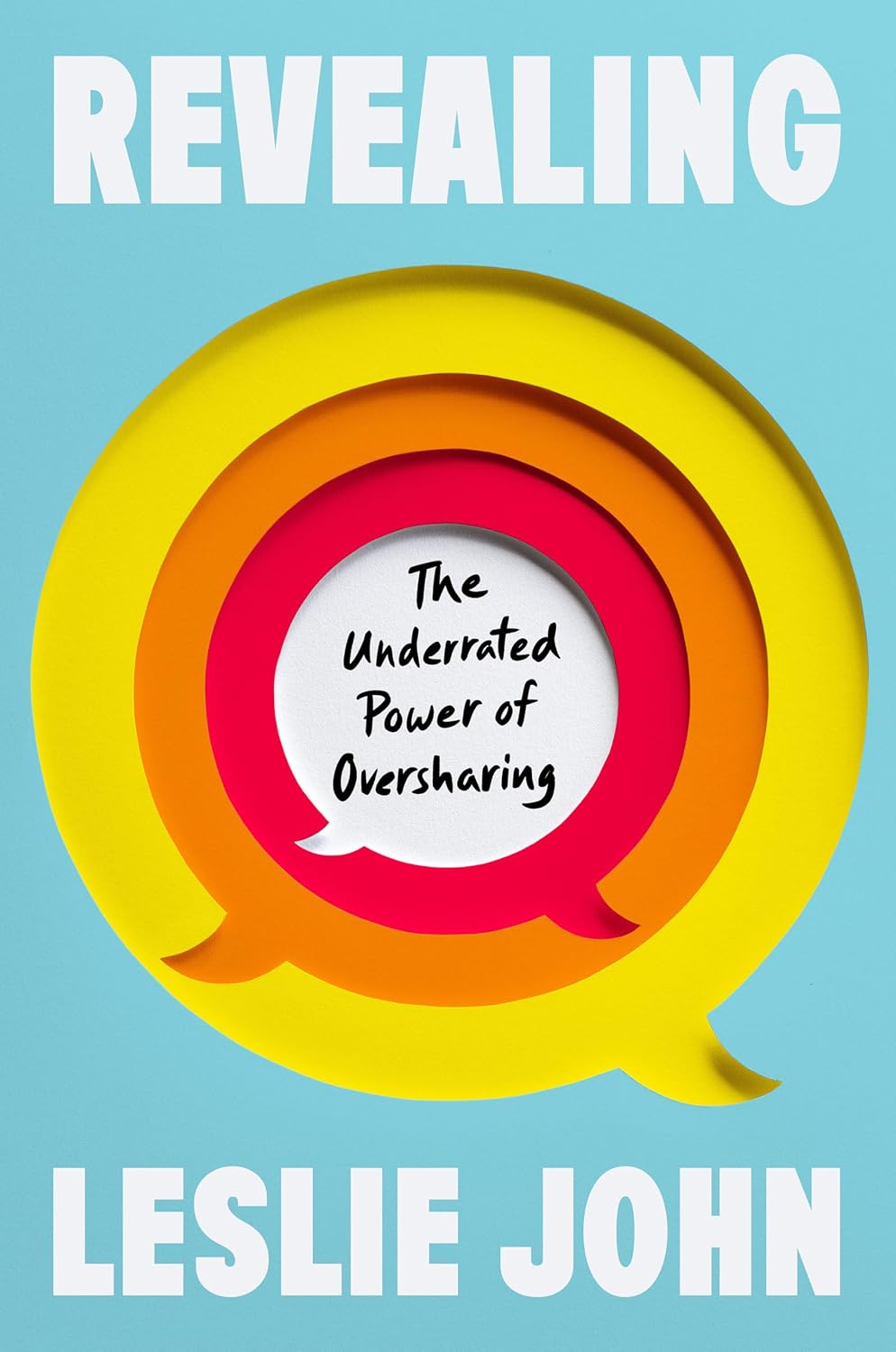
Finding the Goldilocks zone between oversharing and simply sharing confounds many of us. (Avoiding the inevitable cringe attack that follows an unreciprocated share does, too.) Luckily, in Revealing: The Underrated Power of Oversharing, Leslie John is here to school us in the art of offering up just the right amount of ourselves.
The author, a behavioral scientist and professor at Harvard Business School, makes a compelling argument that withholding can keep us from enjoying richer friendships and greater success at work, and even from finding a partner — plus, it’s just plain bad for our health. Drawing on over a decade of research, the book shares moving personal stories — including from John’s own life — which makes sense because the things we’re most often worried about sharing feel especially singular and private. When we reveal them to others, hopefully they’ll reciprocate, leading to stronger relationships and the ever-elusive “good life.”
The book offers much scientific evidence for how to make disclosure decisions bravely and wisely, not just by recklessly oversharing. One major finding that John ably explains is that people often underestimate the downside of concealing, which is a function of our tendency to overestimate the weight of the emotional events being concealed.
In fact, she says, rather than being concerned about disclosing TMI — too much information — we should be wary of revealing too little. “The sting of TMI fades faster than we think,” she writes, “and is replaced by the ache of TLI.” Research indicates that 60 percent of people most often regret the things they didn’t do or say. We also tend to underestimate the cost of keeping a secret, which is linked to negative physical and mental health.
So, how to open ourselves up with confidence and aplomb? As John explains, some people are just better at it because they have high disclosure flexibility — the ability to dial openness up or down depending on the situation. But the rest of us can learn to better weigh the benefits and risks of sharing TMI or TLI, too, even if the skill doesn’t come naturally.
As Revealing points out, disclosing information can feel more daunting than concealing it, but it’s the latter scenario that leads to more psychic harm. That’s because the decision to reveal, once acted upon, is irreversible, but opting to conceal information is not. Withholding information indefinitely leaves us in a state of cognitive and emotional limbo that can lead to a perpetual cycle of rumination and delay. Ironically, it’s often the irreversible decision — going ahead and sharing — that’s healthier. Withholding may seem safer, but disclosing spares us endless second-guessing.
Nonetheless, there are times when holding back (at least initially) makes sense. John points to Dr. Mike Norton, whose research into online dating found, somewhat paradoxically, that the profiles with the least information garnered the most interest. Apparently, the more details you post, the more chances you’re giving prospective dates to think, “That person’s not for me.” As it happens, in the early stages of dating, seeing something you can’t relate to is a bigger turn-off than points of similarity are turn-ons.
In the end, allowing ourselves to be vulnerable is an important part of developing deeper, more meaningful relationships. Finding the right balance between sharing too much and sharing too little may not be easy, but Revealing offers helpful insights to get you started.
Antoaneta Tileva, Ph.D. is a Bulgarian transplant who has lived in the DC area since she arrived here at age 12. She is an intensely curious cultural anthropologist and a lover of all sorts of pun-ditry and dad jokes. She teaches at American University’s School of International Service. She is a very mean cruciverbalista and leaves no crumbs behind (literally). Don’t challenge her to a hip-hop-quoting contest because you will be resoundingly thrashed.