Sunbirth: A Novel
- By An Yu
- Grove Press
- 256 pp.
- Reviewed by Nicole Yurcaba
- August 25, 2025
Villagers struggle to make sense of their darkening world.
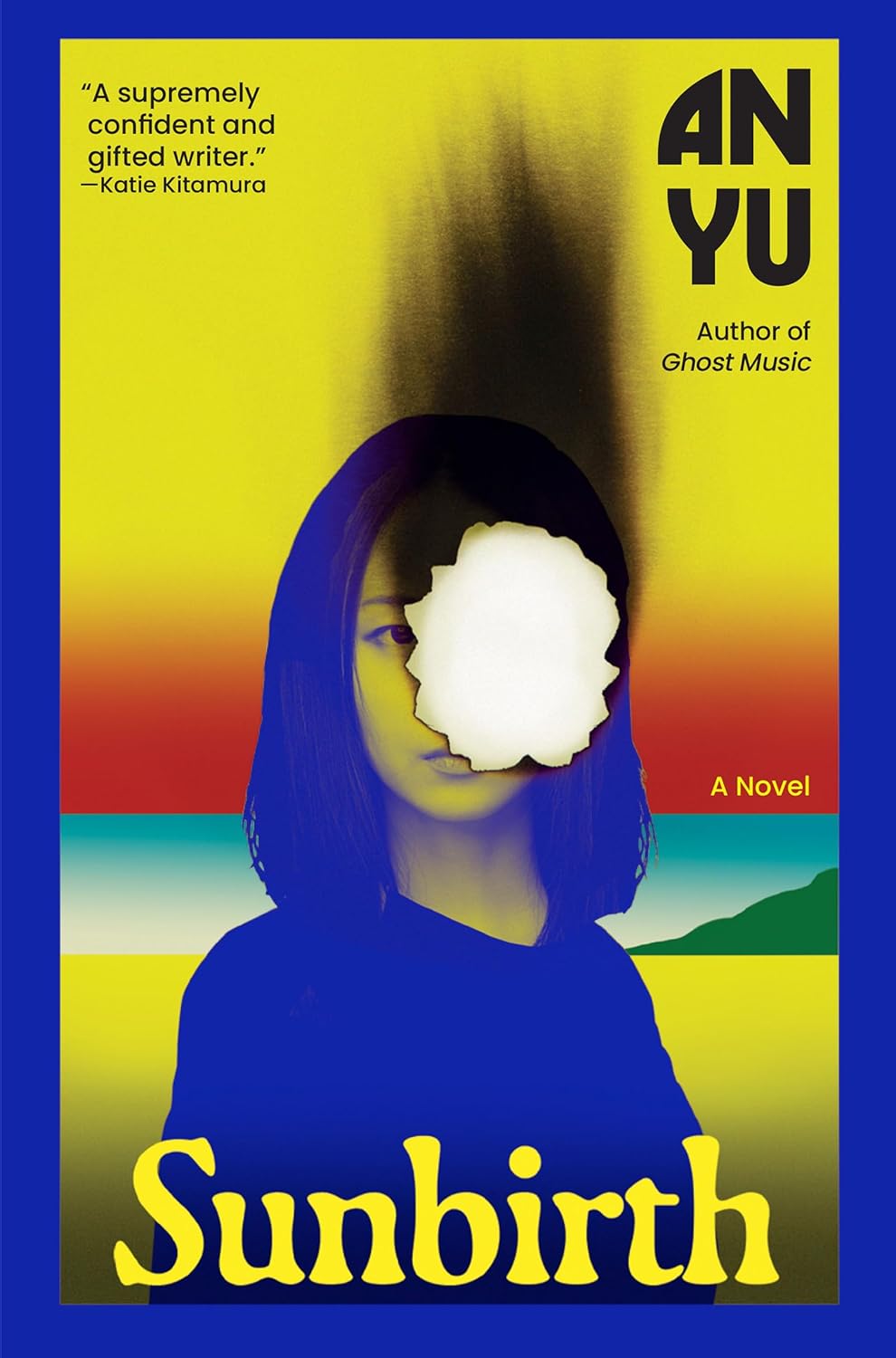
What if the sun slowly began disappearing? What would we scramble to preserve or sacrifice before our world was plunged into perpetual darkness, cold, and despair? And what if, by chance, a secret few held the key not only to the future but to salvation?
Those are the questions posed in An Yu’s surreal and spellbinding Sunbirth. The novel depicts the final days of the darkening Five Poems Lake, a small village isolated by impenetrable desert. Very few ever attempt to leave the place, and those who do either die trying or — if they’re lucky enough to survive the escape — never return.
One of the village’s rare places of hope is a small, traditional-medicine pharmacy operated by the story’s narrator, an unnamed young woman whose only living relative, her sister Dong Ji, works at a wellness parlor for Five Poems Lake’s handful of privileged residents. As the sun disappears, everyone struggles to find meaning in their relationships, their existences, and even their doomed futures. Meanwhile, another disturbing occurrence plagues them: Individuals known as Beacons — their heads replaced by searing, blindingly bright light — begin to appear. Dong Ji and the narrator wonder if the Beacons hold the key to understanding their father’s mysterious death many years earlier.
As natural disasters, mega-storms, and rising temperatures threaten and reshape our real-life world, the fictional catastrophe unfolding in Five Poems Lake feels like a warning. At its core, though, the novel offers a deep message about survival and the importance of community. “People had to live, after all, and life was already a large enough mess, even before the sun started to disappear,” the narrator observes, but “as long as the sun continued to rise, we had to live, and to live, for most people, was to survive as an individual, not as a species.”
These subtle philosophical musings contribute to Sunbirth’s dreamlike tone, even as the novel’s dystopian underpinnings call to mind Alison Stine’s Trashlands, Cormac McCarthy’s The Road, and Toby LeBlanc’s Soaked. Beyond dystopia, however, the book explores the generational trauma caused by cataclysmic environmental events. At one point, the narrator states that, as people grow, their “childhood becomes foggy,” yet “they always remember the weather.” She attributes this recollection to “the tactility of air touching skin” that “makes it impossible to forget”:
“We remember it with our bones, our muscles, our skin. So even though I had been living with the cold for over half of my life, if I just closed my eyes, I could still feel the full sun blazing over Five Poems Lake.”
Along with emphasizing the interconnectedness between humanity and nature, Yu highlights the significance of family as central to one’s identity and resilience. While investigating their father’s death, the narrator and Dong Ji frequently discuss how their upbringing shaped them. For the narrator, carrying on her great-grandfather’s legacy by operating the pharmacy is key to maintaining her independence from her sister. Further, it establishes her as a symbol of a different time. Dong Ji, conversely, represents a new era, a progressive — even hopeful — one. The two stand at odds with one another, their conflict representing how the past and the present collide in order to shape the future.
Of course, looming over everything are the Beacons. Their random, eerie appearance and spontaneous combustion only add to the narrative’s unpredictability and chaos. They also serve as a unique metaphor: During dark, despairing times, perhaps all we need to do is seek the light inside ourselves.
Anchored in curiosity and wonder, Sunbirth is keenly introspective and strangely mesmerizing — a poetic, necessary call to “absorb the world, to endlessly store everything” around us. With its tantalizing story of families, secrets, and a world thrown into turmoil, Yu’s novel is a must-read work of speculative fiction.
Nicole Yurcaba (Нікола Юрцаба) is a Ukrainian American of Hutsul/Lemko origin. Her poems and reviews have appeared in Appalachian Heritage, Atlanta Review, Seneca Review, New Eastern Europe, Euromaidan Press, Chytomo, and the New Voice of Ukraine. Her poetry collection, The Pale Goth, is available from Alien Buddha Press.