That’s All I Know: A Novel
- By Elisa Levi; translated by Christina MacSweeney
- Graywolf Press
- 192 pp.
- Reviewed by Mike Maggio
- July 2, 2025
A delightful tale of a sleepy Spanish town watching the world pass it by.
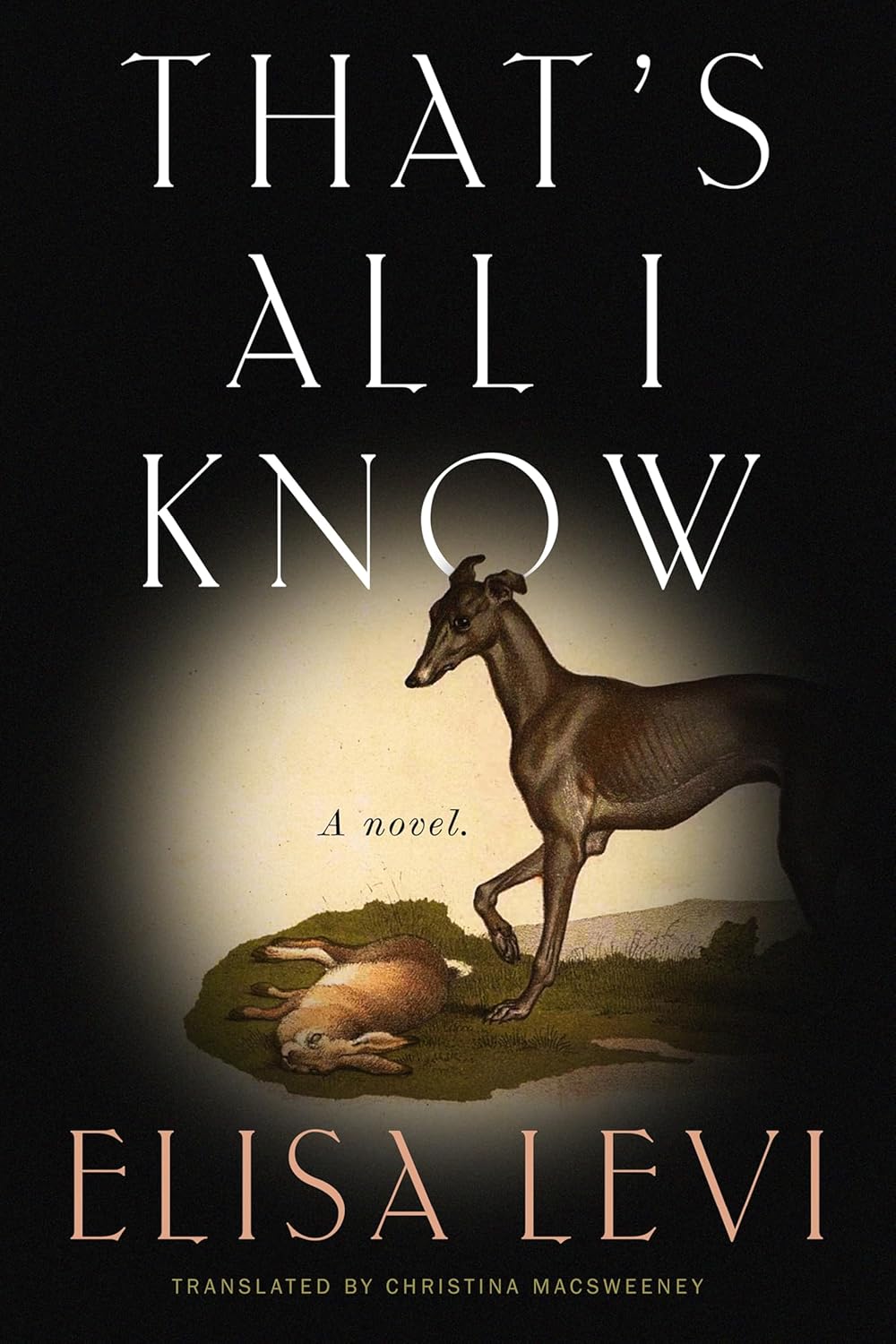
Every once in a while, there comes a novel that tears at the heartstrings and speaks to the soul. The characters woo you into their world in a way that makes you feel you’re part of their lives. You recognize them as if you knew them before and sympathize with them so much that, no matter how egregious their acts might be, you forgive them and even understand why they behave as they do.
The masterful That’s All I Know by Spanish writer Elisa Levi (and translated by Christina MacSweeney) is one such book. It tells the story of Little Lea (as opposed to Big Lea, her mother) who lives in a tiny rural town in Spain that has just four streets and faces a forest where people, according to legend, get lost and never come back. The nearest city is Pueblo Grande, where most residents seek work. Somewhere beyond lies the sea.
Little Lea is a 19-year-old who smokes weed with her friends, Javier and Marco, and has a sister, Nora, with a degenerative condition that leaves her unable to talk, walk, or take care of herself. As a result, Nora is wheelchair bound, and Little Lea has become her caretaker, a burden she bears and sometimes embraces.
The story is told through Little Lea’s eyes in a voice both endearing and biting. As the novel begins, she’s sitting on a park bench on the first day of the New Year talking to a stranger — an out-of-towner — who has lost his dog and who listens patiently as Little Lea relates to him all that she knows about her home and its residents.
She speaks of hapless Esteban, who accidentally shoots his own foot, survives countless tragedies, and is known as “the most fearful man in the world.” She tells the man, too, of Juana, whose brother has died and who sits every day with an empty chair beside her. She also talks of Catalina, who limps due to a leg injury and who searches unsuccessfully for love, and of Marco, who loves Little Lea, who, in turn, loves Javier, who doesn’t really know how to love anyone. And then there are the outsiders who move to town and whom nobody trusts. Like all the others, they’re stuck inside their broken lives.
And that’s exactly what That’s All I Know is about: individuals lost in a stifling world they cannot escape, as if they’ve all gone into that mythical forest and cannot find their way back out. Instead, they await the end of the world, a time when something — anything — momentous will happen to free them from their inertia.
Little Lea continues speaking to the stranger:
“If I were running this town, I’d have signs put up, sir, enormous billboards on poles dug into the ground, saying: What you’re looking for isn’t here. People don’t realize it, but small towns smell of cow dung, and piles of dead animals, and fear, and resentment, and boredom, and sorrow, and hatreds that pass from one generation to the next. And people from other places fall in love with some weird idea of what it means to have to bear the emptiness of the countryside, the slow passage of the days.”
Throughout the novel, Little Lea insists she wants to flee — to free herself from these confines and start over in the city — but she can’t. Like her disabled sister, she is crippled by a life that has fully possessed her and is bound to the ones she loves and the ones she doesn’t. Readers will have to wait until the very end of the tender, engaging That’s All I Know to find out whether she triumphs. Along the way, they’ll grow to care for the people of this town — and come away with an understanding of the complexities of human nature in a world where simplicity masks the reality of joy and suffering.
Mike Maggio’s latest novel, Woman in the Abbey, was released in February and has been called “a magnificent blending of horror, fantasy, romance and suspense.”
.png)