The Art of Losing to a Y-14
- By Andrew Radu
- Jasper Alexander Editions
- 192 pp.
- Reviewed by Allison Thurman
- November 18, 2026
Learning humility in the world of competitive fencing.
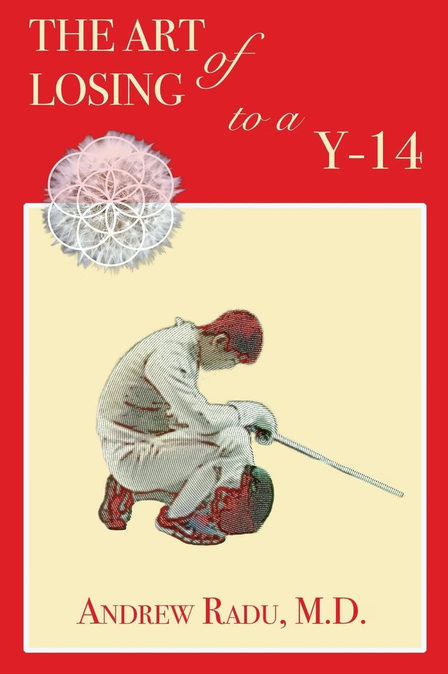
Fencing is a niche sport. Often overshadowed by movie swordplay, it is only noticed by most people during the Olympics (if at all). So, a new book about the sport comes as a pleasant surprise. More than a straightforward memoir, Andrew Radu’s The Art of Losing to a Y-14 both celebrates his victories and describes the cost of becoming an elite athlete. As a psychiatrist, the author also offers expert guidance for managing the stresses and avoiding the pitfalls of training and competing.
The book is intended for a very narrow audience: elite (or aspiring elite) youth fencers and their parents. Full of fencing jargon (for which Radu apologizes), the book’s vivid descriptions of competition are a treat for fellow fencers like myself but will likely be impenetrable to the casual reader. Likewise, Radu’s career in an environment of “community and kindness, but also hyper-competitiveness and brutal expectations” may not mirror the experiences of non-elite athletes.
Still, the discipline and sheer competitive drive required to succeed at the elite level should be illuminating for everyone. The realities of practicing through exhaustion, fitting competition into a work and school schedule, adhering to strict coaching guidance, and learning to dig deep for one more burst of energy and a sliver more focus to win the bout are well illustrated by the author, who provides ample examples from his own life.
But Radu doesn’t flinch when presenting the risks, either: injury, a sacrificing of the competition/life balance, and the conflation of personal worth with success on the strip all contribute to the already sky-high anxiety of existing in a high-pressure athletic environment.
Where The Art of Losing to a Y-14 really shines — and rises above the level of a standard sports memoir — is when Radu shares his psychological and philosophical insights. With admirable candor and self-examination, he reveals how psychotherapy and the perspective of time enabled him to avoid (or at least manage) some of the pitfalls of ongoing, intense pressure. He cites everything from punk-rock humanism to Søren Kierkegaard and explores how their precepts apply to any competitive arena, be it in the sports world, at the office, or at school.
Elite sport is necessarily time-limited, and Radu is frank about the disappointment of losing his competitive edge as he ages and about the singular pain of falling to a younger, less-experienced opponent (the book’s titular “Y-14” refers to a 14-year-old fencer). In my opinion, though, he doesn’t devote enough time to the fact that this decline — in fencing, at least — is slow, and that it’s possible to compete successfully outside of division 1 (the highest skill level).
Of course, my bias may be due to my own experience as a non-elite fencer who came to the sport as an adult and only sees competitive success in the veteran age category (40 and up).
Divisions, age brackets, and other fencing terminology are defined in a helpful glossary at the back of the book, as are detailed explanations of the philosophers and psychological topics presented in the text. At only 192 pages, How to Lose to a Y-14 is a short book but a valuable one for anyone navigating a high-stress environment.
Allison Thurman lives in Gaithersburg, MD, with too many books and not enough swords. She has fenced competitively for 20 years.