The Dream Factory: London’s First Playhouse and the Making of William Shakespeare
- By Daniel Swift
- Farrar, Straus and Giroux
- 320 pp.
- Reviewed by Bob Duffy
- December 24, 2025
A dazzling account of the Bard’s early stomping grounds.
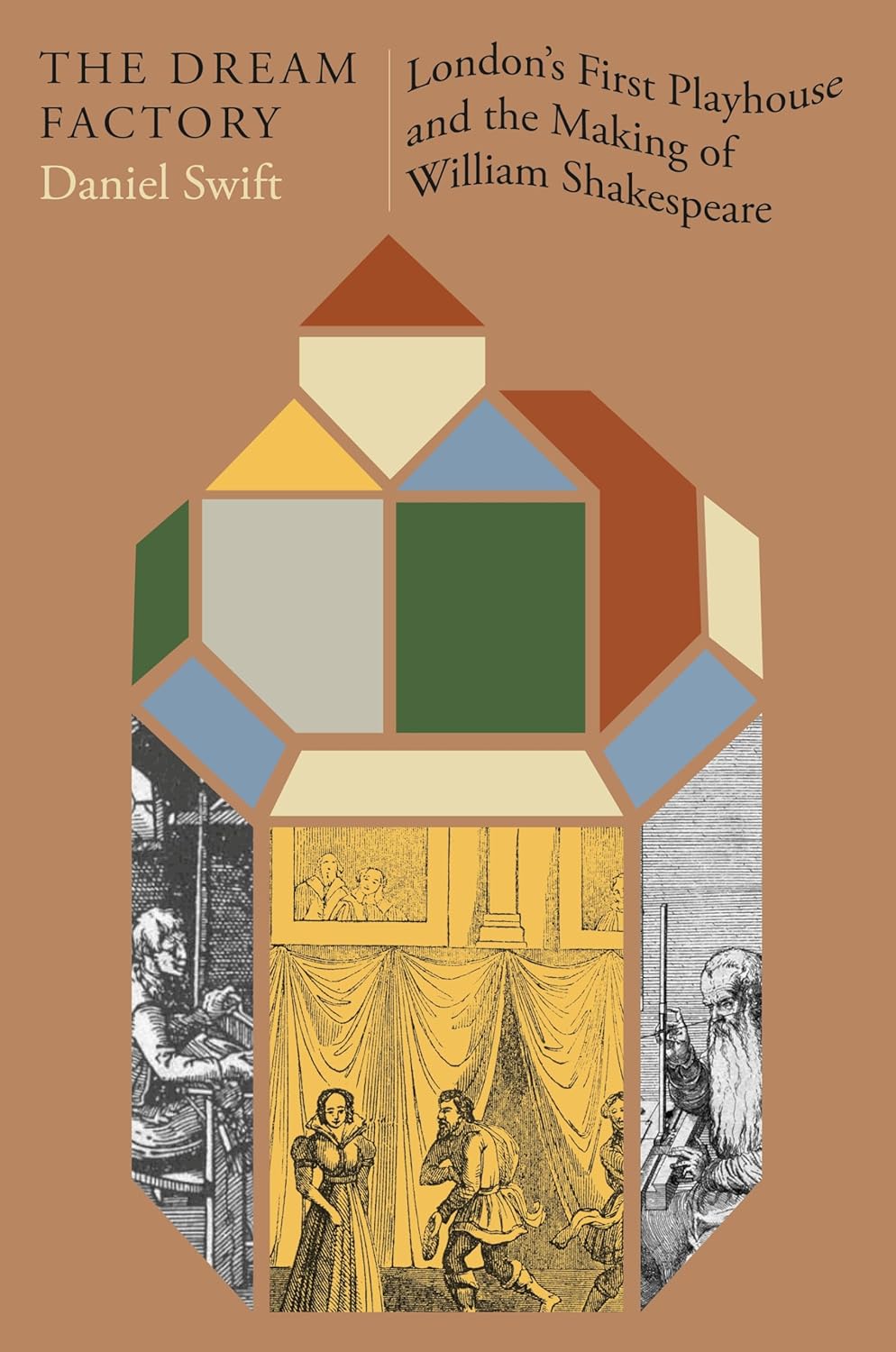
The Dream Factory deserves rave reviews from academic audiences as well as the community of serious readers interested in Shakespeare and the world he lived in. This book checks all the boxes: It’s doggedly researched, brilliantly argued, and artfully presented.
Author Daniel Swift, an associate professor of English at Northeastern University London, serves up fascinating detail and cogent analysis as he makes his case, faithfully integrating all that previous scholars have discovered about the culture surrounding plays and playmaking in the second half of England’s 16th century. This is the age of Queen Elizabeth I and the phenomenal flowering of London’s theatrical community, when we witness the emergence of dramatic geniuses like Shakespeare, Christopher Marlowe, and, a bit later, Ben Jonson.
At its core, The Dream Factory tells the story of the 1576 construction and subsequent operation of the first professional theater in England. The driver of this development: a quirky creative entrepreneur, “notorious brawler,” and former actor named James Burbage, who christened his dream project, rather prosaically, the Theatre.
But beyond this compelling, rough-and-tumble protagonist, there’s a good deal more to the story here. For instance, the author examines the structure and practices of the livery companies — the guilds roughly equivalent to today’s labor unions — that provided structural models for the acting companies of the day. Their frameworks for advancement furnished the template for young Shakespeare’s rise to prominence — from apprentice to actor/playwright to full partner — in the Theatre’s resident repertory company.
Swift also delves into the sporadic outbreaks of plague that walloped London in the mid-1580s and early 1590s. These epidemics prompted the periodic closure of London’s public theaters, often for months at a time. Shakespeare, early in his tenure in Burbage’s enterprise, took advantage of these slack periods to refine his skill as a poet, writing his earliest sonnets and crafting longer narrative works like Venus and Adonis. Coupled with his dawning celebrity as a playwright, Shakespeare’s poetry, published or circulated privately among his contemporaries, contributed to his growing reputation among noble patrons and the theatergoing public alike.
According to the records that we have, Burbage seems to have begun his career as a carpenter. But soon, we find him listed as a player in the road company sponsored by Lord Leicester, a prominent courtier and close confidante of the queen. When Elizabeth establishes the Queen’s Men, her own sponsored troupe of liveried players, Burbage doesn’t follow the handful of actors from Leicester’s company who move up. Instead, he pursues his dream of establishing a custom-built “playhouse,” the Theatre, on land he leases in Shoreditch, a few leagues north of London proper. He prevails upon his brother-in-law, a reasonably wealthy grocer (an industry subject to a livery company of its own), to fund construction.
The Theatre opens for business in early 1577. Shakespeare arrives in London from Stratford later, sometime in the mid-1580s, and quickly catches on at an entry level in Burbage’s “dream factory.” Before long — remember, he’s barely into his early 20s — Shakespeare is taking on small, sometimes female roles (the custom for younger players), and soon thereafter, he’s contributing as a “play doctor” and collaborator with other writers. By the 1590s, he’s the company’s star playwright, with A Midsummer Night’s Dream, Romeo and Juliet, and The Merchant of Venice among his contributions to the repertoire.
Elizabethan London was a litigious and combative place, which seemed to suit the self-assertive Burbage well, as he took on legal actions and religious counterattacks from several quarters. By the late 1590s, though, with his lease on the Theatre’s site running out, he hatches a new scheme. He boldly abandons the property, covertly bringing in a crew to dismantle his playhouse under cover of darkness. He loads its timbers onto wagons and moves them to a new site, where he builds a whole new facility: the Globe, the more widely known venue for Burbage’s star dramatist’s subsequent plays, including the great tragedies of Hamlet and King Lear.
Allow me one quibble: The book’s title seems a bit forced and unearned, as Swift never touches on the imaginative resonance of the plays presented for attendees at the Theatre. (Besides, “dream factory” is more often associated with the Golden Age of film production in America.) Chalk the moniker up to marketing impulse, an increasingly vital driver in publishing today.
Viewed from a broad perspective, Professor Swift’s remarkable study is really about the professional milieu of theater people — actors, playwrights, craftsmen, producers, investors, and venues. And this is the paramount contribution of his book. He offers indispensable, focused coverage of this raucous, thriving community and of a journeyman genius’ creative development. In The Dream Factory, he’s given us a comprehensive narrative recounting and an integrated analysis that appears nowhere else in book form. It’s a stellar, “unputdownable” read.
Bob Duffy, a frequent contributor to the Independent, is a retired brand-development consultant and a former academic specializing in Tudor drama and theatrical culture.