The Family Man: Blood and Betrayal in the House of Murdaugh
- By James Lasdun
- W.W. Norton & Company
- 432 pp.
- Reviewed by Diane Kiesel
- May 25, 2026
A gripping, stranger-than-fiction tale of greed and slaughter.
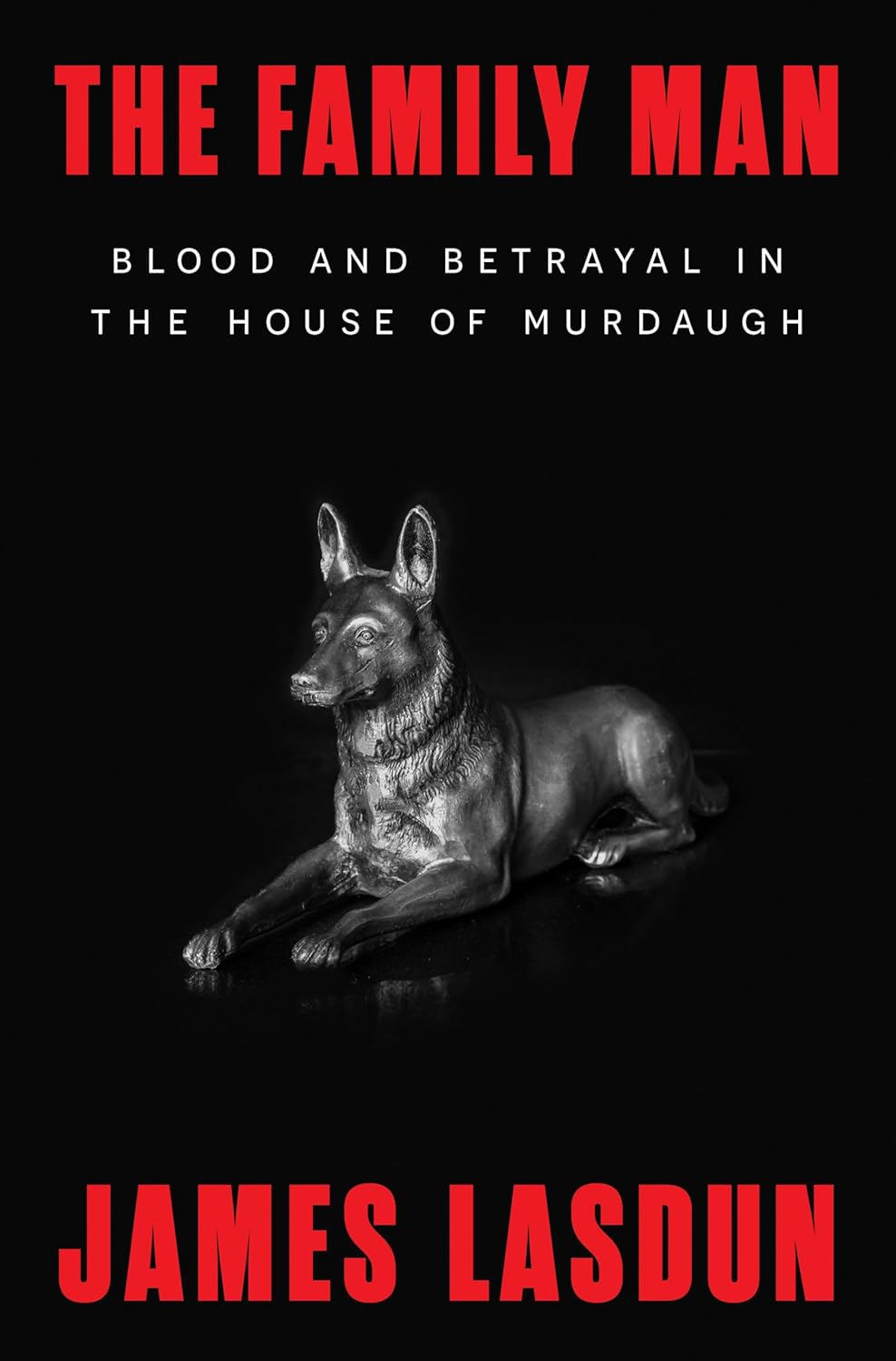
For over a century, the Murdaugh family held an exalted position in South Carolina legal circles. They were powerful prosecutors and wealthy civil litigators. The House of Murdaugh came crashing down in 2023, when fourth-generation attorney Richard Alex Murdaugh was convicted of murdering his wife and adult son. But as James Lasdun reveals in his masterful page-turner, The Family Man, Murdaugh’s homicides were just the tip of the iceberg. The Murdaugh scion was a one-man crime wave who embezzled millions from his law partners to feed his opioid habit and cheated widows and orphans out of personal-injury awards to fund his lavish lifestyle.
Often, when a writer can’t get out of his own way and injects himself into the narrative, it’s to the detriment of the story. Not so here. The English-born Lasdun, a stranger to the American South, takes readers on his journey through the Low Country. Initially unsure Murdaugh was guilty, Lasdun’s painstaking reporting slowly convinces the author — and us — that the jury got it right.
The Murdaugh saga, which riveted the true-crime world, is a tragedy of Shakespearian proportions. Thus, The Family Man is a huge step above standard “Dateline,” “48 Hours,” or “20/20” television fare (i.e., the wife is dead, the husband did it, change the channel).
It begins in 1910 when great-grandfather Randolph Murdaugh Sr. founded the family law firm and was elected county prosecutor. In 1940, the sickly Randolph died when his car was struck by a freight train; perhaps it was a suicide to enrich his heirs in the sure-to-follow wrongful-death suit against the railroad. Senior begat future generations of fraudsters. Randolph Jr. (aka “Buster”) was also county prosecutor. In 1956, he was indicted for tipping off a bootlegger before a raid but avoided conviction by intimidating witnesses, bribing jurors, and bullying the U.S. attorney prosecuting the case.
Randolph III (aka “Handsome”) behaved himself, building up the lucrative firm that his son Richard Alex — called Alex (or “Big Red” for his immense build and flaming hair) — eventually plundered. Alex and his wife, Maggie (who was possibly considering divorce when he killed her), had two sons: Buster, who was booted out of law school for plagiarism, and Paul, under indictment for crashing his boat into a bridge while drunk in 2019, killing one of his passengers.
If there were such a thing as a domestic-violence Hall of Fame, Big Red would’ve entered it at 8:49 p.m. on June 7, 2021, when he blew Paul’s brains out with a shotgun and mowed down his wife with a semiautomatic rifle on the family hunting estate, Moselle. Afterward, he established an alibi by driving 12 miles to the home of his dying father and Alzheimer’s-ridden mother, yakking away on his phone with friends and family the entire ride. He returned home at 10 p.m., “discovered” the bodies, and made a weepy 911 call. Authorities were suspicious from the get-go; Alex too quickly suggested to the dispatcher that cops should focus on people who’d allegedly threatened Paul about the boat crash.
The lid was about to blow off Alex’s years of scamming. Days before the killings, the firm’s financial administrator discovered he’d stolen from clients and misdirected firm funds into a secret personal account. One loathsome example involved Gloria Satterfield, the Murdaugh housekeeper who died in 2018 after falling up Big Red’s front steps. He blamed his rambunctious dogs for tripping her, sued himself, and covertly obtained a multi-million-dollar settlement from his homeowner’s insurance policy without paying a dime to Satterfield’s sons and heirs, including one who was disabled.
It’s believed that Big Red butchered his wife and son to engender enough sympathy to get the firm’s suspicious administrator off his back. And it worked — briefly. But three months later, the extent of Alex’s thievery became clear, and he was fired. Worse yet, the police weren’t buying the vigilante-homicide theory he was peddling. The day after his firing, Alex was found bleeding on the side of the road from a gunshot wound to his head. He claimed he was the victim of a drive-by shooting while changing a flat.
Unfortunately, Big Red lacked ol’ Randolph Sr.’s skill in staging a crime scene. His wound was superficial, and the tire had obviously been sliced with a knife found nearby. When nailed, he claimed he wanted to leave his surviving son $10 million from an insurance policy, but his real motive had been to convince police that there was a vendetta against his family and that Alex wasn’t the killer.
Alex’s gothic tale “seemed to be slipping into the realm of deepest noir,” tsks Lasdun. “Who was this scion of privilege with his secret life of epic larceny? This bastion of the legal establishment with his baroque masquerades?”
Lasdun slowly pulls the twine until Big Red’s ball of deception and evil unravels and he’s indicted for financial fraud and murder. Here, the Shakespearian tragedy truly kicks in; Alex was tried for murder in the courtroom where his grandfather Buster’s photo had long hung on the wall. (In an act loaded with symbolism, the judge ordered it removed before the trial.) More dramatically, the most damning evidence against him came from a final act by his murdered son.
When police finally cracked into Paul’s cellphone, they discovered a video the kid had recorded moments before he was killed (unbeknownst to Alex) that showed the family frolicking at their dog kennels, which was the murder site. Alex had lied to investigators for months, claiming he was napping in the house when his wife and son were at the kennels. Unfortunately for Alex, his voice could be heard on the recording. He was convicted and sentenced to two consecutive life terms.
(In a real-life “Law & Order”-worthy twist, Murdaugh’s murder convictions were recently overturned by the South Carolina Supreme Court due to the “improper” actions of a court clerk who made derogatory comments to jurors during the trial about Murdaugh’s defense case. A new trial has been ordered, but Murdaugh will remain in prison regardless because of his numerous state and federal financial-crime convictions.)
The Family Man first appeared as an article in the New Yorker. Lasdun followed up with this full-length book “to offer a reckoning appropriate in scale and detail to the magnitude of its central horror.” He adds, “I hope I’ve achieved at least some part of this.”
In fact, he’s achieved it all.
Diane Kiesel is a retired judge of the New York Supreme Court and author of a textbook, Domestic Violence: Law, Policy, and Practice.