The Hounding: A Novel
- By Xenobe Purvis
- Henry Holt and Co.
- 240 pp.
- Reviewed by Marilyn Oser
- September 9, 2025
Sisters in 18th-century England enjoy uncommon freedom — to the alarm of their suspicious neighbors.
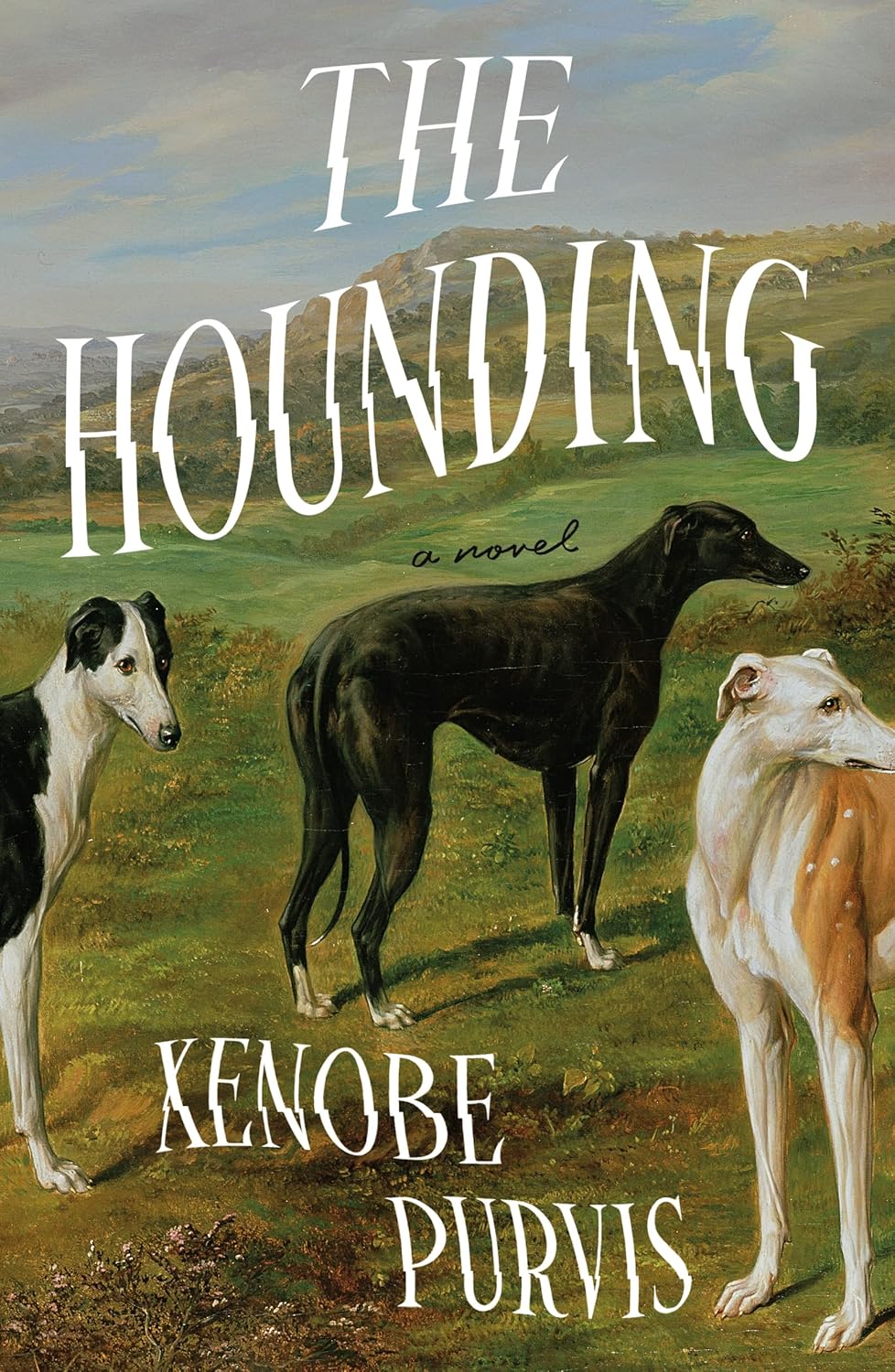
First things first: Ignore the back cover of this debut novel, which might lead you to believe what’s inside is low-taste horror. Ignore the cheesy title, too, with its obvious double meaning. Ignore its “parable” label; the narrative is far too complex for that. (Allegory would be more accurate, except that the characters emerge so fully as human, each with individual quirks, quibbles, and quiddities, that any inherent symbolism never dominates.) Despite the fact that it tells of girls allegedly able to turn into dogs, Xenobe Purvis’ The Hounding is a serious work of fiction.
In Oxfordshire, at the start of the 18th century, near the village of Little Nettlebed, which straddles the not-very-wide River Thames, the five Mansfield sisters, ranging in age from about 8 to 15 or so, are being raised by their nearly blind grandfather. Their parents are dead, and so, too, more recently, is their grandmother, for whom they still wear the deep black of mourning. The sisters are allowed unusual freedom to be outdoors at what is thought an unseemly time, near nightfall. Also unusual, their grandfather prizes their independence as much as they do — so much so that “he’d rather they were dogs than damaged girls.”
A timeless backwardness pervades the village, even while changes are taking place. As the novel proceeds, the villagers’ general unease becomes more and more pronounced, caused by strangely hot, dry weather and its consequences: wells drying up, crops withering. Being or becoming a woman in this place means being looked down upon, despised, even feared, especially this bloc of five of them. Rarely is one girl seen without the company of a sibling. Often silent in public, they seem to communicate among themselves through looks and movements alone, much as animals might. When at home, their sprightly give-and-take is delightful.
Little Nettlebed is large enough for the vicar not to know everyone by name — or not want to, at least. In any case, it’s also large enough for the reader to be dizzied at first, yet soon one comes to be acquainted with the villagers and to know a few of them intimately, in addition to feeling a closeness with the sisters. The story is colored by the perceptions of the villagers, by their beliefs, their hopes, their fears, their prejudices, and their knowledge and ignorance.
The folks whose thoughts the reader is privy to are outsiders in one way or another — or feel themselves to be by virtue of their imagination, place in life, or temperament. Each has his or her own preoccupations and internal struggles, each his or her own decided opinions.
In this tightly plotted narrative, nothing is extraneous, nothing wasted. Everything said early in the story has its echo later on. One character, for example, who believes that he’s beheld an angel as a sign of divine choice, later dies with blood pooling around him ironically like wings. The prose is clean and spare, without modernisms or gratuitous archaisms. Dialogue demonstrates relationships among the characters while simultaneously moving the plot along and creating tension over what’s to come.
The sense of the period emerges, too. Describing haymaking, author Purvis says of one character that “all he knew was the task at hand…the sun burning the back of his neck and the handle of the scythe rubbing against his palms.” And of the time of day called cockshut, she writes, “The light was becoming thinner…things were not always as they seemed. Colours changed, and shapes shifted. Dim light deluded the eyes.” Similar imagery throughout sustains an unrelenting theme of blindness, of the inability to see clearly or make out what’s true.
Description for its own sake is minimal. You won’t, for example, encounter a verbal snapshot of the village. Yet the sky, the trees, the wildflowers, and the small animals along the river receive frequent attention. In brief sketches of the natural world, a sight, sound, or smell affects one of the characters, revealing a fresh thought, emotion, memory, or purpose. The beauty of the place can’t help but impress the reader, especially as it casts into stark relief the ugly urges of the people. “A treat for drinking men could mean only one thing: something was going to be hurt” — or worse, as when a badger is cruelly baited and killed outside the alehouse by a clot of drunken men and their dogs.
Perhaps you’re wondering how — or whether — the five sisters actually turn into dogs. That you must discover for yourself. Fortunately, this isn’t a story about pets but about women and their place in society, about the dangers of rumor and mob behavior, and about the perilous ripening of adolescence — surely as fraught today as it was in the 1700s.
Marilyn Oser is the author of the novels This Storied Land, November to July, Even You, and Rivka’s War; the blog “Streets of Israel”; and other short fiction and nonfiction. A recipient of the University of Michigan’s Hopwood Prize, she has been called “a particularly gifted novelist” by the Midwest Review.