The House of Barbary
- By Isabelle Schuler
- Raven Books
- 368 pp.
- Reviewed by Philip Zozzaro
- February 16, 2026
A mysterious death reveals deeper secrets in 1600s Switzerland.
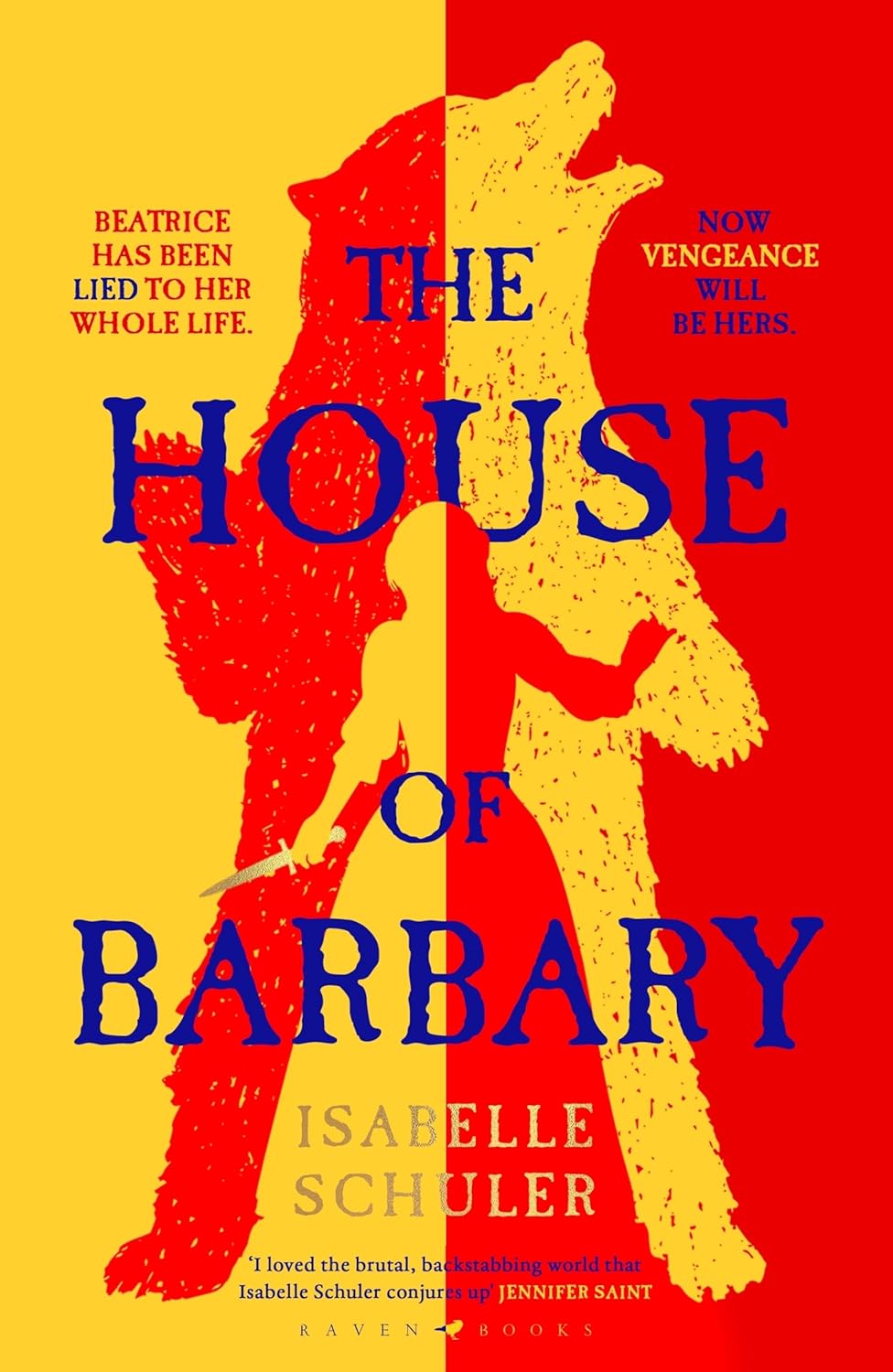
It’s the 17th century, and Beatrice Barbary is mourning the loss of her father, Jakob, the Schultheiss (or mayor) of Bern. Beatrice is adrift, for he was not only her sole surviving parent but also her support system. As the townspeople gather to pay respects to their late leader, Beatrice is withholding a secret from them: The body to be buried isn’t Jakob’s.
Beatrice isn’t completely unattended. She still has her reliable and stalwart maid, Imerla, for counsel. Imerla has assumed the role of guardian and protector, and she believes Beatrice should move on with her life. But Beatrice has doubts about a possible alliance with the Erlach family through marriage to its youngest son, Albrecht. During his life, Jakob refused to allow Beatrice to be married off, and he kept her at a distance from the outside world. Because her father defied convention, Beatrice always believed she was different and that, as a result, the people of Bern viewed her with suspicion.
Of course, Jakob didn’t merely die: He was murdered. Yet when Beatrice confronts the purported killer, she doubts the man’s guilt. Even more troubling are the sudden return of her father’s long-absent adviser, Sigmund, and a heated conversation about Jakob’s shepherding of Beatrice. Soon, she sets her mind to obtaining answers about her father’s death.
Those answers may lie some years earlier, when painter Johann Schor first arrived at the House of Barbary. Johann was born into a political family headed by his ambitious father, Wilhelm, who couldn’t pass up a chance to ingratiate himself to the mayor of Bern. So, Wilhelm positions his son to paint Jakob’s portrait. As Johann begins his residency at the Barbary home, he is introduced to the precocious Beatrice. He observes the bond between father and daughter and becomes fond of the girl. Jakob sees the potential in Johann and commissions the artist to paint other politicians, too.
Wilhelm sees his son’s proximity to the Barbarys mostly as grist for the gossip mill, but Johann finds himself quite taken with Jakob and his daughter. His opinion, however, undergoes a profound change on the night he discovers a body in the cellar of the Barbary home. At first, he is unsettled, but as he begins to learn more about Jakob and his political associates, distress becomes disgust. Johann is soon forced to make a decision that will affect the rest of his life — and Jakob’s.
Isabelle Schuler’s The House of Barbary is a dramatic fairytale with more than a touch of horror sprinkled throughout its gripping 300-plus pages. We see the haunting narrative through the eyes of both Johann and Beatrice, albeit at different points in time: Most of Beatrice’s story is set in 1653, while Johann’s unfolds primarily in 1639.
Beatrice and Johann share similarities: They both are children of powerful men, they are talented, and their fathers are dominating presences in their lives. Beatrice’s curiosity and tenacity distinguish her and propel her search for answers in Jakob’s death. Johann, for his part, desires independence but is forced to yield to the demands of the abusive Wilhelm. His inability to assert himself dogs him through the years and eventually leads him to compromise his integrity. Ultimately, both Beatrice and Johann are tragic figures.
The plot crackles with tension as Beatrice’s search for the truth reveals damning secrets. Schuler skillfully conveys Beatrice’s sense of creeping paranoia as she begins to question whom she can trust. With its themes of filial grief and shattered illusions, The House of Barbary is compelling from its start all the way to its shocking denouement.
Philip Zozzaro, a married father of three, enjoys reading as much as possible, particularly history, biographies, mysteries, and horror. His reviews have appeared in the San Francisco Book Review, Booklist, the U.S. Book Review, and elsewhere.