A superb, genre-defying conclusion to the author’s Cal Hooper trilogy.
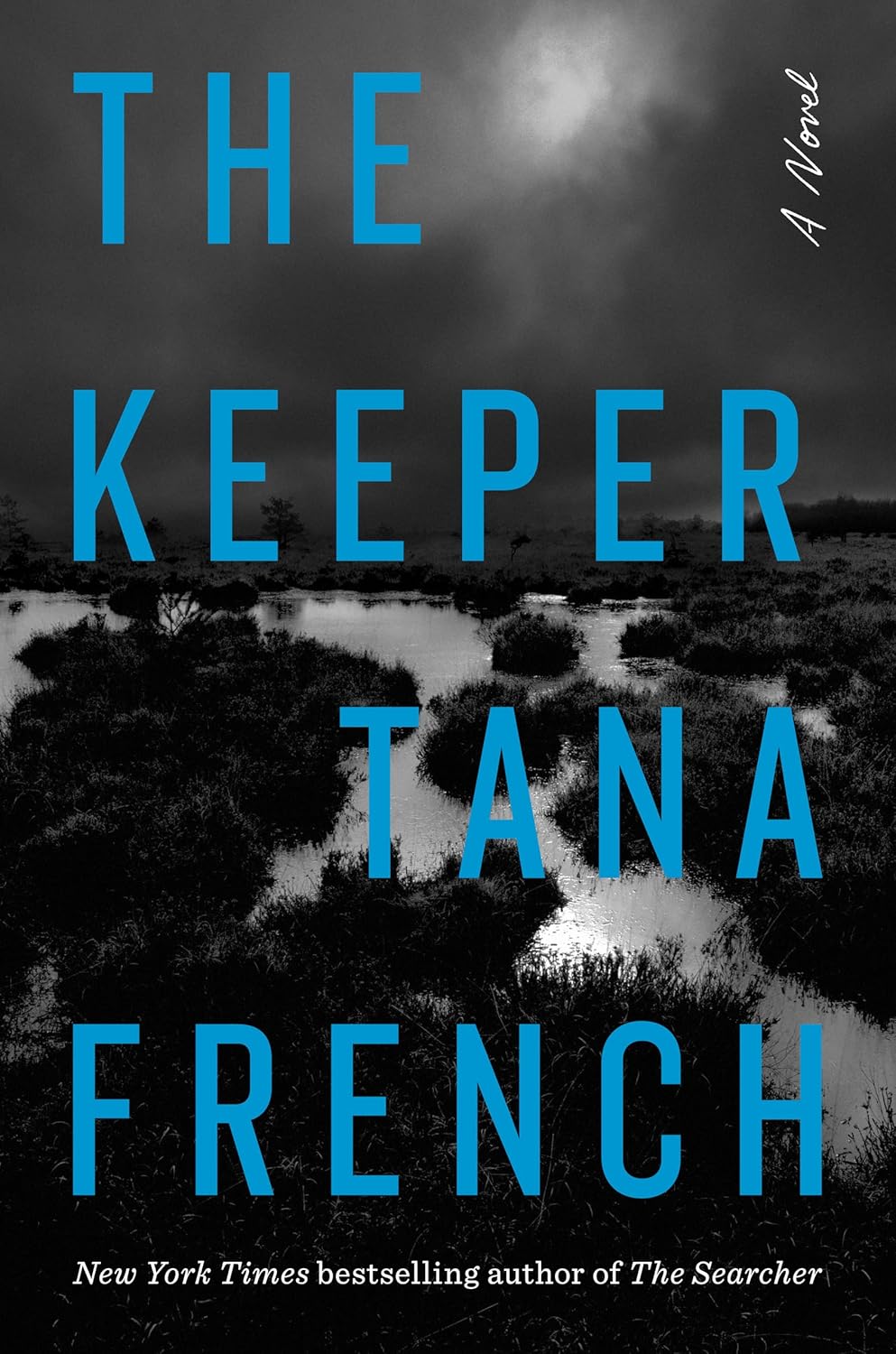
Tana French’s The Keeper concludes her three-novel series centering on American expat Cal Hooper, a retired Chicago detective who has moved to the west of Ireland. Reading this series is a wondrously enthralling experience. The Keeper is imbued start to finish with a mesmerizing sense of place and an unerring instinct for capturing not just character and personality but a spot-on feel for the authentic cadence of spoken language. The rural Irish characters sound like real-world folk, casually interspersing their native idiom with media-transmitted American slang.
As the story opens, the fiftyish Cal has lived in the village of Ardnakelty, the series’ fictional setting, for five years. Gregarious and largely accepted by his rural peers, Cal has drifted into a relationship with Lena Dunne, a solitary widow who is inclined to keep the other denizens of the town — notably the female friends of her youth — at arm’s length.
A central motif throughout the trilogy has been Cal’s emotional bond with young Trey (short for Theresa) Reddy, begun when the girl was 13. Left to her own devices by a single mother who’s more distracted than neglectful, Trey spends much of her free time assisting Cal on his woodworking projects and sleeping on his sofa several nights a week. A dicey arrangement, indeed, especially in reflexively Catholic Ireland, but the Ardnakelty community — a collective, often ominously judgmental presence — apparently sanctions it, mostly because Cal seems to have transformed Trey from an alienated loner and potential delinquent into a minimally sociable adolescent.
French has written 10 successful novels, the first five of which fall squarely in the realm of character-driven crime fiction. The more recent — including this series — involve crimes or serious transgressions that demand unraveling. But they also bristle with the deepened attention to character portrayal more often associated with literary fiction. Most prominent on this measure: French’s interest in and insight into her characters’ psychology go beyond the immediate exigencies of plot progression that motor the standard whodunit.
We see this in The Keeper most vividly in the interior monologues of Cal and Lena, whose reflections on the goings-on in Ardnakelty — expressed in roughly successive sections of the book — frame the narrated action. It’s also apparent in French’s spectacular knack for worldbuilding, most evident when she brings together multiple characters in extended sequences of group dialogue: For instance, when Cal is engaged in playful back-and-forth with his farmer friends, or when he’s entrammeled in dark-of-night forays against the local power-broker oppressing the townland.
In other brilliant conversational set pieces, we find Lena dropping in on her sister, the village’s shopkeeper and gossip maven, or tentatively visiting the town’s sibylline crone as she (Lena) covertly investigates the suspicious suicide of a 19-year-old. Another arresting moment: her reunion with former school friends in a tipsy get-together after the funeral of the same young woman. As the friends half-jokingly complain about the rebellious behavior of their own teens, Lena, invoking the history and collective consciousness of rural Ireland, muses to herself:
“These women are brandishing the stories the way they’d hang amulets and scroll symbols, masking their children’s preciousness from whatever malevolent thing weaves through the air scanning for prey. This is protection.”
Although my recital of these moments may read like critical overkill, in this marvelous novel, quite the opposite is true: There are scores of such sequences — easily comprising more than half the book — where extended spoken exchanges dominate, though they’re mediated by the savviness of the two principals. These passages are more starkly theatrical than the typical tumbling-forward rhythms of much genre fiction, and they drive home the profound social resonance of The Keeper and its companion novels. At the same time, they make for a contemplative, leisurely read rather than a fast-paced page-turner. Something to consider if you choose to pick them up.
So, am I singling out French as a unique innovator here? Nope. There are other authors blurring the line between genre and literary fiction. I suggest Booker Prize laureate John Banville or Americans Laura Lippman and Dennis Lehane because they’re among my favorites. You may have your own exemplars of this growing trend. There are many. My recommendation? Read The Keeper or the entire three-volume series. They’re equally dazzling.
Bob Duffy, an ex-academic and former brand-management consultant, is a late-to-the-party fan of mystery fiction.