The Perilous Deep: A Supernatural History of the Atlantic
- By Karl Bell
- Reaktion Books
- 336 pp.
- Reviewed by Mariko Hewer
- September 25, 2025
An extensive account of an otherworldly ocean.
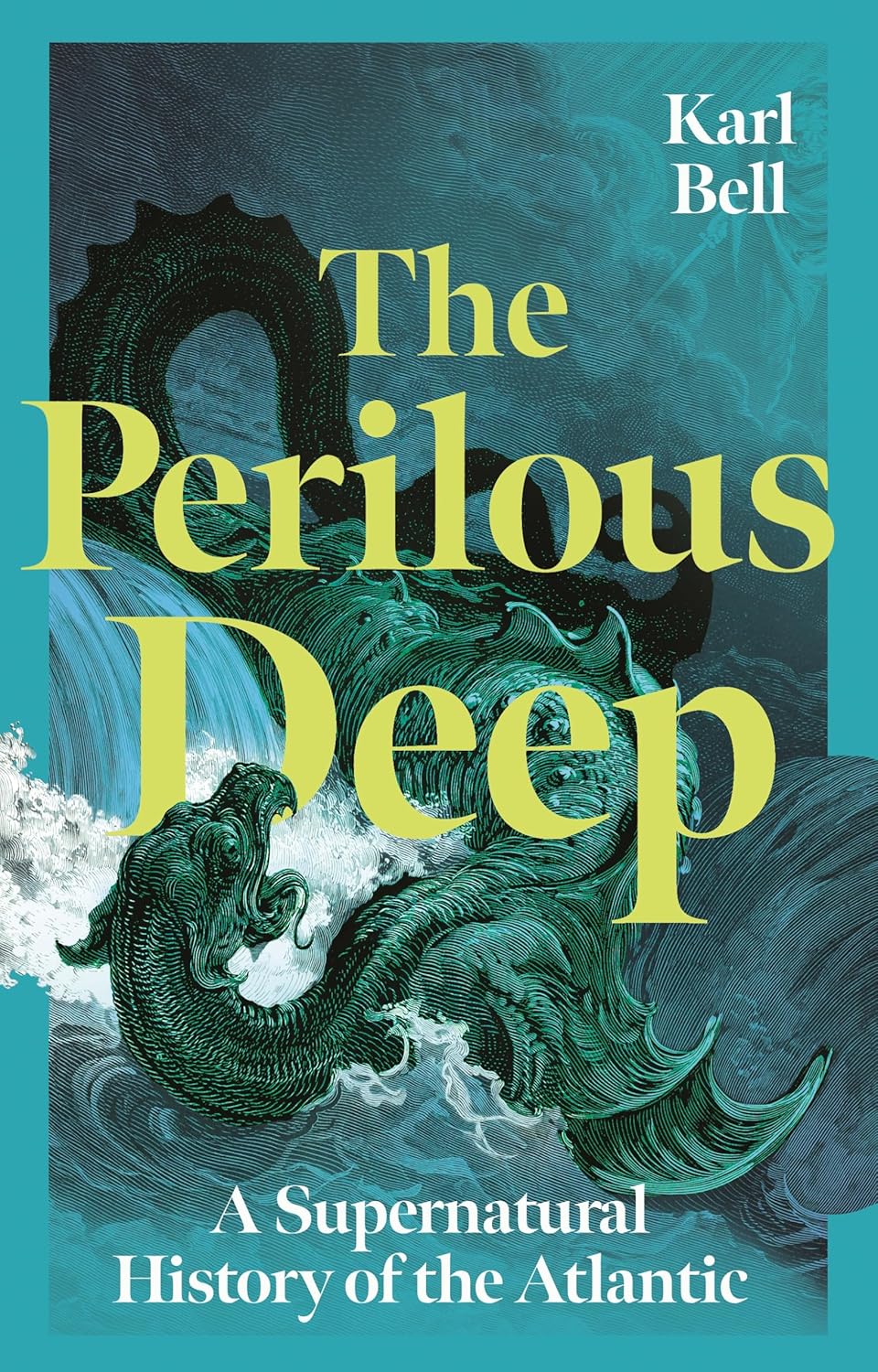
It seems humankind has always had a fascination with bodies of water and the stories spawned around them, from Homer’s epic The Odyssey and Hans Christian Andersen’s fairytale The Little Mermaid to, more recently, such films as the “Pirates of the Caribbean” franchise. Karl Bell’s comprehensive review, The Perilous Deep: A Supernatural History of the Atlantic, delves into the origins of seafaring myths, the purposes they served, and the evolution of such tales as our relationship to the Atlantic evolved.
“Our fear of the dark (nyctophobia) and fear of open or deep water (thalassophobia) combine to express the primal unease humans can feel at sea,” Bell notes. “It is often understood as an otherworldly realm, a barren place of loss, wreckage and decay.” In addition, “Earlier scientific understandings of the deep encouraged strange and macabre ways of envisioning what lies beneath the waves.”
The Perilous Deep is organized along clear, easily digestible lines, with chapters detailing such subjects as “Supernatural Beings and Fishy Tales,” “Monsters of the Deep,” and “Weird and Enchanted Geographies.” The author draws extensively on anecdotes, either firsthand or passed on by repetition, and provides useful context for them. In discussing the origin of a notorious haunted ship that persists in popular culture, for instance, he explains:
“[T]he Flying Dutchman’s appearance lashed together past, present and future: a vessel from the past is seen in the present and taken as an omen of future misfortune. In foreshadowing a storm or ill fortune, mariners were haunted by the ever-present dangers in their future as much as by a vessel from the past.”
For the loved ones left behind on land, “Tales of ghost ships became dramatic and memorable ways of memorializing nautical tragedies,” he writes. “For coastal communities that had suffered directly, the ephemeral existence and form of ghost ships and their ghosts reflected the simultaneous presence, absence and continuing existence of the dead in the minds of grieving relatives coming to terms with loss.”
In examining the haunted history of the Atlantic, Bell laudably doesn’t shy away from its darker side by discussing the transatlantic slave trade. Mermaids, in particular, he asserts, could be seen as an answer to the horrific and senseless deaths aboard slave ships:
“The Atlantic colluded in hiding the unknown number of bodies of slaves, both dead and alive, that were cast overboard. One idea, a comfort against the grief and loss of such actions, was that those who were treated in such a callous fashion transformed into merfolk…[permitting] them to live and live free in the Atlantic’s vast expanse.”
Bell also displays occasional deadpan humor, as when he describes an increasingly hysterical (and second-hand) account by the Dundee Courier of a hunting expedition to the seaweed-clogged Sargasso Sea that theatrically insisted “the [sought-after] giant squid was ‘a man-killer’”:
“Straying beyond the natural into the vampiric, it claimed that the creature used its ‘pump-like suckers’ to suck out their blood. The suggestion that the seaweed might sit above the site of Atlantis was casually dropped in…The article proposed a final horror, the existence of a huge whirlpool beneath the seaweed, a latter-day Charybdis that still occasionally drew in ships and held them in a strange ‘living death.’”
It can be all too easy, as the author points out, to view such tales about sea monsters and mystical underwater lands as mere superstitious fables, yet the underlying reasons for circulating such mythology — to make sense of a terrifyingly changeable world and our place within it — remain valid. Bell’s well-researched history does an excellent job of interpreting some of these legends.
Mariko Hewer is a freelance editor and writer as well as a nursery-school teacher. She is passionate about good books, good food, and good company.