The Price of Their Toys: Stories
- By John P. Loonam
- Cornerstone Press
- 178 pp.
- Reviewed by Chris Rutledge
- March 3, 2026
Poignant glimpses of what it means to be a man.
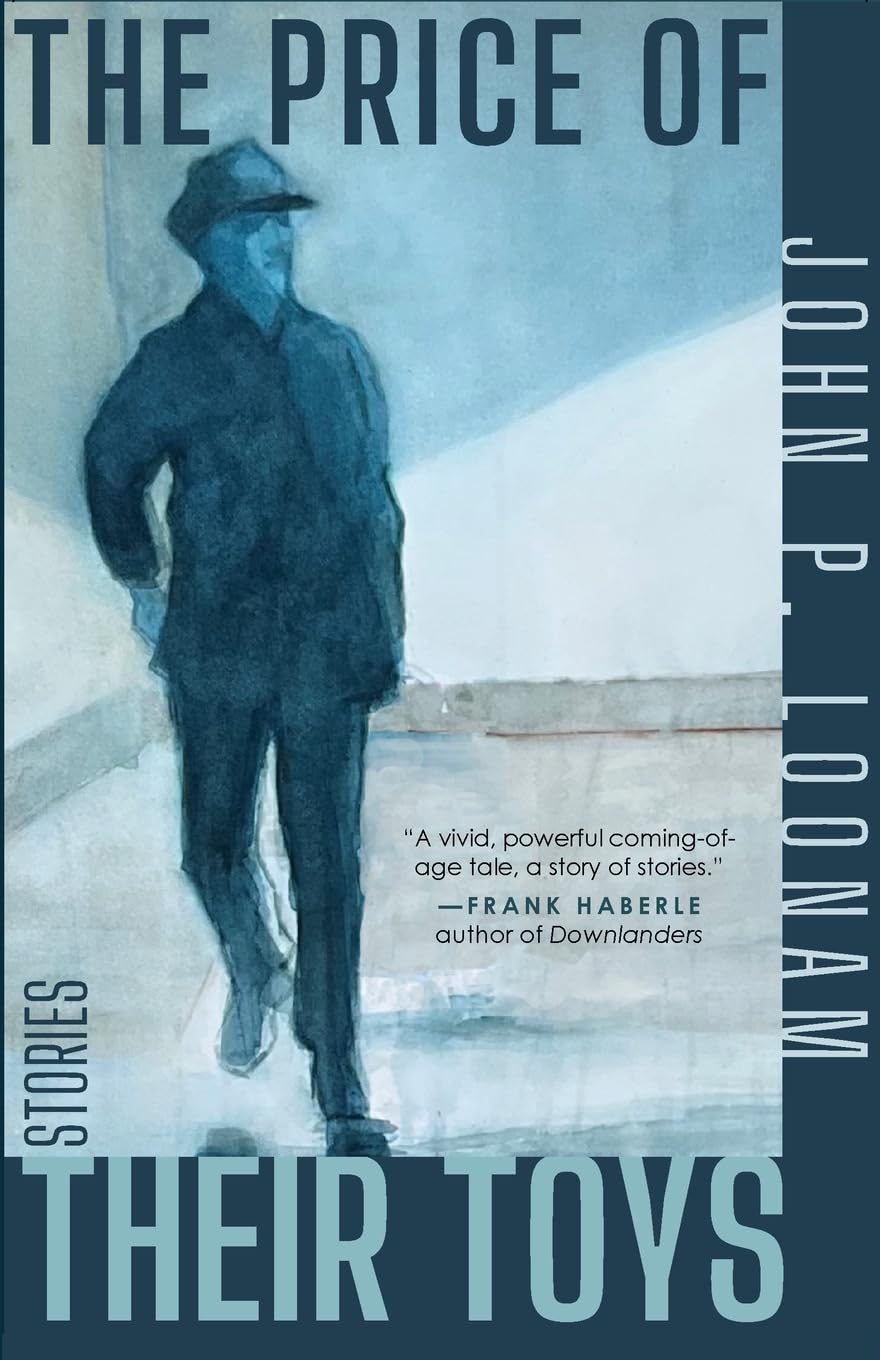
The title of John P. Loonam’s debut story collection is taken from a Malcolm Forbes quote, “The difference between men and boys is the price of their toys.” Those words, like The Price of Their Toys itself, suggest that, deep down, every adult male is pretty much still a young fellow struggling with identity and issues of manhood — we just have different playthings to enjoy while we do.
Brooklynite Loonam taught in New York City public schools for over three decades and uses his exposure to young men of all ages to inform his writing. The father of two grown sons, he casts a sympathetic eye on those who wrestle with what it is to be a man in 21st-century America.
A few key topics form the basis of Loonam’s writing. One is the issue of male loneliness. This malady has been the focus of many discussions in recent years, and the book explores it in several insightful stories. In “Running,” teenager Sam is pushed by his mother to develop relationships with other boys. She tells one, “He’ll be so happy to see you — his first real friend in the neighborhood.” Sam’s desperation for contact drips off the page, even if it is mortifying to have his mom play matchmaker for him.
In another high-school story, “Jorge’s Notebook,” we read of a student who has written graphic essays about which classmates he will murder. Jorge is isolated, and it’s only through violent fantasies that he feels able to connect with others.
This theme continues in “Even Richard Nixon,” wherein a lowly corporate drone finds that the ex-president has taken an office in his building. The narrator repeatedly tries to meet Nixon, if only to befriend him. In the process, he develops an unlikely bond with the Secret Service agent barring his way, guarding an office where Nixon never seems to appear.
Loneliness and isolation extend to families, as well. In “The Unexamined Life,” main character Barry seeks a familial closeness that will never come. As a friend reminds him, “Your daughter will grow up…she’ll live in a world that has nothing to do with you. You’ll only get to know…what she wants to show you.” This is a true — and truly heartbreaking — thing to hear.
Part of what leads men to be isolated is the sense of competition we foster among ourselves. In the aforementioned “Running,” Sam’s new friend Martin sabotages a toilet repair Sam has made, though his reasoning isn’t clear even to himself. Sometimes, guys just undermine other guys to lift ourselves up. In “Even Richard Nixon,” the narrator plays upon the Secret Service agent’s insecurities, asking him, “Are you jealous…Some other agent is actually guarding the President while you’re stuck here guarding his empty office.” How can the agent not be hurt by being reminded of his insignificant task?
A fear of romantic and/or sexual inadequacy recurs in these pages. Also in “Running,” one of the boys, commenting on how a neighbor looks in her bikini, notes that “it’s normal to be afraid of pretty girls.” This is partnered with a fear of sexual differences, as seen in “Trump,” which features a priest who takes an unnatural interest in a young male student. When “Father B’s hand came down for another gentle second on Frankie’s knee,” the result is panic on the boy’s part. To prove (or to restore) his “manliness,” Frankie goes to punch a friend so he can feel, rather than lurking homosexuality, the satisfaction of “his knuckles crushing Andre’s thick lips.”
Additionally, we read of men suffering through broken relationships. In “Returns,” our protagonist is left by his ex-fiancée to soldier through the process of returning their now-unneeded wedding presents to the store. He befriends Manny, a store security guard, who validates his suffering and focuses his attention away from his broken heart and onto the absurdity of the conspicuous consumption that fuels the wedding industry.
Lastly, in “A Wake,” the narrator considers the state of his relationship with his former wife. It’s gutting to hear him observe, “I was sorry to think that I could still make her laugh even though I could no longer make her cry.” It seems she’s moved so far past him, and he’s lost so much sexual power, that she has grown beyond his touch.
There’s one concerning element about this collection that I would be remiss not to discuss. In two stories, Loonam, in adopting the persona of his characters, indulges in the use of the N-word in his dialogue. One can argue that a white writer has the right to adopt such language for the sake of verisimilitude. This white reviewer believes we do not. Coming across this jarring slur in 2026 inevitably takes one out of the story and causes offense.
Nonetheless, The Price of Their Toys has much to offer. We men of a certain age will see ourselves in its pages, and those who love us may learn a bit about what makes us tick.
Chris Rutledge is a husband, father, writer, nonprofit professional, and community member living in Silver Spring, MD. Besides the Independent, his work has appeared in Kirkus Reviews, American Book Review, and countless intemperate Facebook posts, which will surely get him into trouble one day.