The Problem of God: The Challenges of Faith, Religion, and Spirituality Today
- By Erin M. Cline
- Georgetown University Press
- 212 pp.
- Reviewed by Jennifer Bort Yacovissi
- August 5, 2026
The real problem? Humankind.
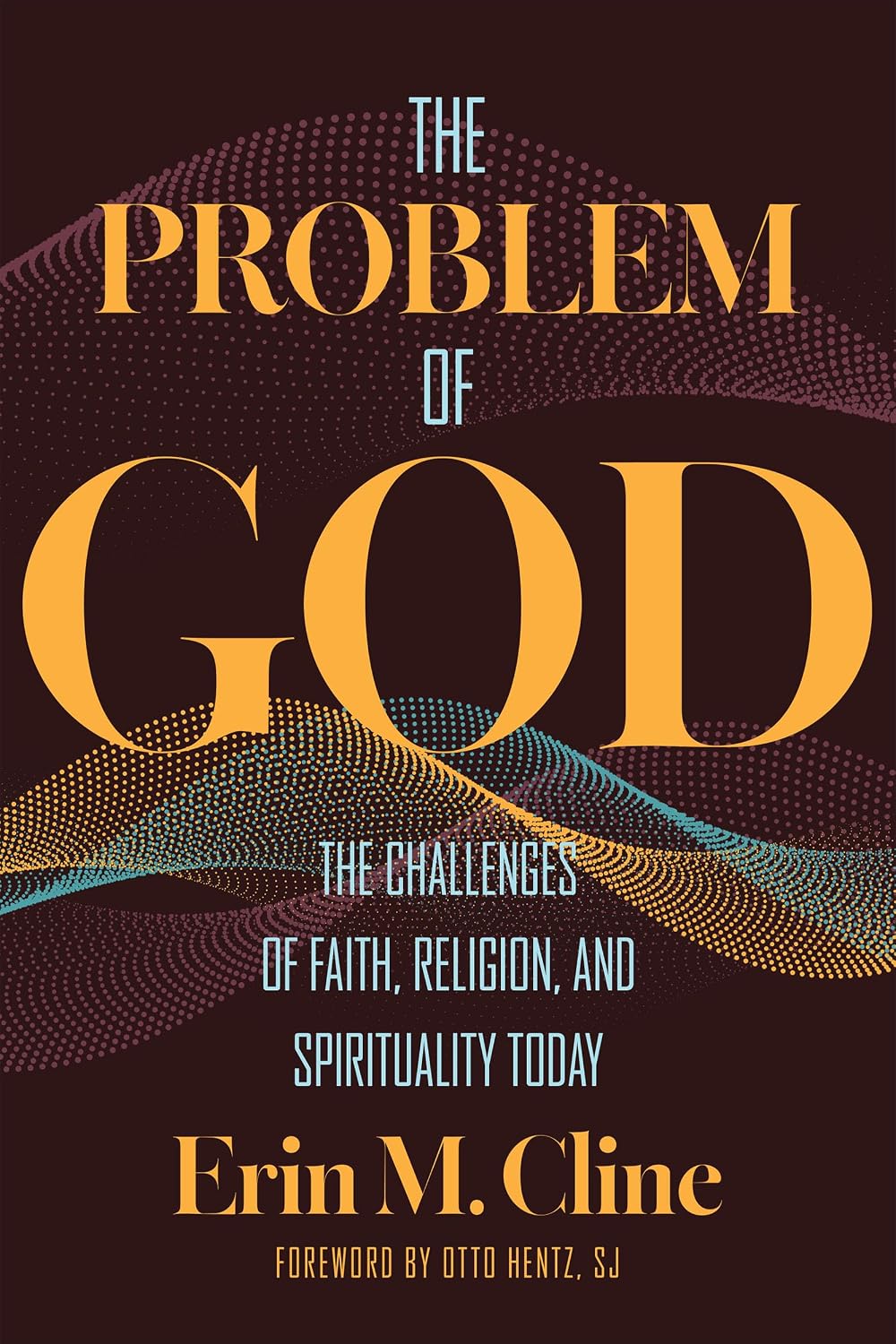
All incoming freshmen at the Jesuit Georgetown University must take one of two mandatory classes; the more popular one is “The Problem of God,” for which author Erin M. Cline is one of the current professors. (The other is “Biblical Literature.” I’m guessing those new undergrads aren’t keen on all that reading.)
The objective of the class, which has been taught since the 1960s, is to have the freshmen interrogate their personal views by considering philosophical arguments through the ages for and against belief in a being or essence greater than our own. Now in book form, The Problem of God: The Challenges of Faith, Religion, and Spirituality Today invites us all to take that same journey.
I imagine Professor Cline might be gratified to know that I scribbled far more notes in the margins of her book — often in all caps and with an excessive amount of exclamatory punctuation — than in any other I have reviewed. The fact that I was usually taking exception to her arguments is unimportant; an engaged reader is a sure sign the author has hit her mark.
Part of the issue for me, I ultimately diagnosed, is that Cline does not appear to make any real distinction among the elements of her subtitle, when I would argue that spirituality, faith, and religion are different things. Ever since our species achieved self-awareness, we’ve struggled to answer the eternal questions: Why was I born? Why am I living? Isn’t there something more to it than this? Spirituality might be described as our sense that there is, in fact, Something More, a higher purpose to which we can aspire and from which we might derive comfort. But to equate spirituality, even faith, with organized religion is a huge leap, and it’s one that readers may not be willing to take.
Why do we believe what we believe? As the brilliant philosopher Jackson Browne once said, “It’s not a world of our own choosing; we don’t decide where we are born.” At least in our formative years, what we believe is usually based on where we are born and the family in which we are raised. It is not initially a choice we make for ourselves, and the pressure in various cultures and communities often makes the concept of choice illusory anyway. But culture and geography are not the final arbiters of divine insight.
Cline is herself a student of Eastern religions and uses that knowledge to discuss the belief systems of Hindus, Buddhists, Confucians, and Daoists given their contrasts with (and similarities to) the Abrahamic religions with which Westerners are more familiar. As she says, “One of my aims in this book is to explore different conceptions of the infinite,” and she does so with clarity and balance.
The author also walks us through the various Western arguments that seek to prove God exists — which misses the whole point of having faith — as well as those arguments against the existence of the Christian God (who is all-powerful, all-knowing, and perfectly loving), generally on the grounds that such a benevolent being could never allow all the evil that exists in the world.
It strikes me that this is the perfect book for a set of undergrads or, indeed, anyone who enjoys sitting around with friends arguing weighty but ultimately unresolvable points of philosophy, such as Pascal’s Wager or The Problem of Evil.
(Speaking of sitting around arguing, here’s just one example of my one-sided argument with the author. Cline: “People often mistakenly assume that atheism requires no defense or justification. However, the denial of a spiritual or religious entity or reality also requires justification. Hence, the burden of proof falls equally to atheists and theists.” Me: Justification? Proof? What proof? And why is it “required”? Does our belief or lack thereof have a material impact on whether that belief is correct? Is this like needing to clap to rouse Tinkerbell?)
It’s entirely worth asking the question, “What do I believe?” but it’s a fool’s errand to imagine that any of us gets definitive answers in this realm.
Much of my marginalia within Cline’s book appears where I feel she is being simplistic, asking the wrong questions, eliding some of the thornier issues or giving them a handwave rather than engaging more deeply, or making head-smackingly obvious statements, such as in her conclusion, where she writes:
“Perhaps the most challenging Problem of God is that in our finitude, our perspective on the infinite is always profoundly limited.”
Perhaps?
The problem of God is that humans throughout history continually insist they can know the mind and the intent of the Infinite and, even more problematically, insist that the other humans who think they know are categorically wrong and, therefore, evil. Taking just one tiny example from the annals of religious bloodshed, consider the countless people murdered — many on the orders of that paragon of Catholic virtue himself, Thomas More — over the question of whether a communion wafer is figuratively or literally the body of Christ. The “us and them” undercurrent in codified religious belief is one of the most corrosive forces in history.
One of Cline’s final chapters is entitled, “The Problem of Religious Pluralism,” it being the concept that you may not have all the answers and that it’s okay for other folks to believe something different — which is, to my mind, a solution rather than a problem.
While I was reading The Problem of God, I had the opportunity to visit an ashram in Virginia that includes a temple called the Light of Truth Universal Shrine (or LOTUS). The shrine has displays describing each of the world’s major, and many of its minor, religions and illustrates that virtually all of them use the central metaphor of light in their belief systems. The shrine’s philosophy is summed up as “Many paths, one Truth.” How enlightened.
Jennifer Bort Yacovissi’s novel, Up the Hill to Home, tells the story of four generations of a family in Washington, DC, from the Civil War to the Great Depression. She reviews regularly for the Independent and serves on its board of directors as president. Follow Jenny on Bluesky at @jbywrites.bsky.social.