The Ryukyu Islands: A New History from the Stone Age to the Present
- By Gregory Smits
- University of Chicago Press
- 488 pp.
- Reviewed by Eileen Miller
- January 20, 2026
A comprehensive reassessment of the pivotal Pacific chain.
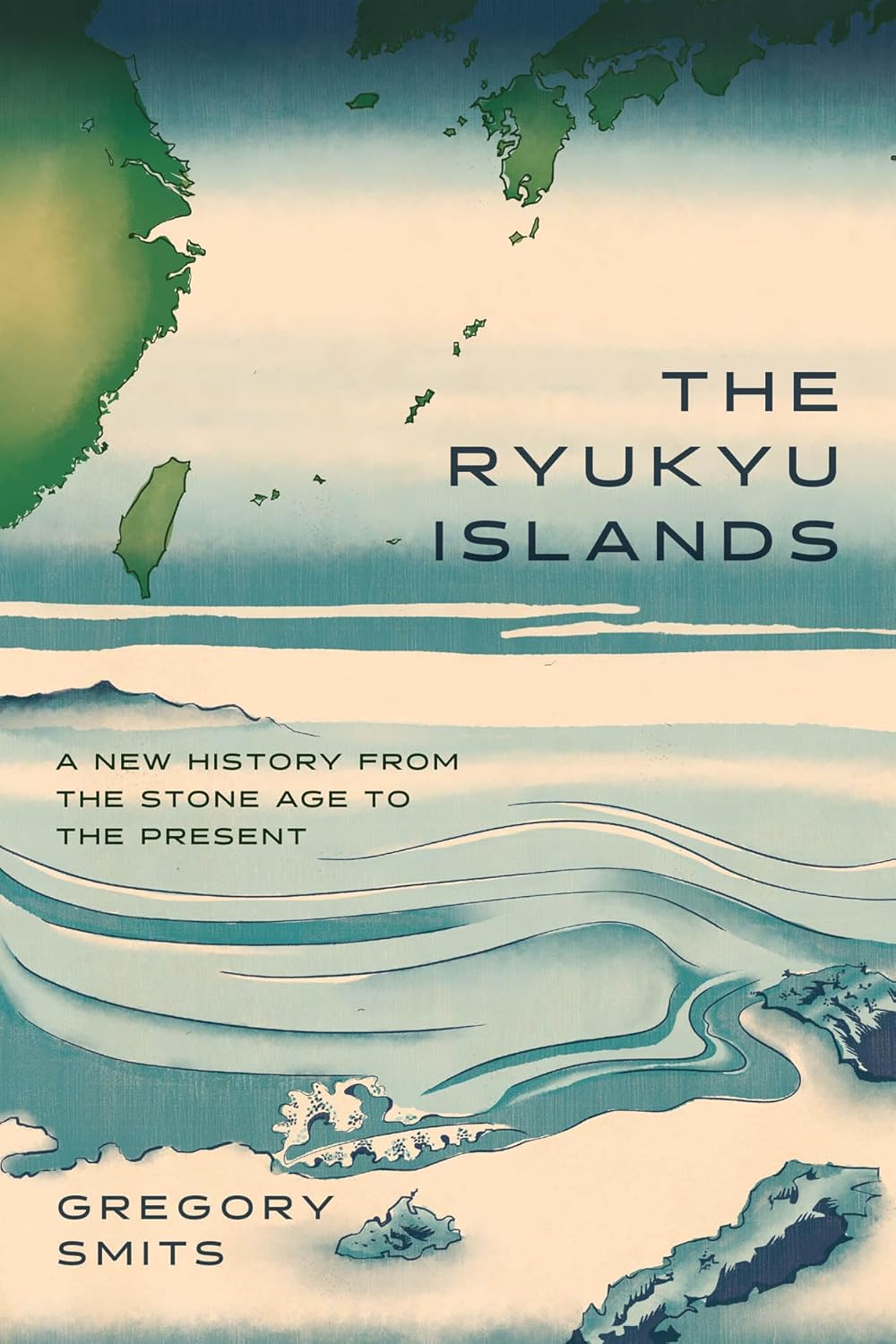
“New” is a word rarely affixed to the idea of “history.” But while the content of history remains unchanged, contemporary understanding of it can certainly shift. Gregory Smits’ The Ryukyu Islands: A New History from the Stone Age to the Present encapsulates this idea. Beginning its narrative nearly 35,000 years ago, the book traces the history of the Ryukyus, a chain of roughly 160 islands stretching from Japan to Taiwan, from the pre-modern era to the present.
This is familiar territory to Smits, who teaches courses on history and Asian Studies at Penn State and has written three other books on the subject. The Ryukyu Islands is his most comprehensive yet, drawing upon a wealth of primary and secondary sources, combating misconceptions, and introducing fresh ideas about the islands’ past.
The book is divided into four parts, covering the peoples and societies who lived on the islands during the pre-state era; the rise and development of the islands’ first centralized state, the Shuri Empire; the fall of the Shuri and its annexation by Meiji Japan; and the Ryukyus in the modern era. Each section begins with a brief introduction that includes a list of additional sources relevant to the topics covered.
Smits traces the dawn of Ryukyuan history from the late Paleolithic Era. In tackling one of many misconceptions he addresses throughout the book, he notes that it was not the people populating the islands during that era, but rather settlers moving south from Japan in the 11th and 12th centuries, who are the ancestors of contemporary Ryukyuans.
Trade is a major theme here, with the islands’ strategic locale — a pivotal factor in shaping their history — giving them access to China, Japan, and Korea. This location also made them the ideal outpost for wakō, pirates of Japanese, Korean, mixed Japanese and Korean, and (later) Chinese heritage.
The islands became more formally incorporated into regional dynamics in the 1370s as wakō began to participate in the tribute trade with Ming Dynasty China. This, Smits argues, was a tactic used by the Ming to domesticate the marauding wakō and maintain access to the international trade ostensibly forbidden by Ming law. Although this period saw the emergence of “trade kings” in the Ryukyus, they were not traditional kings. Instead, the title served as a license to participate in the tribute trade.
In the early 1500s, the Ryukyu Islands were unified for the first time under Shō Shin, the descendant of a prominent trade king. Smits describes this period of the islands’ history — the Shuri Empire — as comprising a centralized kingdom with a maritime empire. The Shuri Empire lost its independence in 1609, however, after a war with Tokugawa Japan’s Satsuma Domain resulted in the Ryukyus falling under Satsuma control.
One compelling concept that Smits contributes to contemporary understanding of Ryukyuan history is the idea of the Ryukyu Kingdom of the early 17th to late 19th century as a “theatrical state.” After absorption into Satsuma rule, the Shuri — whose direct administration was now restricted to the southern Ryukyus — continued the tribute trade with Ming China while feigning independence. Ryukyuan officials presented a fictive version of the Ryukyus, hiding their cultural ties to Japan, performing Chinese culture, and even changing surnames to appear less Japanese.
This dynamic benefited Tokugawa Japan, which lacked diplomatic ties to China, and the Satsuma, who reaped the commercial benefits of trade. It also benefited the Shuri: Only an “independent” Ryukyu Kingdom could trade with China, making the trade relationship the sole reason the kingdom could retain limited autonomy.
Smits’ thorough chronicle continues up to the year 2024. He covers the annexation of the Ryukyus by Meiji Japan and their subsequent transformation into Japan’s Okinawa Province. After that, he discusses World War II and the horrific toll the Battle of Okinawa wrought on civilians. He continues on to American military occupation, the reversion to Japanese control, and the ongoing presence of U.S. military bases on Okinawa.
Many other themes are deftly explained, as well, including the suffering of the common people and the role broader geopolitical shifts played in shaping the Ryukyus. Smits’ frequent references to these recurrent themes give the book a solid sense of organization, tying eras separated by centuries together into a cohesive narrative. Still, contemporary understanding of Ryukyuan history is far from complete, a point Smits makes multiple times. While “new” is an adjective that only lasts so long when describing history, this work can proudly claim it.
[Editor’s note: This article was written with support from the DC Arts Writing Fellowship, a project of the nonprofit Day Eight.]
Eileen Miller is a DC Arts Journalism Fellow with Day Eight. She currently lives in Washington, DC, where she is pursuing a degree in East Asian studies at Georgetown University. Her writing has also appeared in DC Theater Arts and the Georgetown Voice.