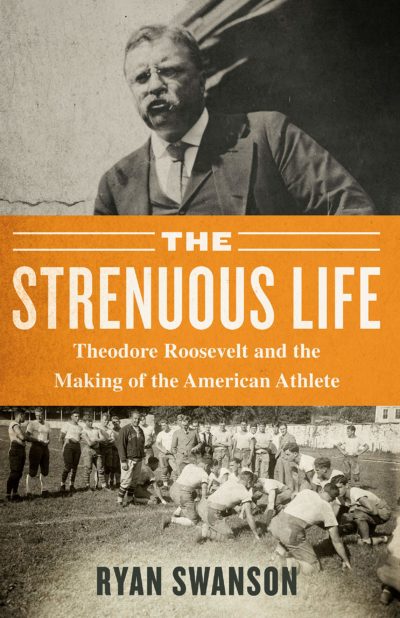
The Secret War Against Hate: American Resistance to Antisemitism and White Supremacy
- By Steven J. Ross
- Bloomsbury Publishing
- 416 pp.
- Reviewed by Robert Beauregard
- June 3, 2026
Meet the operatives who sought to stamp out bigotry in the mid-20th century.
For a decade, beginning in the late 1950s, the exploits of the photogenic George Lincoln Rockwell made headlines in the country’s newspapers and magazines and on television and radio. Among those spewing hate against Jews and Blacks, he was a far-right celebrity whose goal was to make America a white, Christian nation, with him as führer.
But while Rockwell could generate media attention, his organizational and interpersonal skills were inadequate for his aspirations, and he couldn’t move beyond the political fringe. Further keeping him there were Jewish and anti-fascist organizations that monitored far-right activities, fed information to journalists, and encouraged the government to take legal action.
Steven J. Ross, a professor of history at the University of Southern California, asserts in The Secret War Against Hate that “hate has been a central part of American history since the nation’s founding. Yet so has resistance to hate.”
Any time hate travels to the center of political life, however — entrenching itself in the institutions of American society — more than a few anti-hate groups will be needed to contain it. With this book, Ross has written an engrossing, informative, and timely history of the hate groups that energized the far right in the early postwar decades, the anti-hate organizations that infiltrated them, and the spies who gathered information from (and fomented dissent among) those who hate.
We read of the fascist Columbians led by Emory Burke and Homer Loomis; the Anti-Jewish Party (AJP) of Jesse Stoner, who later, with Edward Fields, established the white-supremacist National States Rights Party (NSRP); the National Renaissance Party of James Madole; the American Nazi Party formed by George Lincoln Rockwell; and the Ku Klux Klan. Aligned against them were the spymasters James Sheldon of the Non-Sectarian Anti-Nazi League, Arnold Forster of the Anti-Defamation League, and George Mintzer of the American Jewish Committee, all of whom defended both Jews and Blacks against white supremacists.
Then there were the agent provocateurs themselves: Renee Fruchtbaum, Mario Buzzi, and William Bishop, who became trusted members of the Columbians; Emmanuel Trujillo and Irene Dovale, who infiltrated the National Renaissance Party; and the cagily named Agent BG, who embedded in the Anti-Nazi League.
Jesse Stoner was typical of the careerist haters. At age 23, in 1947, he founded the AJP to insure the survival of the white race. According to his group, African American men, women, and children were to be deported to Africa, and American Jews were to be exterminated — with their “ill-gotten wealth” confiscated for the benefit of whites. Stoner wrote pamphlets, ran unsuccessfully for public office numerous times, and spoke regularly at far-right events around the South. The AJP held rallies and burned crosses in Jewish and Black neighborhoods, hoping to recruit poor, disgruntled white Southern workers to the cause and build a political party big enough to elect AJP members to office.
Later, aiming to leverage the anti-integrationist anger generated by Brown v. Board of Education (1952), Stoner and Fields organized the NSRP to mobilize the many White Citizen Councils that had emerged to oppose the Supreme Court decision. One of the NSRP’s major undertakings was the bombing of synagogues and churches. Although the authorities believed Stoner was directly involved in the terrorism, not until 1983 was he convicted of any crimes. With his incarceration, the NSRP collapsed. Stoner died in 2005, his death, writes Ross, marking “the culmination of an era but not of a movement.”
Soon enough, the haters of the 1940s and 1950s were replaced by, among others, the Proud Boys and Oath Keepers, who led the Unite the Right rally in Charlottesville in 2017, as well as the January 6, 2021, insurrection at the U.S. Capitol in Washington, DC.
When dealing with fringe groups, it’s difficult — prior to the commission of actual violence — to assess the threat they pose. Except for the KKK, the groups that Ross discusses were relatively small (the Columbians had maybe 500 paid members) and often poorly run. The rationale for spying on them nonetheless rested on the fear of a united fascist front, even though clashing egos and a paucity of popular support made cooperation among hate groups nearly impossible. A similar lack of information limits what we can know about the spies who penetrated them. Consequently, Ross writes less about the spies themselves and more about the leaders of the pro- and anti-hate groups.
Given the prevailing atmosphere of political and cultural divisiveness in the U.S. today, the author wants us to recognize that resistance to hate is not in vain. Having given that hope, alas, he pulls it back when he writes, “The reelection of Donald Trump signaled a triumph for the men and women who had pursued a particular vision of America since the end of World War II, the far right no longer on the political fringe.”
Robert Beauregard is emeritus professor at Columbia University writing on politics, postwar U.S. history, social theory, and current events.