The Wall Dancers: Searching for Freedom and Connection on the Chinese Internet
- By Yi-Ling Liu
- Knopf
- 336 pp.
- Reviewed by William Rice
- February 10, 2026
Building an online community under Big Brother’s nose.
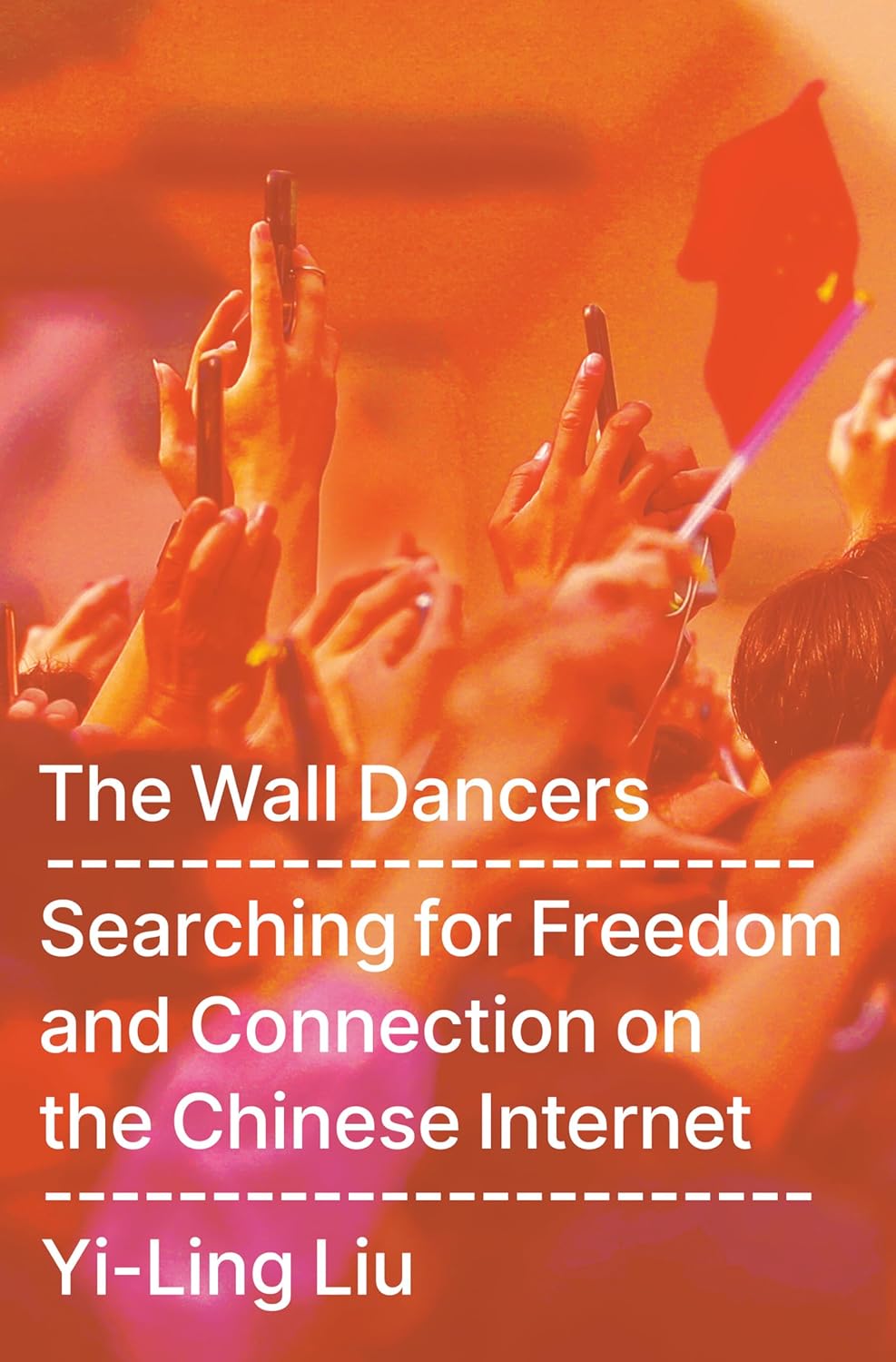
Life under a totalitarian regime is just as bad as it seems — but it’s different than you think. That’s the message of Yi-Ling Liu’s sparkling volume The Wall Dancers: Searching for Freedom and Connection on the Chinese Internet. In crisp and lively prose, it describes the relationship between Chinese people and their domineering state through the experiences of five citizens who pressed the boundaries of control in the pursuit of a cause, dream, or principle.
Most outsiders are probably unaware that the Chinese experience of the internet is not just constrained but entirely different from that of the rest of the world. Because the so-called Great Firewall of internet controls keeps out otherwise inescapable global services like Google and X due to the dangerous ideas of freedom they could spread, carefully monitored local equivalents (Baidu and Weibo, in the above cases) have sprung up to take their place.
The five avatars for the national experience are: a closeted police officer who winds up running a thriving gay-dating site; an online censor who starts secretly archiving his higher-ups’ directives; a feminist organizer and journalist; a science-fiction author; and a rapper.
The book is an exploration of what Liu terms China’s “delicate balancing act”: keeping “the internet just free enough to nurture economic growth but not so free that it [opens] the door to political instability.” Because of those competing goals, the Chinese internet is “controlled from the top down and mobilized from the bottom up.”
Liu seeks to add some illuminating grey to typical black-and-white Western thinking about China. Automatically labeling outspoken Chinese voices as either “dissident” or “apologist,” as belonging to a “victim” or an “oppressor,” she believes, fails to capture the nuanced lived experience of the speakers.
Since the internet became available in China in the mid-1990s, media analysis in the West has ping-ponged between two opposing narratives. The first is that the online world is too dynamic to be contained and so the Communist Party’s days of absolute control of information are numbered. The counter-narrative says the internet, for all its unruliness, is no match for an entrenched autocracy determined to hold power. Liu makes clear that, at least as of now, the latter narrative is the accurate one. As she sums it up:
“[T]he smartphone did not bring emancipation.”
Liu succeeds in getting across a subtle idea. First, she wants us to know that inside an apparently stultifying system there is still space for expression if it’s offered carefully. The “most apt and most enduring” metaphor for life in China, she writes, is to “dance in shackles.” But she also emphasizes the ongoing anxiety of online pioneers: never sure of where the frontier lies, always guessing and second-guessing whether they’ve gone too far, pulling back of their own accord for safety’s sake.
Activists feel the pull to leave China and its shackles behind, but they also experience the love of family, place, and nation that makes them want to stay. They embrace what they have, know there’s something better, but don’t waste time yearning for it. In short, it’s complicated, and Liu allows the reader to feel the complexity.
The sections about the feminist advocate Lü Pin contain arresting facts about the rapidly evolving status of women in China. For instance, at the turn of the 21st century, females made up just one in five university students; 10 years later, they are the majority. More surprising, in the mid-2010s, feminist activism actually changed government policy on domestic violence, education, and even the availability of women’s bathrooms.
The book also offers a fascinating take on the status of homosexuals in an authoritarian state. Liu, who identifies as gay, maintains that homosexuality was neither “recognized nor shunned” by historic Chinese culture. But despite that neutral background, she says that the current Chinese government’s stance on gay rights is “opaque and ambivalent,” making the position of Ma Baoli as head of a gay-dating app “precarious.”
A crackdown in 2019 carried some of the overtones of Mao’s Cultural Revolution of the late 1960s and early 1970s. In both cases, to stay out of trouble, public figures had to pay the “speech tax”: not only abide by the new restrictions but vocally endorse them. But Liu notes two differences between the reactionary periods. In the 21st century, those currying favor with the state need only be patriotic Chinese, not good communists. And whereas buttering up the political bosses could save your life in the older era, doing it in the dynamic new economy of China today could also make you rich.
Early in the book, Liu ponders what it means to “live within the truth” (a phrase coined by former Czech dissident Václav Havel) when you’re physically living under a regime that routinely distorts reality to maintain power. Later, she recounts physical ailments — including tinnitus — her subjects suffer as their attempt to “dance in shackles” takes a psychological toll. So, it seems that, after all, it’s not such a culturally insensitive oversimplification to note human beings will always fare better within freedom — however imperfect — than under old-fashioned tyranny.
William Rice is a writer for political and policy-advocacy organizations.