The Water Lies
- By Amy Meyerson
- Thomas & Mercer
- 347 pp.
- Reviewed by Chris Rutledge
- February 20, 2026
Was a young woman’s accidental drowning actually murder?
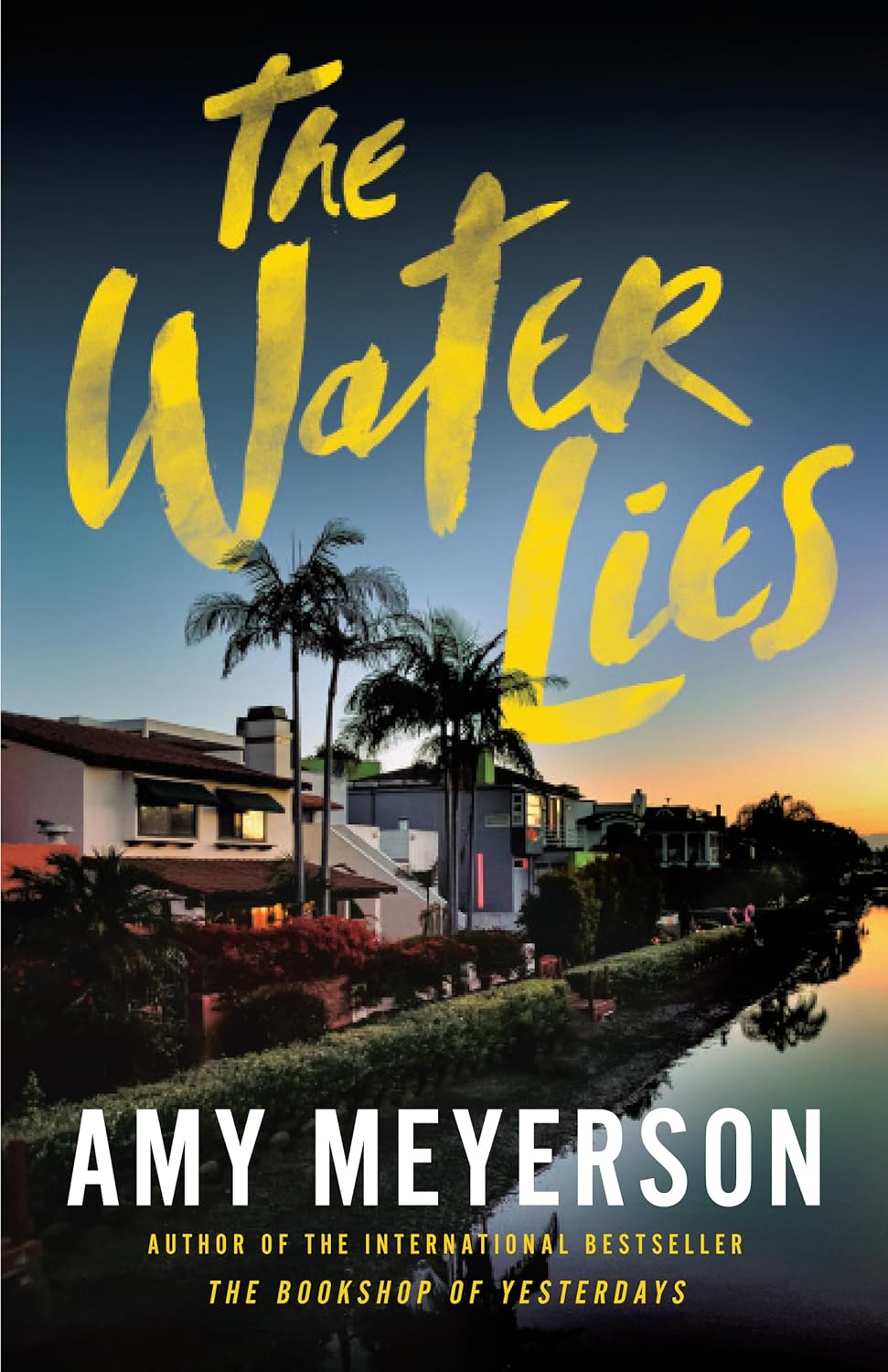
In The Water Lies, author Amy Meyerson explores marriage, motherhood, and betrayal. Los Angeles’ Venice Canals form the thriller’s backdrop, and they fittingly convey the sense of stagnancy and stench in which she immerses readers. The intersection of family, love, and mystery is an area with which Meyerson is familiar. Her previous novels, including The Bookshop of Yesterdays and The Love Scribe, addressed these topics to much success on the bestseller lists.
The story unfolds with a question: Was Regina Geller murdered? She drowned in the canals, and her death is initially ruled a drunken accident. But this conclusion raises the suspicions of her mother, Barb, who knew her daughter to be steadfastly sober and a fairly competent swimmer. It also piques Tessa, a neighbor who, while not knowing Regina personally, recently crossed paths with her in a way that triggered her own protective instincts. Soon, Barb and Tessa join forces to find justice for one family and protect another from a looming threat.
This maternal instinct is the central theme of the novel. Barb reports that she has learned through the years to “trust the worry my body senses.” For both her and Tessa, a mother’s fear is a flood of hormones that no one else can understand, especially not the objects of that fear. After all, as Barb complains, “Children never appreciate all the things [they take] for granted and [resent].”
Nor can fathers see the value in this fear since they lack it. As Tessa explains, “A father’s instinct isn’t the same…It doesn’t course…like blood, doesn’t keep them up at night.” It’s a wonder men are allowed to have children at all, since — in this book, at least — they don’t seem to care what happens to them. Men are also portrayed as being bad spouses. Barb’s husband cheated on her, and while he was involved in the minutiae of Regina’s life, he never grasped the level of Barb’s concern for their daughter’s well-being.
Tessa’s husband is something else altogether. A physician specializing in complex infertility cases, he’s wrapped up in far more than he tells his wife and may somehow be tied to Regina’s death.
The women, meanwhile, pay a price for their depth of feeling. Barb remembers “part of early motherhood, how you feel constantly judged…this maternal guilt, it never goes away.” Of course, maternal instinct can quickly tip into over-involvement, and Meyerson does a fine job challenging the motivations of her characters. Barb, for example, was forced to retire from her HR position for surreptitiously accessing an employee’s email under the guise of protecting the young woman from what Barb saw as an older male boss’ inappropriate advances. Barb acknowledges her tendency toward “taking on someone else’s injustice” and accepts her punishment.
Likewise, Tessa embraces the investigation into Regina’s death as a personal quest. She’s convinced that something bad happened to Regina and that nobody but her cares. Perhaps proving her correct, the investigating officer remarks dismissively, “Leave it to the PTA to get everyone hysterical.”
There’s also another neighbor in the mix, Judy, who constantly peers into folks’ windows and inserts herself in their lives. She is portrayed alternately as an amusing local and a nuisance. Without giving away too much, it’s clear she serves an important purpose, one that gives weight to her problematic behavior.
As thrillers go, The Water Lies is pretty solid. Readers will often be on the edge of their seats, wondering what really happened to Regina and whether Tessa’s husband had a hand in it. If there’s a weakness, it’s that the novel’s many whiplash twists become, on occasion, too twisty. You’ll find yourself certain you know whodunit, only to realize you still have a hundred pages to go and so must be wrong.
Also, it’s unclear which side the author comes down on in the “maternal instinct vs. busybody” debate. Certainly, both Tessa and Barb pay a price for their incursions into other people’s lives, but their fears and suspicions are often validated. Maybe we readers, just like the characters, must decide for ourselves what to believe.
Chris Rutledge is a husband, father, writer, nonprofit professional, and community member living in Silver Spring, MD. Besides the Independent, his work has appeared in Kirkus Reviews, American Book Review, and countless intemperate Facebook posts, which will surely get him into trouble one day.