They Hold Grudges
- By Diana Rojas
- Arte Publico Press
- 256 pp.
- Reviewed by Chris Rutledge
- November 27, 2026
Should a falsely accused man stay silent for the sake of family harmony?
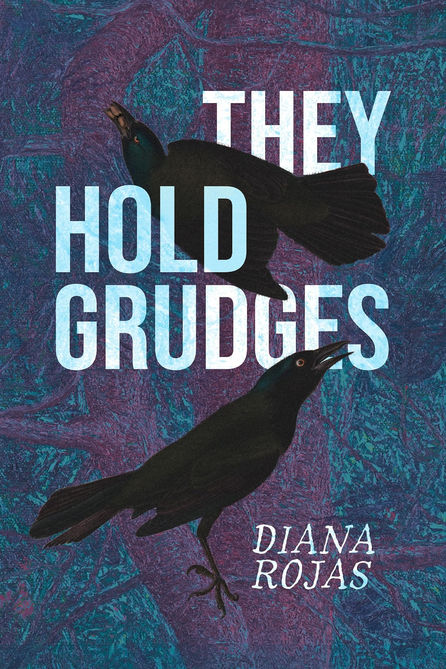
They Hold Grudges is the first full-length novel from Diana Rojas. The volume explores domestic dramas large and small and looks at how unfounded accusations can ruin lives, as well as the damage wrought by a mindset that insists “family loyalty trumps everything.” One is often tempted to forgive relatives the harm they cause, but the destruction is not easily forgotten.
Grudges contains a vibrant cast of characters, including protagonist Rob, whose life is upended by false molestation charges; his wife, Yamileth, who appears more concerned about the charges than is her husband; and his accusers, Uncle Pablo, Aunt Mara, and cousin Pablito. The latter three claim that, as a teenager, Rob molested Pablito in the bath. Throughout the novel, Rob’s innocence is never in doubt. Instead, the accusation is presented as the result of years of resentment by Pablito over how much his father likes his nephew Rob.
Mara and Pablito fold the erroneous charge into their underlying belief that Rob is envious of Pablo’s love for Pablito. Mara exclaims, “You’ve always had it out for [Pablito]! You’re jealous of him because he took Pablo away from you.” In Mara’s mind, Rob avenged his own honor by fondling his cousin, scarring the younger boy for life.
Complicating matters is Rob’s family’s preference that he put aside any complaints about the egregious charge in the spirit of filial unity. As Rojas writes, “Anger, grudges, were verboten.” The problem is that suppressing negative feelings doesn’t make them go away; it allows them to simmer. Rob’s mom knew of the allegations long before he did but, in keeping with the rules, waved them away. It’s Yamileth who correctly concludes that her mother-in-law “let that fester all these years.”
As expected, ignoring rumors leads to their spread. “In the days that followed…Mara had started speaking casually outside of the family, to her nail techs, the mailman…” And so on. Rob’s employer finds out about the molestation claim and forces him to take leave. After all, a company needs to “insulate [itself] from any harm,” even if that harm is imaginary.
Eventually, Rob and his family flee to Yamileth’s hometown of New Orleans. This, of course, just deepens the suspicions of his old neighbors. Why run if he’s not guilty?
The novel treads bravely into dangerous territory. In recent years, we’ve been repeatedly told that we need to believe children at all costs. And, in general, this is sound advice. But what if the accused is actually innocent? (Again, Rojas makes clear that no assault occurred, that this is the delusion of deeply troubled people.) Sadly, even those closest to you may come to doubt you. Yamileth, for one, knows her husband did nothing wrong, “Unless Rob, there is something you need to tell me.” In a moment of weakness, she even tells their daughter that it’s best to leave her bedroom door open when playing with Daddy.
(Rojas draws a comparison to the infamous McMartin preschool case of the 1980s, in which a mother and her adult son were dragged through hell because of false accusations by the families of children in their care. Ultimately, they were exonerated, but their lives were destroyed.)
We all have innocuous things in our pasts that could be reframed as evidence of depravity. In Rob’s case, his sisters jokingly regale Yamileth with tales of “the last time someone accused him of being a creep.” That time? When Rob was 10, and his crush on a classmate went unreciprocated. As the old saying goes, “Show me the man and I’ll find you the crime.”
Rojas is strongest when portraying Rob’s sense of frustration. We share his anger, his helplessness. She makes it easy for us to see how we, too, could be wrongly accused of something horrible, with no facts to back it up and no way to defend ourselves.
The challenge, though, lies in balancing our awareness of this story with the very real widespread sexual abuse of minors. If Pablito is lying, might not other accusers be? In less agile hands, this could present a conundrum. It is to Rojas’ credit that she handles the matter with sympathy and forces us to confront all sides.
Chris Rutledge is a husband, father, writer, nonprofit professional, and community member living in Silver Spring, MD. Besides the Independent, his work has appeared in Kirkus Reviews, American Book Review, and countless intemperate Facebook posts, which will surely get him into trouble one day.