Too Good to Be Altogether Lost: Rediscovering Laura Ingalls Wilder’s Little House Books
- By Pamela Smith Hill
- University of Nebraska Press
- 384 pp.
- Reviewed by Jan Kilby
- August 14, 2025
Revisiting the origins of the beloved childhood series.
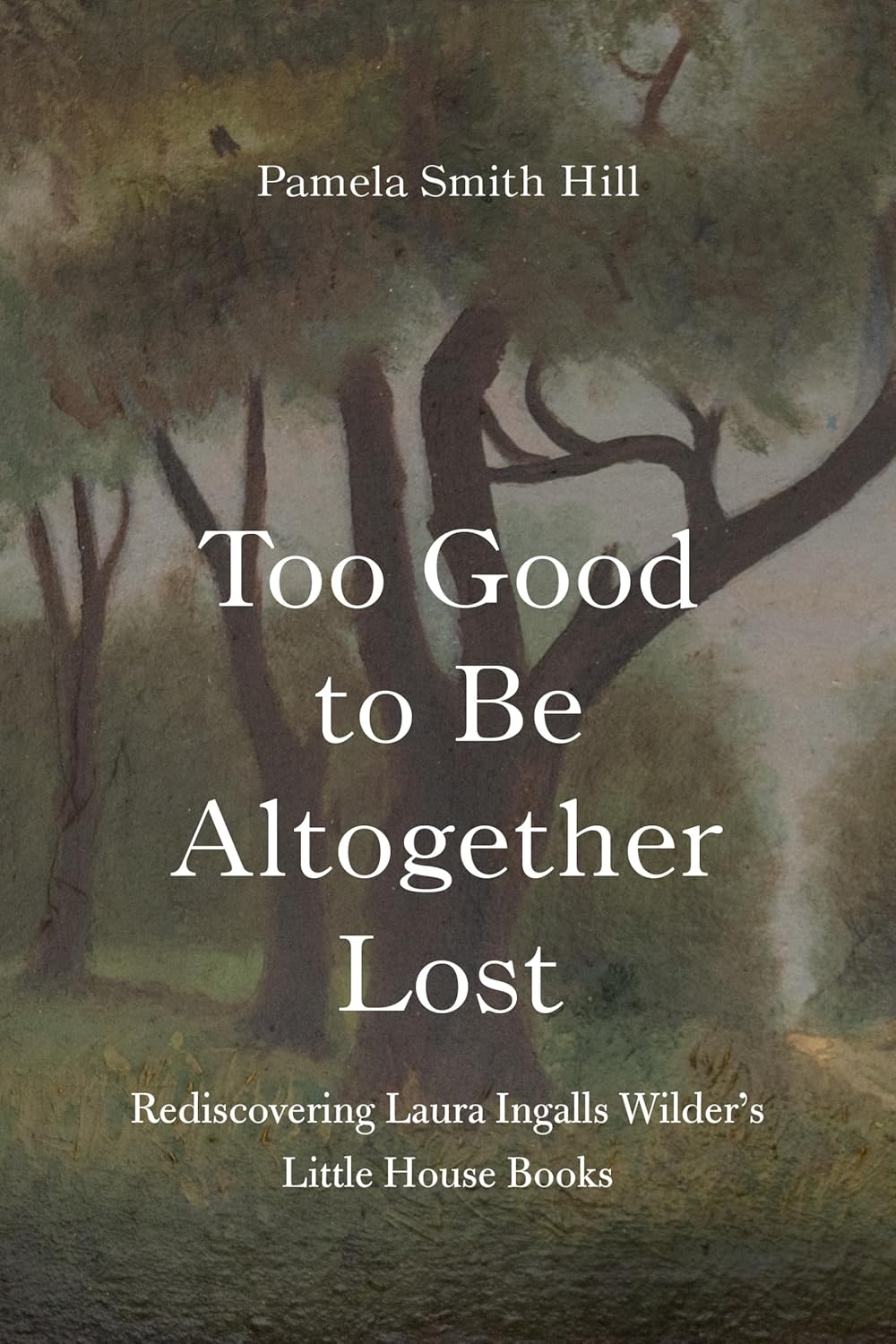
Journalist Pamela Smith Hill’s Too Good to Be Altogether Lost should delight readers, including those unfamiliar with Laura Ingalls Wilder’s iconic “Little House” books (or whose familiarity is based solely on “Little House on the Prairie,” a popular TV show in the 1970s and early 1980s). Hill’s goal is to recount how Wilder (1867-1957) came to write the nine-volume series — which includes Little House in the Big Woods, Farmer Boy, On the Banks of Plum Creek, and The Long Winter — and how her own life informed her work.
Wilder’s books provide a loosely autobiographical account of her family’s migration from Wisconsin to the American West in the late-19th century. Her parents, Charles and Caroline Ingalls, “valued education, books, and music,” writes Hill, and provided their four daughters with a caring home while weathering the many perils — including blizzards, locust infestations, disease, hunger, and isolation — that came along with frontier life.
As an adult, Wilder, whose resilience and self-sufficiency were fueled by her upbringing, worked as a teacher and journalist before authoring her series. Hill considers her a “pioneer” as a novelist, given that her books, though written for children, nonetheless address “mature themes,” including “sacrifice and survival, growth and maturity, illness and disability, feminism, coming-of-age, sexuality and marriage.” Perhaps more importantly, they boast “unforgettable characters, powerful settings, lyrical descriptions and unprecedented emotional realism.”
They also, however, contain a few characters whose views of Native Americans — though widely held in the 1800s — are rightfully considered racist today. So problematic are these characters that the American Library Association, in 2018, took the unusual step of renaming its Laura Ingalls Wilder Award the Children’s Literature Legacy Award. For her part, Hill offers a sound defense of Wilder:
“Her books pose difficult questions for young readers, yet she resisted the urge to provide answers. Instead, she trusts her audience to draw their own conclusions about the dynamic, harsh, and sometimes bewildering American frontier.”
Hill, who has written two prior books on Wilder, further argues against “presentism” — the “interpreting and accessing [of] the past through the lens of contemporary culture” — by asserting that authentic (if uncomfortable) depictions of long-ago behavior and social mores “can lead to essential discussions, not only about the past but about the present — and the underlying and overt racism young readers encounter today.”
The author takes time, too, to carefully explore the interesting role played by Rose Wilder Lane, Wilder’s only child, in her mother’s writing career. An author herself, Lane was the one who shepherded the “Little House” books to publication in the first place. She also, evidently, plagiarized her mother’s work in her own novel Let the Hurricane Roar (an action that figured into the creation of the oddly off-kilter final book in the “Little House” series, The First Four Years).
Finally, Hill provides an insightful literary analysis of Wilder’s books, supporting her conclusions with extensive reference notes, illustrations, photos, a bibliography, and an index. With its prodigious research and readable, suspenseful style, Too Good to Be Altogether Lost deserves a space on everyone’s shelf, whether or not the “Little House” books are already on it.
Jan Kilby is a freelance writer and editor and a former college English teacher in San Antonio, Texas.