Tower Hill: A Plantation on the Edge of Rebellion
- By Alan Taylor
- W.W. Norton & Company
- 352 pp.
- Reviewed by Gregory May
- October 9, 2026
The seeds of revolt were sprouting before Nat Turner ever made a move.
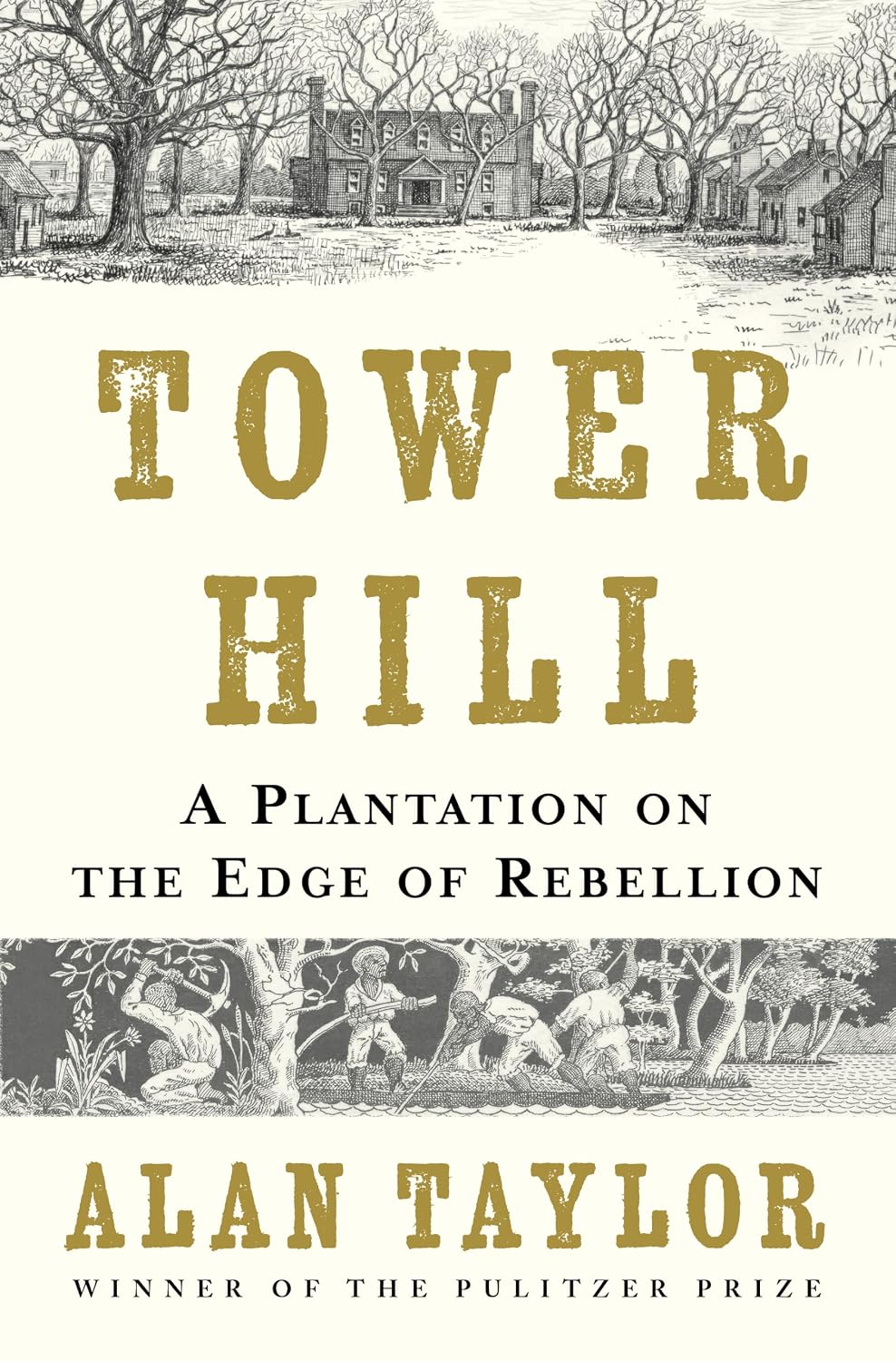
Alan Taylor won the first of his two Pulitzers for turning a rich cache of family papers into William Cooper’s Town: Power and Persuasion on the Frontier of the Early American Republic, a penetrating account of frontier land development in Upstate New York. In Tower Hill: A Plantation on the Edge of Rebellion, he applies the same powers of historical analysis to a marvelous archive of family papers that portrays slave-based agriculture in southeastern Virginia. Although there have been many successful microhistories about American slavery, this exciting new book offers surprises.
The Blow family’s 2,000-acre Tower Hill plantation lay on the border of Southampton County, scene of one of the bloodiest and most important rebellions by enslaved people in American history. In August 1831, a band of men led by Nat Turner killed about 60 white people, and whites retaliated by killing roughly as many free and enslaved Black people. The Blows lived through these events, and from their letters, Taylor gleans new insights into the shadowy background and uncertain extent of the uprising.
Early in the book, we meet Simon. He is an excellent cooper, which makes him particularly valuable on a plantation that needs casks for the apple brandy from which the Blows derive much of their agricultural income. But Simon has grown recalcitrant. Long accustomed to pragmatic indulgence from family patriarch Richard Blow, he openly despises Richard’s son George, who is trying to enforce the stricter discipline needed for agricultural improvement.
So, Simon piles the containers he has made into one spectacular heap and smashes them to bits before dashing off into the surrounding swamps. His sojourn there brings Simon into contact with other Black refugees led by a maroon who calls himself General Sampson. Taylor explains how General Sampson, previously unknown to historians, could have inspired the young Turner.
Tower Hill goes on to shed fresh light on the religious inspiration for Turner’s uprising and the scope of the conspiracy surrounding his bloody rebellion. Other recent books have considered those things, too, but the motives and activities of the Black actors are notoriously difficult to extract from the records left by the frightened whites of Southampton County. The additional evidence that Taylor finds in the Blow papers, therefore, is important. It helps to explain how evangelical Christianity could prompt some enslaved people to rebel, and it also indicates that slaves beyond Southampton County had anticipated Turner’s uprising. The severed heads displayed along what became known as Blackhead Signpost Road could be provocations as well as warnings.
There is, of course, much more to Tower Hill than Nat Turner. Taylor uses the Blow family archive to paint a vivid, nuanced picture of the travails of a failing farmer in the Upper South during the years leading up to the Civil War. Although historians from Avery Craven to Joyce Chaplin, Drew Swanson, and David Silkenat have written about the economic and environmental devastation caused by slave-based agriculture, nothing brings it to life more than Taylor’s account of the decades of struggle described in this family’s many letters. We come to know these people and to understand their predicament.
George Blow lived in a simple house originally built for his father’s plantation steward. Tower Hill’s depleted soil grew irretrievably more acidic even though he used huge amounts of enslaved labor to fertilize his fields with marl. Rural isolation, monotony, and financial strain drove his city-born wife to madness. George and his father had to rely on the sale of slaves to pay down their mounting debts. And when he was too old to do anything about it, George dreamed that he could shed his troubles by migrating to better land in Texas. Yet turn where he might, writes Taylor, George never escaped “from a property system that entangled his family in debts, slavery, and a degrading soil.”
Desperation can push people toward dangerous political decisions; like many other slaveholders, the Blows sealed their fate by supporting secession. Emancipation wiped out nearly all their personal property, and the value of their land fell. A kinsman returning to Tower Hill toward the end of the Civil War found the place a wreck. The overseer had disappeared, farming had collapsed, and the people who remained were doing pretty much what they wanted. But even to the freedpeople, the war had brought no victory. “They were waiting,” this kinsman later remembered, “for they knew not what.”
Tower Hill is one of those books that can help us understand how things were. By recovering the lived experiences of relatively ordinary men and women — enslaved and free — the book takes us into the past in a way that works about the doings of the great and powerful never can. Taylor has recently written some acclaimed surveys of American history, but this one brings him back to the poignant, particular stories that he tells so well.
Gregory May is an historian who writes about the early American republic. He is the author of A Madman’s Will: John Randolph, 400 Slaves, and the Mirage of Freedom and the forthcoming The Ghosts of Mount Vernon: George Washington’s Heirs and the Untold Legacy of Slavery.