What Is Wrong with Men: Patriarchy, the Crisis of Masculinity, and How (Of Course) Michael Douglas Films Explain Everything
- By Jessa Crispin
- Pantheon
- 288 pp.
- Reviewed by Cara Tallo
- June 25, 2025
What’s the deal with dudes?
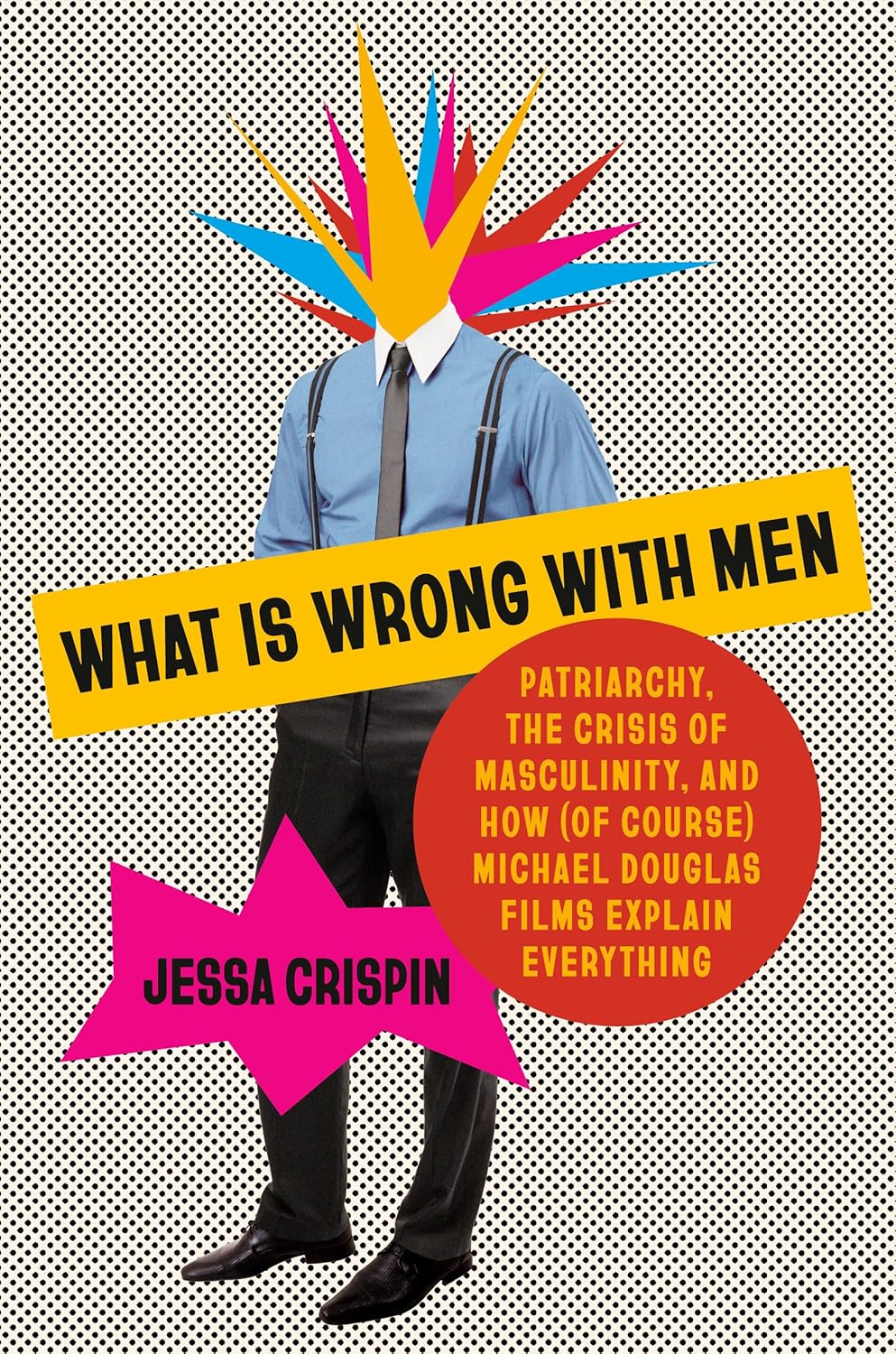
In What Is Wrong with Men: Patriarchy, the Crisis of Masculinity, and How (Of Course) Michael Douglas Films Explain Everything, Jessa Crispin introduces a fresh take on a perpetual male-female issue: We’ve been so busy conflating men with the system that keeps them in power, we didn’t notice that the patriarchy sold them out, too, decades ago. Now, we’re dealing with the aftermath — aggressively competitive plutocrats who will happily betray their own to maintain power and financial success.
Over the course of the book, Crispin traces how political nationalism and financial freedom have shaped our definition of masculinity, bringing America’s continued nostalgia for “a brief sliver of time, from the New Deal to the edge of the Vietnam War” into perspective.
In the 1980s, when then-president Ronald Reagan first issued the directive to “Make America Great Again,” men were generally supportive of previous decades’ unprecedented progress with the women’s liberation movement. But at that early point, men failed to recognize that they’d been “liberated,” as well, from their default role as provider, protector, and center of the nuclear family. Michael Douglas characters, Crispin argues, act as “a kind of cinematic stand-in” for these men.
In 1987’s “Fatal Attraction,” alpha-male Douglas becomes the victim as a woman’s refusal to allow the man to maintain control “turns a romance into a horror movie.” In 1989’s “The War of the Roses,” he is a delegitimized father struggling in the aftermath of a no-fault divorce. And in 1993’s “Falling Down,” Douglas is an unemployed failure at the mercy of corporate reorganization and “the non-white other.” Crispin evokes empathy for these archetypes by characterizing them as a cry for help from a generation of men lost without a new model for masculinity in this era of expanded women’s rights.
“The patriarchy didn’t have time or support for men who couldn’t hold their families together, who couldn’t fulfill the obligations of manhood,” she explains. “And instead of organizing around the idea of protecting men who were vulnerable or creating a sense of solidarity with women who suffered similar plights, the men’s rights movement was almost entirely reactionary.”
In 1987’s “Wall Street,” Douglas’ Gordon Gekko stepped into this vacuum. Sure, he’s the uber bad guy, but he’s also winning, and who doesn’t want to win? In Crispin’s assessment, Gekko personified the uncoupling of masculine values from masculine actions, and in so doing, signaled a larger systemic change. She writes:
“Let’s not get confused. Masculinity has always been about competition, war games, and who dies with the most toys. But the patriarchy, as we understand it, as a system of institutions, rituals, and roles, has for a long time encouraged, even if it didn’t celebrate, hard work, delayed gratification, and public service. Now those material incentives like financial stability and property ownership and a sense of purpose have been destroyed and replaced with a mad scramble of acquisition and the hoarding of resources.”
So, when Crispin refers in the final section of the book to our “post-patriarchal” viewpoint, what she’s really describing is America’s descent into nihilism, where “the declaration of values…is more important than acting on those values.”
Is she using these films like a delicious, squeeze-cheesy sauce on the broccoli of social anthropology? Sure. Does it work? Surprisingly, it mostly does. Her decision to organize the book by topic (sex, race, and economics) rather than timeline makes it a bit tricky in places to track the overlay of the movies’ themes with broader cultural trends. And she seems content to leave the parallels between the patriarchal past and its present implicit, which I found an interesting choice. But in the end, what Crispin presents is arguably more valuable than a straightforward interrogation of gender inequality. It’s a powerful lesson on the human cost of valuing money over morals and competition over collaboration.
Cara Tallo is the former executive producer of NPR’s “All Things Considered,” “Invisibilia,” and “Morning Edition.” She’s currently pursuing her MFA at American University while freelancing at MakingitWork.io.