A mesmerizing tale about how we make sense of what came before.
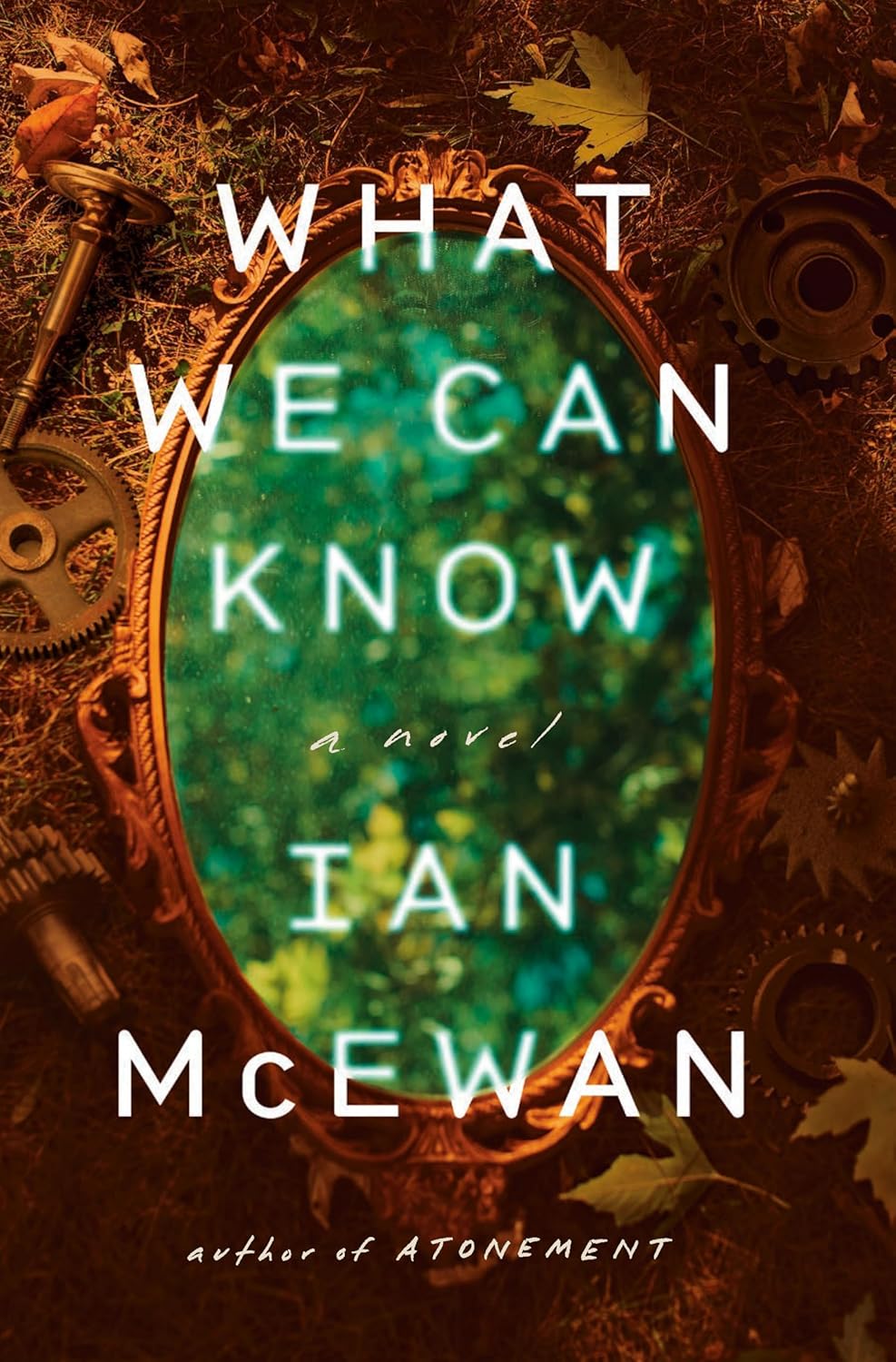
The only fault I can find with Ian McEwan’s latest novel, What We Can Know, is that I had trouble thinking through its thorny intellectual issues while turning the pages as fast as possible to find out what would happen to Tom Metcalfe and his obsession, Vivien Blundy.
The novel’s plot is deceptively simple: In 2014, the renowned (fictional) poet Francis Blundy wrote a birthday poem for his wife. Long and complex, “A Corona for Vivien” was described by the few who heard him read it as the capstone of his career, perhaps his best work, one that rivaled Eliot’s “The Wasteland.” The trouble is that Blundy left only one copy, destroying the earlier drafts to make his gift to Vivien singularly precious. Now, that copy has disappeared.
In the world of the novel, it is 2119, and society has been reshaped by a variety of apocalyptic events, including both climate change and nuclear war. The U.K. has been transformed into an archipelago, with lowlands swallowed up by rising seas, the higher ground now a series of islands, some quite remote and difficult to reach. However, while food and wine, transportation and geopolitics have been utterly changed, the university system and the world of scholarly criticism have survived with minimal adjustments.
The scholars of 2119 feel about Blundy’s missing masterpiece pretty much the same way they would in 2025: Finding that holy grail would make someone’s career, potentially opening up new worlds of interpretation for the literature of the early 21st century (or, as Tom has categorized it, the “90-30” years, 1990 to 2030; did you know we’re living in a literary “period”?). McEwan places his fictive poet among the biggest names of our era, comparing him to Seamus Heaney and having his work analyzed by critics as eminent as Frank Kermode.
Absent the actual poem, Tom relies on reading or rereading every note, text, email, journal entry, interview, or article about the Blundys and the six others who attended the birthday dinner where the great verse was read aloud. This recounting of the events of 2014 raises thorny questions regarding history’s effect on language, the role of biography in assessing and understanding literature, and the use of speculation in the telling of history. These are all matters we struggle with today, and McEwan magnifies them by focusing on a poem no living person has ever seen. But Tom is convinced a copy exists and that paying attention to the details of past events will help him find it.
He is also in the midst of falling in love with his colleague Rose, battling university politics, and enjoying a pronounced nostalgia for a period we readers are very familiar with, all while trying to survive in a world that is poorer, wetter, and more dangerous. Tom becomes a wonderful guide to the things around us that we should be savoring while they’re still here, including butterflies, healthcare, and cauliflower with anchovies. He is able to pursue literary criticism because so much of literature was digitized and therefore survived, though how some things endured while others did not is never fully explained — this is science fiction without much science.
And, of course, much of what Tom “learns” is speculative, a product of his intense attempt to imagine the past. This gets us to the question implied by the book’s title: What can we know? In this case, the hollow at the core of our knowledge is the missing poem, which manages to shift and grow as Tom learns more about its composition and about the relationship between Francis and Vivien Blundy it allegedly portrays.
As he goes deeper, the small group who heard the poem back in 2014 becomes more complicated, and each individual’s relationship to it changes. Perhaps Harriet Page’s purported reverence for the poem wasn’t completely selfless. Maybe Harry Kitchener’s championing of Francis’ work was influenced by factors other than the poet’s fame and his status as Harry’s brother-in-law. And might Vivien herself have been less appreciative of the work than her husband may have hoped?
Eventually, we witness Tom and Rose literally risk their lives to learn the truth about a poem that turns out to be beyond anything they (or we) expected. By that point, they were real people to me, and the success of their quest — and of their personal relationship — felt vitally important. For all intents and purposes, “A Corona for Vivien” really was a singular poem, and I was as anxious as Tom to read it.
Eager to reach the novel’s conclusion, I flipped the pages so quickly that my own questions about language’s shifting nature and its effect on our understanding of literature, history, and the world around us will require a second, closer reading to answer.
John P. Loonam has a Ph.D. in American literature from the City University of New York and taught English in New York City public schools for over 35 years. He has published fiction in various journals and anthologies, and his short plays have been featured by the Mottola Theater Project several times. He is married and the father of two sons; the four have lived in Brooklyn since before it was cool. His first novel, Music the World Makes, will be published by Frayed Edge Press in 2026, while a collection of his short stories, The Price of Their Toys, is forthcoming from Cornerstone Press this February.