Winter: The Story of a Season
- By Val McDermid
- Atlantic Monthly Press
- 160 pp.
- Reviewed by Anne Cassidy
- January 16, 2026
Even the cold, dark months can feel warm and bright.
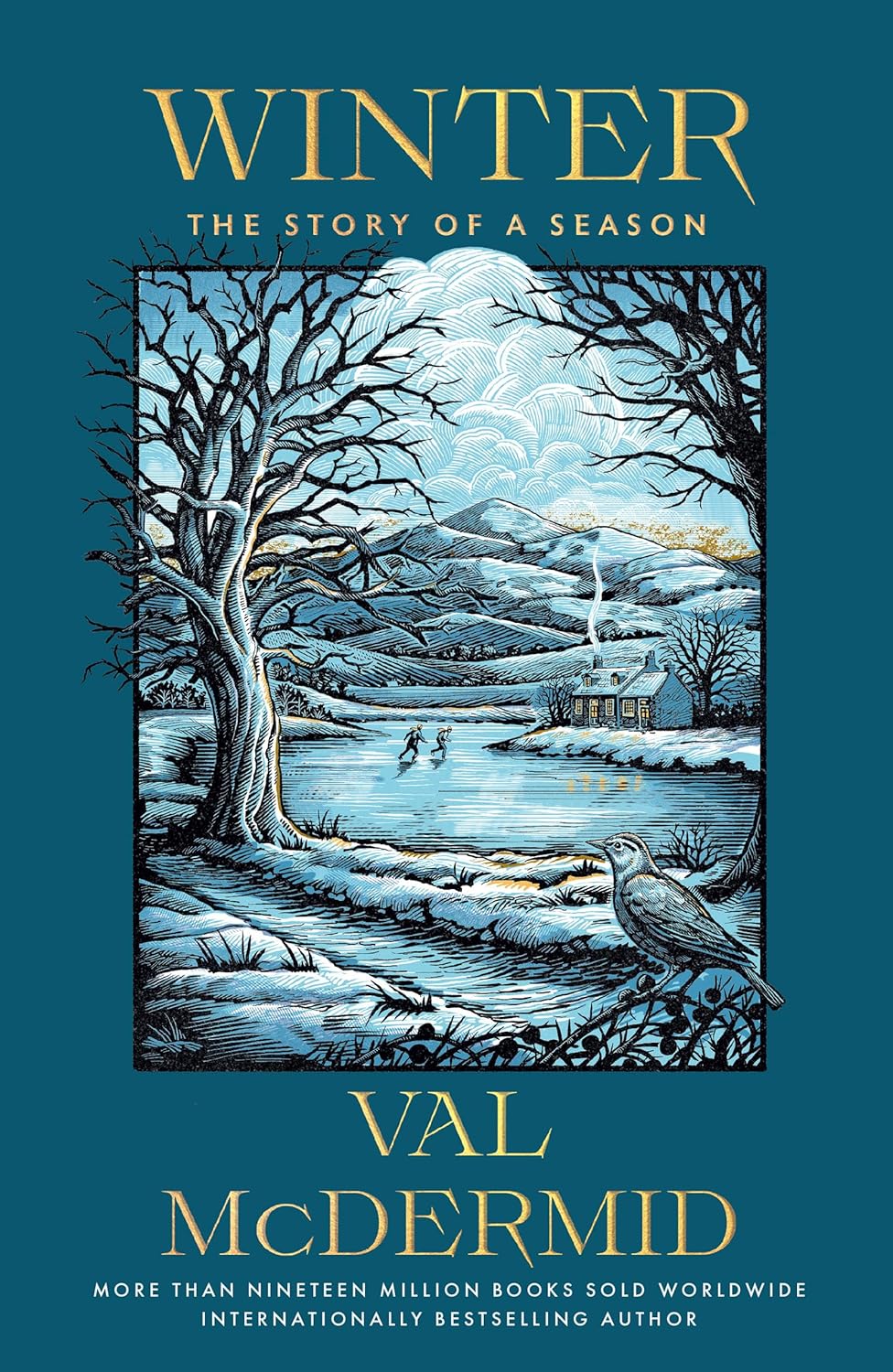
I’m no fan of winter, but I’ve come to a grudging acceptance of it. Winter is part of life where I live. The season of rest and reflection, it strips us down to the essentials, gives us time to pause, clean closets — and read, of course. This year, we can read about winter in winter with a slim book of creative nonfiction appropriately titled Winter: The Story of a Season by Scottish crime writer Val McDermid.
As a denizen of the north, McDermid knows a thing or two about wintertime, and she shares it through stories, memories, and observations. She acknowledges that winter is the “poor relation of the seasons,” but she’s always liked it, in part because it provides an excuse to curl up on the sofa with a good book.
But she also enjoys winter because it’s when she mines the notes she’s been making throughout the previous year and begins writing a new novel. The first week of January, she pulls on fingerless Icelandic mittens, sits down at her computer, and begins.
“I feel a bit like a mole, digging through the cold, dark ground with little pink paws,” McDermid writes. But she draws comfort from the season. Whenever she contemplates “the scribble of bare trees against the wintry sky,” she tells herself that the “scribbles” in her notebooks will make a new book. Apparently, this system works: McDermid has written more than 40 of them.
Winter is not just about work, though. It’s also about celebrations. McDermid begins with Halloween and the old Scottish version of trick-or-treating, “guising,” which she practiced as a child. Guising involved turnip lanterns and performing a song or telling a joke to score a treat. Some might argue that Halloween is actually a fall festival, but McDermid grew up in Fife, on the east coast of Scotland, and “needed something to remind us that the light always comes back.”
Close on the heels of Halloween is Guy Fawkes Day, a British holiday celebrated with bonfires and, on one memorable 5th of November for McDermid, a bang-up display of fireworks when her father tripped and dropped a candle into a whole box of them.
The winter solstice is a more serene experience — and no wonder, with fewer than seven hours of daylight in Edinburgh. McDermid takes readers to the bleak Culloden Moor and the Clava Cairns, Bronze Age stone tombs built so precisely that light illuminates the back of the chamber only on December 21st.
McDermid is at her best when she’s describing the sights, tastes, and contours of her native land. A nighttime drive along the byways of North Fife takes her along roads that gleam “black in the moonlight, a dark ribbon threading through the trees.” Skating over a frozen pond ends “with the spray of ice crystals from the serrated tip of one blade.”
No Scottish book would be complete without references to Burns’ Night (January 25th), a tribute to Robert Burns replete with haggis and poetry, and Hogmanay, the traditional Scottish New Year’s Eve festival. McDermid has fond recollections of the Hogmanays of her youth, when children toasted with ginger wine and waited for the “First Foot,” the first friend to knock on the door after midnight. He or she was expected to bring food, whisky, and a lump of coal, the necessities of the season. Sometimes, there would be energetic country dancing.
These personal, homespun rituals have vanished for the most part, McDermid writes, giving way to large-scale public celebrations. But McDermid misses the old-fashioned gatherings, when everyone “linked arms and sang Auld Lang Syne.”
Winter is reflective but never maudlin. After each short chapter, the author moves on to another aspect of the season, such as the Scottish National Gallery’s Henry Vaughan bequest, an exhibit of Joseph Mallord William Turner watercolors specifically set for January, when light is low and won’t damage the fragile paintings. Or soups that are less recipe than “rummage,” using whatever is in the fridge.
This warm, eclectic book can be read in a single sitting — preferably in front of a toasty fire. Before you know it, McDermid will have you out on the Fife Coastal Path with her, looking for the first flowers of spring.
Anne Cassidy has been published in many national magazines and newspapers, including the Washington Post, the New York Times, and the Christian Science Monitor. She blogs daily at “A Walker in the Suburbs.”