These titles put tomes front and center.
There are at least two books about bookselling called The Bookshop. Dennis Drabelle reviewed one of them here in October. After reading his review, I went looking for the other, and then for more books about the people who sell, collect, and lend.
I was on staff at the Washington Post, where I wrote a monthly roundup of new books for Book World, and I now recommend books to book clubs through my Substack, What’s Our Next Book. Any of these five would give a club plenty to discuss, beginning with where their own volumes came from.
 The Bookshop: A History of the American Bookstore by Evan Friss (Penguin Books). Boston’s Old Corner Bookstore, the shop that published Hawthorne and Longfellow, is now a Chipotle. In The Bookshop, Friss tells the history of American bookselling one shop at a time. Between the chapters are short profiles of people connected to bookstores. Barnes & Noble’s chairman, Len Riggio, saw Amazon coming and tried to buy it from Jeff Bezos over a steak dinner in Seattle in 1996. Bezos himself once sat through a four-day seminar on how to open a bookstore. One chapter covers Los Angeles in the late 1930s, when Nazi bookstores made no effort to hide. Friss opens his book closer to home, with the one shift he worked at Three Lives & Company in New York, where his wife was a bookseller for eight years. Customers who’d never met him asked what they should read. He is fond of bookstores without being sentimental about them.
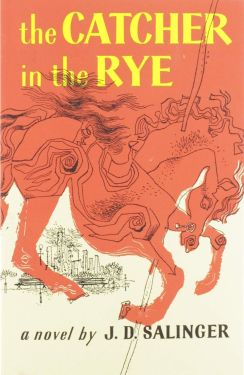
 Among the Gently Mad: Strategies and Perspectives for the Book Hunter in the 21st Century by Nicholas A. Basbanes (Henry Holt). Joseph Heller inscribed Basbanes’ first edition of Catch-22 in 1984 and added that he wished he had one himself. Fourteen years later, signing another book for him, Heller was still wishing. Basbanes tells the story to argue for asking authors for a message instead of a bare signature, one of many practical lessons in Among the Gently Mad. He credits much of what he knows to the people the bookman Lawrence Clark Powell grouped together: collectors, booksellers, and librarians. The book came out in 2002, so the passages on eBay and other online buying and selling are dated. When I interviewed rare-book dealer Rebecca Romney about valuing old books, however, she pointed me to this one as still useful for collectors. Basbanes had the most fun building what he calls his Orphan Collection, books that libraries discarded, each still stamped “withdrawn.”
 Receipts from the Bookshop: A Bookseller’s Year in an English Seaside Town by Katie Clapham (William Morrow). A customer wearing two coats wants to know whether the new “Hamilton” DVD is out. The shop doesn’t sell DVDs, but Clapham searches for it anyway before the customer realizes she meant “Napoleon.” Clapham runs Storytellers, Inc. with her mother in the town of Lytham St Annes. She began writing about her Fridays in the shop on Substack, and Receipts from the Bookshop chronicles a year of them. When a local paper called Storytellers the UK’s seventh-best bookshop, Clapham noted that it usually takes in less than £20 a day. One morning, the window cleaner hears that her mother has gone from a cruise straight to Spain and decides owning a bookshop must pay. They both know it doesn’t, and he’s off on a cruise himself the next week.
 A Librarian’s War: The Man Who Fought World War II with Books and Brought the Joy of Reading to Millions by Molly Guptill Manning (Oxford University Press). Cut off from their units in the Battle of the Bulge, a band of American soldiers who abandoned their weapons to run for the woods hears a car approaching at dusk and can’t tell whose it is. Inside is Ray Trautman, the Army’s chief librarian, on an errand for Eisenhower in what was supposed to be a quiet sector. Within days, he has the men holding off German tanks with makeshift weapons, and he has promised them books if they live. When Eleanor Roosevelt decried the lack of books in camps for Black soldiers, Trautman called the president of Howard University to ask what Black readers wanted. Manning mentioned Trautman briefly in her earlier work, When Books Went to War, and his sons, who’d kept boxes of his diaries and papers, got in touch after reading it. She was the first historian to go through them, and she checked the family’s stories against Army records.
 Remainders of the Day: A Bookshop Diary by Shaun Bythell (David R. Godine). When people downsize or settle an estate, Bythell comes to look at the books. Owners nearly always value their collections more than anyone else does, and sometimes he has to tell them the books aren’t worth much. What he does buy goes to the Bookshop, his secondhand shop in Wigtown, Scotland, which has nearly a mile of shelves and a cat named Captain. Remainders of the Day is the third volume of his diaries from the shop, and new readers can start here. He began keeping them after a partner pointed out that his memory was too poor to write a book about the shop someday without notes.
Becky Meloan covered new books in a monthly column as a member of the Washington Post’s Book World staff. She now recommends books for book clubs on her Substack, What’s Our Next Book, where this piece originally appeared. Reprinted by permission of the author.