Wally Lamb’s The River Is Waiting is both searing and sensitive.
One of the most riveting epigraphs in American literature opens John O’Hara’s 1934 novel, Appointment in Samarra, in which he borrows from W. Somerset Maugham’s retelling of an ancient fable, writing, “Death Speaks.”
From there, O’Hara unspools Maugham’s mythical tale of Death jostling a servant in the market in Baghdad, who then jumps on his boss’ horse and flees to Samarra. Later in the day, the boss chides Death for bumping into his servant and asks why he did it. Death replies, “I was astonished to see him in Baghdad, for I had an appointment with him tonight in Samarra.”
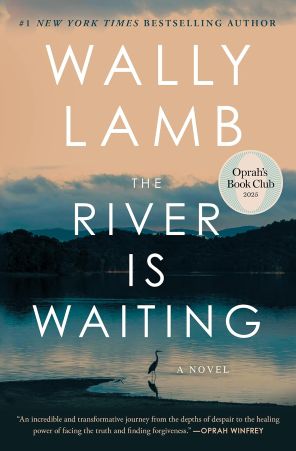
Just as memorable is the start of Wally Lamb’s 2025 novel, The River Is Waiting, now out in paperback. In its first pages, which the novelist rightly entitles “The Unimaginable,” he describes a scene that will haunt his main character (and readers) with excruciating pain.
Lamb introduces the character as Corbin (“Call me Corby”) Ledbetter, who’s currently unemployed after being laid off as a commercial artist. Dad stays home to take care of 2-year-old twins, while Mom goes to work. He begins his day with an Ativan (for anxiety) that he chases down with his morning coffee, followed by “a couple of splashes of hundred-proof Captain Morgan” that he hides in a kitchen cabinet where his wife can’t reach. As she picks up the empty beer cans from the night before, he tells the reader that he’s now drinking the hard stuff during the day and hiding the empty bottles from her. He also admits that he’s doubling up on the benzos. But, he assures us, “It’s not like I’m addicted.”
Mom kisses the twins goodbye as she leaves for work, and Dad hits the Captain Morgan again as he gets the toddlers dressed to go to their grandmother’s house because he’s supposed to spend the day job-hunting. As he informs the reader, though, he’s “pretty much surrendered to the status quo.” Corby’s existing state of affairs seems to be mostly rum-based.
He takes the kids outside and buckles Maisie into her car seat as her brother, Niko, studies a swarm of ants in the driveway. Dad schmoozes with the neighborhood wives seeing their kids off to school and then remembers the diaper bag. He rushes inside to get it, comes back, and jumps in the car. Only when he sees the women waving wildly and screaming — and feels the horrible crunch under his tires — does he realize Niko isn’t strapped into his seat. The little boy is rushed to the hospital but does not survive. Corby is arrested, pleads guilty to involuntary manslaughter, and is sentenced to three years in prison, where the rest of the novel unfolds.
A drinking and drugging dad responsible for his young son’s death is a damning subject for a 480-page novel — dislikable, even despicable — but such is Lamb’s talent that his hapless protagonist compels as much as he repels. Readers might not like Corby and may feel contempt for what he did, but they’ll keep reading this book because Lamb writes with a magic wand.
He seems to have a therapist’s understanding of prisoners, some of whom carry lifelong wounds on their backs as the barred doors slam shut. “The bruises might not show, but they haven’t necessarily healed,” he writes. One of the most significant quotes in the novel comes from the prison psychiatrist, who counsels Corby:
“Worrying does not empty tomorrow of its sorrow; it empties today of its strength.”
(Lamb seems to have improved on Matthew 6:34 in the King James version of the New Testament: “Sufficient unto the day is the evil thereof.”)
The author knows prisons. He’s volunteered in them, taught inmates, and facilitated a writing program for incarcerated women at the York Correctional Institution in Connecticut. In addition to his seven bestselling novels, three of which were blessed by Oprah, Lamb has written two nonfiction books about prisons, Couldn’t Keep It to Myself: Testimonies from Our Imprisoned Sisters (2003) and I’ll Fly Away: Further Testimonies from the Women of York Prison (2007). He isn’t afraid to show the ugly underside of prison, including the bullying, the racism, and the sexual violence. (As the well-known saying goes, when behind bars, it’s often “gay for the stay and straight at the gate.”)
The River Is Waiting isn’t a happy book, but it weaves a spell like the metaphor Lamb invokes in its title: The river is never still — it slaps against an ever-changing shoreline, ebbing and flowing as it waits for each of us at the end of life.
Kitty Kelley is the author of seven number-one New York Times bestseller biographies, including Nancy Reagan, Jackie Oh!, and Elizabeth Taylor: The Last Star. She is on the board of the Independent and is a recipient of the PEN Oakland/Gary Webb Anti-Censorship Award. In 2023, she was honored with the Biographers International Organization’s BIO Award, which is given annually to a writer who has made major contributions to the advancement of the art and craft of biography.