Why it’s the perfect time to revisit Tolkien.
Sometimes, the old ways are best. In a time of #NoKings protests, the aftermath of our longest government shutdown, and unprecedented attacks on undocumented individuals, I wonder if any hobby — nerdy or otherwise — matters beyond the self-soothing it provides.
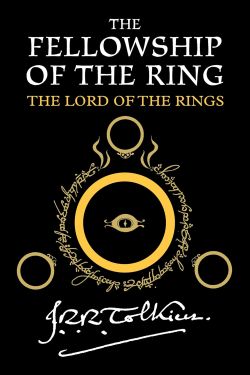
I recently returned (via audiobook) to one of my favorite stories of all time, The Fellowship of the Ring, J.R.R. Tolkien’s first book in The Lord of the Rings trilogy. This particular audiobook was narrated by Andy Serkis, who rose to pop-culture fame as the voice actor and motion-capture model for Gollum in Peter Jackson’s film adaptations of Tolkien’s work.
Returning to Middle Earth in my early middle age affirmed many of the things I’ve always loved about the books — the importance of small acts by marginalized folks, the commentary on the corrupting influence of power, the lament of realizing you can’t forestall change — but I was also mesmerized by the strength of Serkis’ narration to the point where I wondered if I hadn’t largely missed the majority of what’s important in The Fellowship of the Ring when I first read it as a young man.
Most folks who’ve read the book will recall the chapter titled “The Council of Elrond,” where a group of individuals from different races (dwarves, elves, humans, wizards, hobbits) is deliberating on what to do with the “One Ring.” The options are bleak: They can’t hide it, they can’t use it, and they can’t destroy it by their own means. Doing nothing means slow destruction. The wisest, the strongest, and the most influential folks who oppose Sauron (the Big Bad of this world) are faced with an intractable problem and mostly talk themselves into silence.
The council might as well be a metaphor for an artist entering middle age. Not because art itself is a corrupting “One Ring”; in Tolkien’s mythologies and philosophical framework, art is probably closer to the unexpected good that rescues us — or what Tolkien called a “eucatastrophe” in his essay “On Fairy-Stories.”
The council’s inertia reminds me of middle age because each artist must eventually deal with the issue of resentment. This could be angst over not being as famous as one’s peers (in that way, Tolkien’s character Boromir, with his dual desires to defend his people and to seek a kind of stalwart glory, is a good analog since his mindset ultimately dooms him). This could be the questioning of past actions, past study, and past effort, asking, “Was any of it worth it?”
Here, the elves’ retreat into the undying lands of “The West” (and into their perpetual sadness) seems to provide a parallel. Elves have “made their peace” and so rely on Middle Earth’s version of a well-managed retirement portfolio. Some artists may feel motivated by resentment — after all, “haters gonna hate” — but I find that it mostly leaves one stretched thin, like “butter scraped over too much bread,” as Bilbo says of himself after finally letting go of the ring.
How an artist deals with resentment is a defining feature of middle age: the awards one didn’t win, the lovers one couldn’t commit to, the creation one never made time for, etc., etc., etc. And yet, into that inertia, into that silencing indecision, a lesson can be learned from this chapter of The Fellowship of the Ring.
What breaks the group out of their miasma are two actions by hobbits. First, Bilbo, hero of The Hobbit, verbally wags his finger at the group, saying, essentially, that there’s no sense in mentally doom-scrolling; the only thing to be done is to decide who will take the ring to Mordor, the one place where it can be destroyed. And second, Frodo volunteers for the task — after watching everybody else both figuratively and literally stare at the floor. Bilbo and Frodo provide a method for the middle-aged artist (here, I’m mostly thinking about writers): One must first decide what can be done, and not simply worry about what might go wrong.
I’m reminded of the poet Lauren K. Watel saying on a podcast how she realized in her 50s that she had to start submitting to journals and literary contests at the rate of a young MFA grad. (This despite her having written countless poems, several novels, and a slew of short stories.) Resentment, before it can be processed, must simply be carried. But that doesn’t mean one must remain inert. There’s always something that can be done, even if that something is just accepting one’s circumstances.
Next, in order to deal with resentment, one must, like Frodo, do what others will not. But also like Frodo, such an endeavor usually can’t be undertaken alone. Frodo doesn’t demand fellowship but welcomes it when it’s offered. So much has been written about the importance of community and the value of literary friendships, but I think they’re most important in middle age, when circumstances often draw folks to consider their personal and professional mortality.
Tolkien seems to suggest — and I echo this for artists — that we must cherish the friendships that have been consistent (be like Samwise), but we must also let go, however gently or emphatically, the folks who would, even with good intentions, force something from us because they haven’t seen fit to deal with their own resentment.
In another time, in another life, I would’ve written here about the ways prestige TV fed a generation of Americans an endless diet of nihilistic red meat (how Orc-ish of us), and how folks looked at The Lord of the Rings as moralistic, irrelevant, and not “real” enough. And yet, such reactions seem connected to the persistent hopelessness we feel, to our mistrust of the government, to our doubt in the possibility of social ills being corrected.
We let ourselves wallow in our resentments and our being stretched too thin, shouting “My precious!” at anything that lets us remain self-righteous about perceived slights. But maybe it’s time to return to Middle Earth’s slim hopes, to allow an unexpected good to rescue us from the myopia of resentment. It could be done by giving your full attention to a poem you’ve been putting off. It could be by auditioning for a play. It could be by setting new stones in the outline of the garden.
Middle age can be a eucatastrophe, if we let it.
Steven Leyva’s latest poetry collection is The Opposite of Cruelty.